Difference Between AGM and EFB Batteries: Which One to Choose
The evolution of automotive electrical systems has required a major shift in battery technology. The introduction of Start-Stop systems, regenerative braking energy recovery, and the growing amount of onboard electronics have drastically increased the demands placed on vehicle energy storage systems. In this context, AGM and EFB technologies have replaced conventional batteries in modern vehicles. But what is the real difference between AGM and EFB? And how can you choose correctly to avoid failures, premature wear, or loss of energy efficiency? In this article, you will understand the technical differences between these technologies, how each one works, and when each type of battery is recommended. Before comparing the two technologies, it is important to clarify a fundamental point: in most cases, the battery technology is not a free choice for the driver. It is defined by the vehicle’s electrical design. AGM and EFB meet specific requirements, and replacement should always follow the original manufacturer specification.
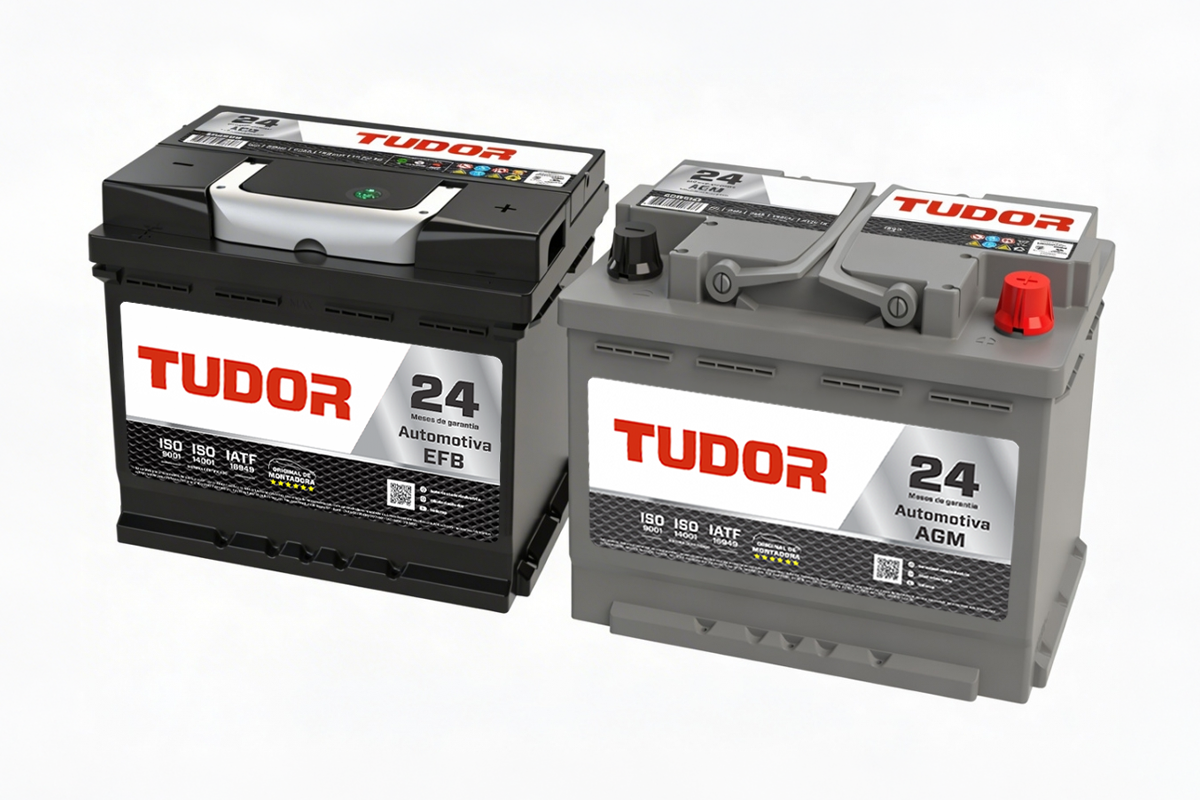
What Defines EFB Technology?
The EFB battery, which stands for Enhanced Flooded Battery, is an evolution of the conventional flooded battery.
Its main improvement lies in the structural reinforcement of the positive plates, which receive a polyester layer responsible for keeping the active material more stable during charge and discharge cycles.
This reduces the shedding of active material, one of the main causes of wear in vehicles that perform multiple starts per day.
Technically, the EFB offers:
• Up to twice the cycle resistance of conventional batteries
• Improved dynamic charge acceptance
• Greater durability in intense urban driving conditions
It is recommended for vehicles equipped with standard Start-Stop systems, as explained in the content about Start-Stop systems and the ideal battery.
What Makes AGM Technology Structurally Superior?
AGM stands for Absorbent Glass Mat.
In this technology, the electrolyte does not circulate freely. Instead, it is fully absorbed by fiberglass mats positioned between the lead plates.
This structural detail completely changes how the battery behaves.
The main technical advantages of AGM batteries include:
• Lower internal resistance
• Higher cold cranking current (CCA)
• Faster recharge capability
• Greater resistance to deep discharges
• Superior thermal stability
• High vibration resistance
The lower internal resistance allows greater efficiency in energy transfer, both during engine starting and recharging.
The concept of CCA, which is essential in this scenario, is explained in detail in the article about what battery CCA means.
Charge Acceptance and Energy Recovery
One of the most critical differences between AGM and EFB batteries lies in their ability to absorb current peaks.
Vehicles equipped with regenerative braking energy recovery systems send rapid and intense charges to the battery.
AGM batteries can absorb this energy more efficiently due to their low internal resistance.
EFB batteries offer good charge acceptance, but with lower limits.
Replacing an original AGM battery with an EFB battery can compromise:
• Fuel economy system efficiency
• Battery durability
• Proper Start-Stop operation
Voltage Stability and Electronic Protection
Modern vehicles contain dozens of electronic modules interconnected through networks such as CAN Bus.
During engine start, a temporary voltage drop occurs, known as voltage sag.
In AGM batteries, this drop is significantly smaller.
This reduces risks such as:
• Infotainment system restarting
• False dashboard warnings
• Sensor failures
• Instability in driver assistance modules
This stability is especially relevant in SUVs and vehicles with high electronic density, a topic further explored in the article about the best battery for SUVs.
Which Technology Lasts Longer?
Under equivalent operating conditions:
AGM batteries tend to offer longer lifespan.
They withstand:
• More charge and discharge cycles
• Deeper discharges
• Continuous severe usage
EFB batteries provide excellent performance in moderate applications, but they do not match the structural robustness of AGM batteries.
Still, battery lifespan also depends on proper use and correct application, as discussed in the article about mistakes that reduce battery lifespan.
The Risk of Technological Downgrade
A fundamental technical principle is:
Never downgrade the battery technology.
If the vehicle originally comes equipped with an AGM battery, replacement must also be AGM.
The Battery Management System (BMS) operates with charging curves specifically designed for that technology. Installing an EFB battery in this scenario can lead to:
• Overcharging
• Excessive heating
• Reduced battery lifespan
• Premature failure
On the other hand, upgrading from EFB to AGM is technically possible in many cases and may provide a greater safety margin for severe usage.
The correct replacement procedure is also essential, as explained in the guide on replacing an automotive battery.
When to Choose EFB?
EFB batteries are recommended when:
• The vehicle has a standard Start-Stop system
• There is no advanced energy recovery system
• The original manufacturer specification indicates EFB
They provide a strong balance between performance and cost-effectiveness.
Attention: If the vehicle was designed for EFB, that technology must be maintained. Replacing it with a conventional battery drastically reduces lifespan and may compromise the Start-Stop system.
When to Choose AGM?
AGM batteries should be chosen when:
• The vehicle requires this technology from the factory
• There is high electronic density
• The vehicle has an advanced energy management system
• The vehicle experiences severe usage or frequent daily starts
Attention: In vehicles that require AGM batteries from the factory, there is no technically inferior alternative. Replacing it with EFB represents a technological downgrade and may lead to overload, electrical instability, and premature failure.
Final Summary
The difference between AGM and EFB batteries goes far beyond their names.
It involves:
• Internal structure
• Cycle resistance
• Charge absorption capacity
• Voltage stability
• Compatibility with the vehicle’s electrical design
EFB is an evolution of the conventional battery, designed for basic Start-Stop systems.
AGM is a superior technology designed for high electrical demand and maximum stability.
Therefore, the real question is not simply “which technology is better,” but rather “which technology does my vehicle require.” Respecting this requirement ensures electrical stability, durability, and proper system operation.
The Tudor battery line offers AGM and EFB batteries developed under strict technical standards to meet different levels of electrical demand. If you are unsure about the correct technology, Tudor’s technical team can help guide the ideal application for your vehicle.
Read also

What happens when a car sits unused for a long time?
Not every vehicle is driven long distances every day. Many people own a second car, use their vehicle only on weekends, or leave it unused during extended trips. Although this situation may seem harmless, long periods without use can directly affect the automotive battery. Even with the engine turned off, some vehicle systems continue to consume power, and the battery itself naturally loses charge over time. If this period is prolonged, the risk of discharge, sulfation, and reduced service life increases significantly. Understanding what happens when a car remains unused for a long time helps preserve the battery and avoid surprises when it is time to use the vehicle again.
Continue reading
Automotive battery and alternator: what is the relationship between them?
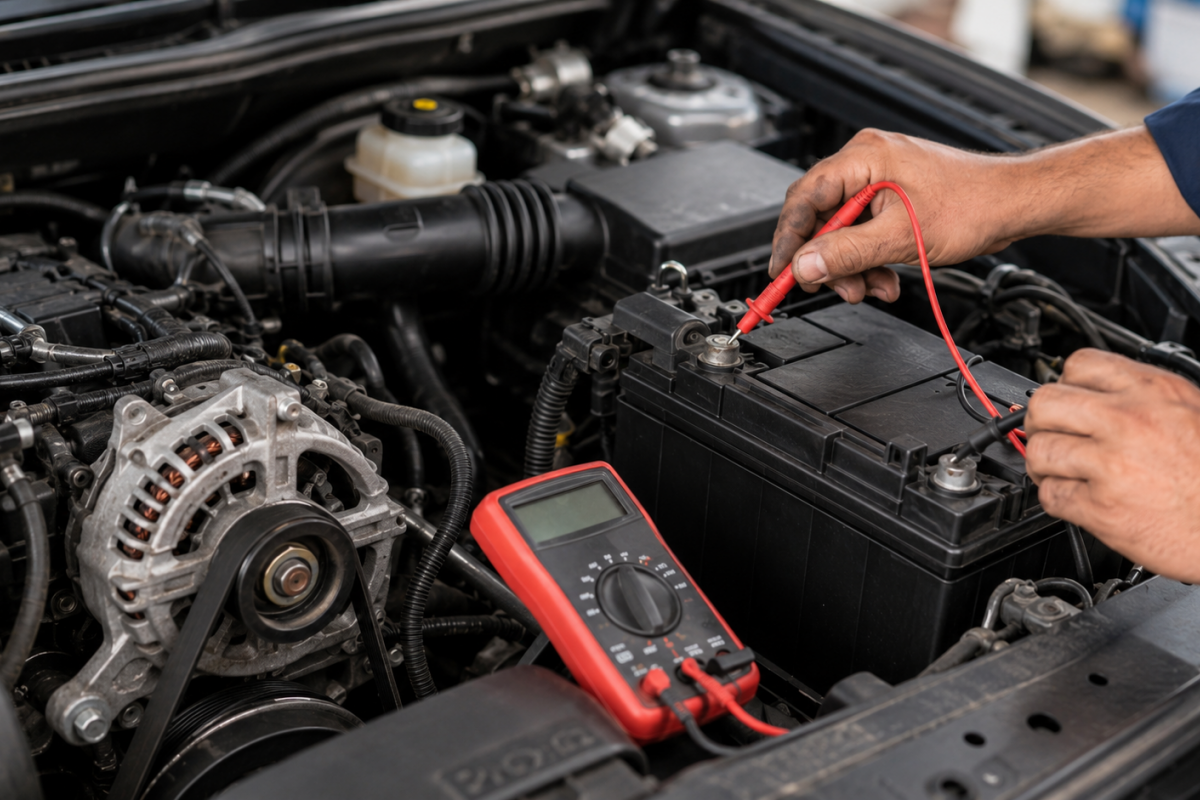
It is common for a driver to experience difficulty starting, find the battery dead, and quickly conclude that it is time to replace it. However, the problem is not always the battery. The battery and the alternator work together to keep the vehicle's electrical system running correctly. When one of these components fails, the other ends up being affected as well, which can generate very similar symptoms and make diagnosis difficult. Therefore, understanding how the battery and alternator work together is essential to identify the source of possible failures and ensure that the electrical system operates safely and efficiently. When the battery needs to be replaced, it is also important to check whether the charging system is operating correctly to preserve the performance of the new component.
Continue reading

How temperature influences the useful life of the automotive battery
The automotive battery is constantly exposed to different environmental conditions. In some regions, intense heat predominates for much of the year. In others, lower temperatures become a challenge for the vehicle's electrical system. Although many drivers associate battery problems only with usage time, temperature is one of the factors that most influences its durability and performance. Both excessive heat and intense cold affect the chemical reactions that take place inside the battery, accelerating wear processes and reducing its ability to supply energy.
Continue reading