How to extend your car battery’s lifespan? Learn in this complete guide
A car battery doesn’t fail overnight without a reason. In most cases, wear happens gradually and is directly linked to usage habits, vehicle conditions, and basic care that many drivers end up ignoring in their daily routine. If you’ve already had to replace your battery earlier than expected or been left stranded without clear warning, it’s worth knowing that this is rarely just “bad luck.” The good news is that some simple practices make a big difference and help extend your car battery’s lifespan, preventing premature replacements and unexpected issues. This guide brings together the key factors that truly impact battery performance and durability.
What causes the most battery wear?
Before talking about maintenance, it’s important to understand why a battery wears out over time. This wear does not happen for a single reason, but rather due to the combination of chemical, electrical, environmental, and daily usage factors.
A car battery works through internal chemical reactions. Over time, these reactions cause gradual corrosion of the lead plates and the formation of sulfate, reducing the battery’s ability to store energy. This is a natural process, but it can be accelerated.
The main factors that contribute to battery wear are:
- Many engine starts in short periods, which require repeated electrical effort
- Very short daily trips, which do not allow the alternator to fully recharge the battery
- Using electronics with the engine off, such as multimedia systems, headlights, and chargers
- Accessories left on or forgotten, generating continuous power consumption
- Electrical system failures, such as an alternator with irregular performance or dirty and loose connections
- High temperatures in the engine bay, which accelerate internal corrosion and efficiency loss
When these factors add up, the battery is constantly operating under stress. The result is gradual loss of efficiency, reduced energy storage capacity, and a significant decrease in lifespan, until the first symptoms appear.
Avoid using the car only for short trips
One of the biggest enemies of the battery is frequent use of the car only for very short trips. Starting the engine is the moment of highest electrical demand, and when the vehicle runs for just a few minutes, the alternator cannot fully restore that energy.
Over time, this causes the battery to always operate with partial charge, a very common situation in vehicles that show problems explained in the article: Why does the battery discharge quickly?
Whenever possible, allow the car to run long enough to recover the energy used during startup.
Be careful with excessive electrical consumption
Headlights, air conditioning, multimedia systems, chargers, cameras, alarms, and trackers are part of modern car routines. The problem is not using them, but how and when they are used.
Some situations that accelerate battery wear include:
- Prolonged use of accessories with the engine off
- Installation of equipment without proper technical criteria
- Accumulation of multiple high-consumption electrical devices
This excess demand forces the battery to work beyond what is expected, especially in urban use, reducing its durability over time.
Keep battery terminals clean and properly tightened
It may seem like a small detail, but it makes a big difference.
Loose or oxidized terminals make it harder for electrical current to flow. When this happens, the battery has to “work harder” to deliver the same amount of power to the system.
Good practices include:
- Checking that terminals are properly tightened
- Looking for signs of oxidation
- Cleaning whenever necessary
A simple poor connection can compromise the electrical system’s performance and accelerate battery wear without the driver realizing it.
Pay attention to the vehicle’s charging system
There is no point in taking care of the battery if the alternator is not working properly.
When the charging system has faults, the battery never reaches full charge, even after long periods of driving. This drastically reduces lifespan and causes recurring discharges.
If warning lights appear on the dashboard, electrical fluctuations occur, or voltage drops when turning on accessories, it’s best to check the electrical system before considering replacing the battery.
Avoid leaving the car parked for long periods
Even when turned off, the car continues to consume energy. Electronic modules, alarms, and comfort systems remain active.
When the vehicle stays parked for many days:
- The battery gradually loses charge
- It may enter deep discharge
- It suffers wear even without use
In these cases, using an automotive charger can help preserve the battery.
Always use the correct battery for your car
Using a battery that does not match the specifications causes it to operate outside ideal conditions, accelerating wear and increasing the risk of electrical failures.
Seemingly small differences, such as incorrect amperage or unsuitable technology, have a direct impact on durability. That’s why following the vehicle manufacturer’s recommendation is always the safest choice.
Perform preventive battery testing
Periodic tests help identify efficiency loss before the battery fails completely. Many signs appear gradually, such as starting difficulty and electrical instability, and noticing these early is essential to act at the right time.
Testing the battery in advance allows you to plan the replacement and avoid being stranded.
In summary, extending battery lifespan depends much more on habits and care than on brand alone.
Essential best practices:
- Avoid only short trips
- Control electrical consumption
- Keep terminals clean and secure
- Ensure the alternator is working properly
- Avoid long periods with the car parked
- Use the correct battery for the vehicle
- Perform preventive tests
Tudor batteries are developed with a focus on electrical stability, compatibility, and consistent performance, helping reduce premature failures when properly applied.
And if you want to avoid unnecessary replacements and unexpected failures, talk to Tudor. Specialized technical support can help identify the best solution for your usage pattern.
Read also
What happens when a car sits unused for a long time?
Not every vehicle is driven long distances every day. Many people own a second car, use their vehicle only on weekends, or leave it unused during extended trips. Although this situation may seem harmless, long periods without use can directly affect the automotive battery. Even with the engine turned off, some vehicle systems continue to consume power, and the battery itself naturally loses charge over time. If this period is prolonged, the risk of discharge, sulfation, and reduced service life increases significantly. Understanding what happens when a car remains unused for a long time helps preserve the battery and avoid surprises when it is time to use the vehicle again.
Continue reading
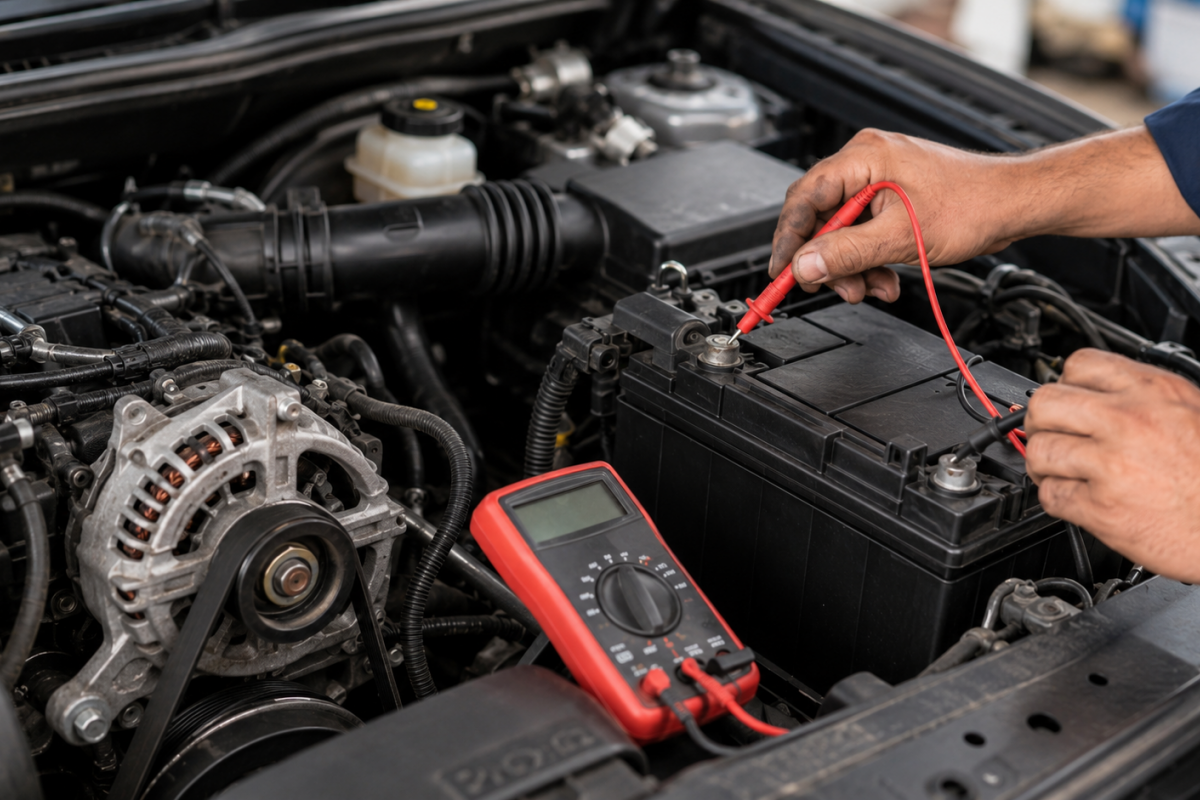
Automotive battery and alternator: what is the relationship between them?
It is common for a driver to experience difficulty starting, find the battery dead, and quickly conclude that it is time to replace it. However, the problem is not always the battery. The battery and the alternator work together to keep the vehicle's electrical system running correctly. When one of these components fails, the other ends up being affected as well, which can generate very similar symptoms and make diagnosis difficult. Therefore, understanding how the battery and alternator work together is essential to identify the source of possible failures and ensure that the electrical system operates safely and efficiently. When the battery needs to be replaced, it is also important to check whether the charging system is operating correctly to preserve the performance of the new component.
Continue reading
How temperature influences the useful life of the automotive battery
The automotive battery is constantly exposed to different environmental conditions. In some regions, intense heat predominates for much of the year. In others, lower temperatures become a challenge for the vehicle's electrical system. Although many drivers associate battery problems only with usage time, temperature is one of the factors that most influences its durability and performance. Both excessive heat and intense cold affect the chemical reactions that take place inside the battery, accelerating wear processes and reducing its ability to supply energy.
Continue reading