Tudor Baterias

Link copiado para a área de transferência!
Motorcycle Batteries

Sealed or Conventional Motorcycle Battery: Which Technology Should You Choose?

Choosing the right motorcycle battery directly impacts starting reliability and electrical system stability. Although both rely on the lead-acid chemical principle, conventional (flooded) and sealed technologies behave differently in terms of maintenance, mechanical resistance, and chemical efficiency. On modern motorcycles, the battery is not only responsible for starting. It helps maintain the integrity of the fuel injection system, digital instrument cluster, and all onboard modules. That’s why understanding the structural differences between technologies is essential.

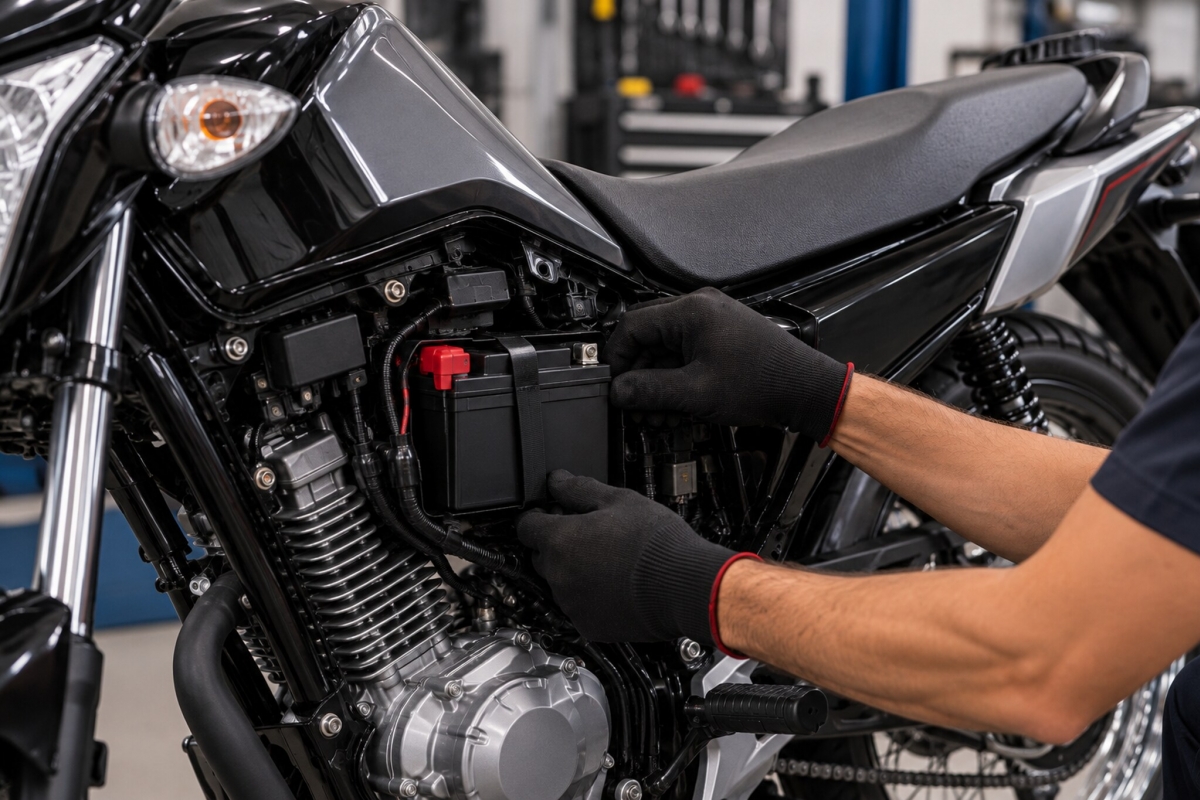
mecanico instalando bateria de moto

Conventional battery engineering

The conventional battery, also called a flooded battery, uses free liquid electrolyte between the plates.

Its construction typically uses lead-antimony alloys, which improve electrical conduction but increase electrolysis during charging. This means part of the water in the electrolyte breaks down into hydrogen and oxygen.

In practice, this requires:

  • Periodic electrolyte level checks
  • Topping up with demineralized water
  • Ongoing maintenance attention

If the level drops too much, the plates become exposed to air, accelerating sulfation and reducing service life.

It’s a robust technology with a lower initial cost, but it depends on consistent user maintenance.

Sealed VRLA technology and the recombination process

Sealed batteries use VRLA (Valve Regulated Lead Acid) technology.

Unlike conventional batteries, they operate in a nearly closed system. During charging, oxygen generated at the positive plate migrates to the negative plate and reacts to form water again. This is called gas recombination.

A safety valve maintains ideal internal pressure and opens only in cases of extreme overcharge.

In practice, this provides:

  • Maintenance-free operation
  • No water top-up required
  • Lower leak risk
  • Easier installation

The differences between technologies are also covered in the article on motorcycle battery types.

The structural advantage of AGM technology

Many high-performance sealed batteries use an AGM (Absorbent Glass Mat) separator.

In this design, the electrolyte is fully absorbed in fiberglass mats that compress the internal plates.

This engineering delivers important technical benefits for motorcycles:

  • High vibration resistance
  • Less active material shedding
  • Low internal resistance
  • Higher starting current capability
  • Lower self-discharge rate

For motorcycles used on rough roads or single-cylinder engines with strong vibration, AGM offers greater structural durability.

Electrical stability and protection for fuel injection

Modern motorcycles with fuel injection and digital clusters are sensitive to voltage variation.

During starting (cranking), if the battery can’t sustain adequate current, voltage sag occurs, meaning a sharp voltage drop.

This can cause:

  • Cluster reset
  • Intermittent ECU faults
  • Unstable idle after starting
  • Temporary sensor errors

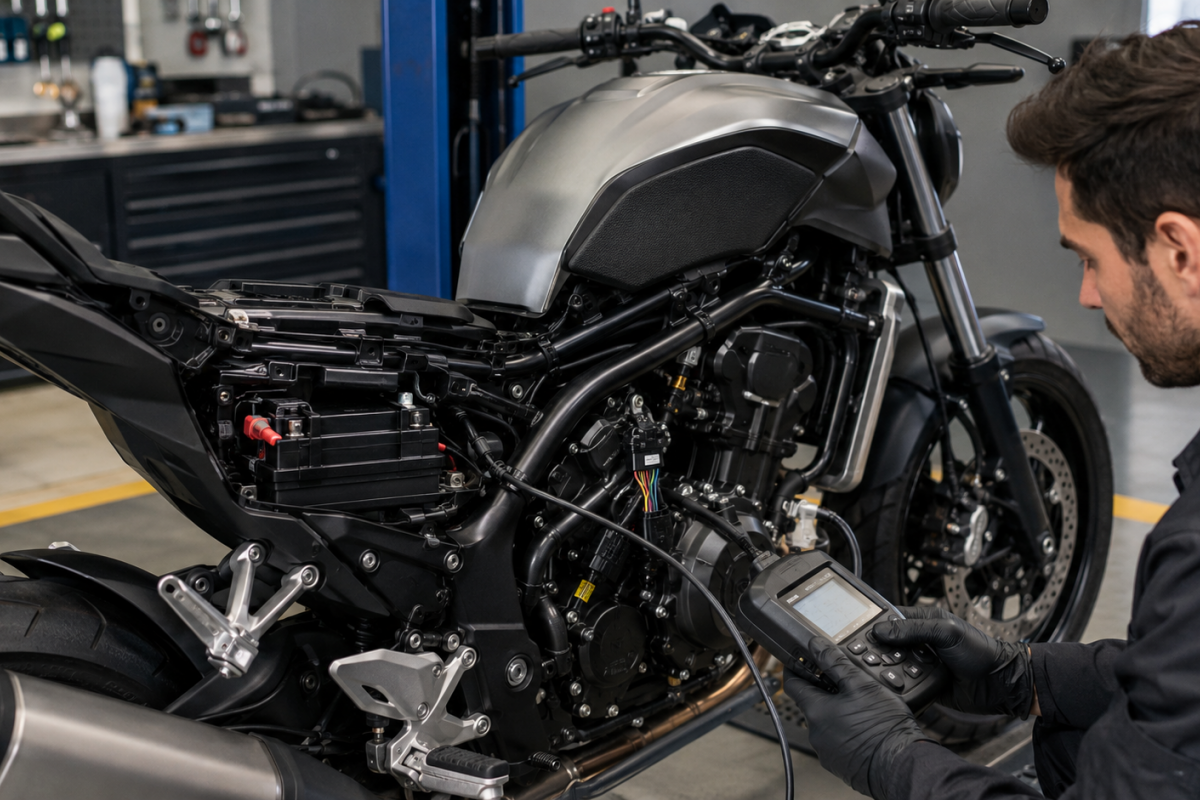
These symptoms are detailed in the content on how to tell if a motorcycle battery is failing. If voltage drop becomes frequent, it’s also important to review the guide on when to replace a motorcycle battery.

Self-discharge and motorcycles that sit unused

Sealed batteries with lead-calcium alloys typically have lower self-discharge.

This is especially important for motorcycles that stay parked for long periods.

Recurring discharge overnight or after just a few days of sitting may indicate issues explained in the article on why a motorcycle battery drains overnight.

Direct technical comparison

Criteria Conventional (Flooded) Sealed AGM
Maintenance Required Not required
Water top-up Yes No
Vibration resistance Moderate High
Leak risk Present Minimal
Self-discharge Higher Lower
Voltage stability Good Superior

Technical criteria to decide

From a technical standpoint, both technologies can work well when applied according to the motorcycle’s design.

However, as modern motorcycles evolved with fuel injection, digital modules, and higher voltage-stability demands, sealed VRLA with AGM construction has become the higher-performance standard.

Because it delivers:

  • Higher vibration resistance
  • Lower self-discharge
  • More consistent voltage stability
  • Maintenance-free operation
  • Better starting current performance

AGM technology is now the most robust solution for two-wheel applications.

The technology standard adopted by Tudor

Tudor’s motorcycle battery lineup uses only sealed VRLA technology with AGM construction.

That decision is not merely commercial, but technical.

AGM technology is better suited to real-world riding conditions in Brazil, which often include:

  • High temperatures
  • Constant vibration
  • Heavy urban use
  • Periods of inactivity

By adopting only sealed AGM batteries for motorcycles, Tudor delivers a higher standard of electrical stability and structural resistance, eliminates the need for periodic maintenance, and reduces the risk of failures caused by electrolyte evaporation.

Conclusion

In short, the difference between sealed and conventional batteries lies in internal engineering, maintenance requirements, and structural resistance.

While conventional batteries still exist in the market, motorcycle technology has evolved, making sealed AGM the most efficient option to ensure electrical stability and longer service life.

To choose the correct model for your motorcycle, contact Tudor’s specialized technical team for guidance based on engine displacement and electrical demand.

Read also

motocicleta com injeção eletrônica e bateria em destaque
Motorcycle Batteries

Battery for motorcycles with electronic fuel injection: what changes when choosing?

Electronic fuel injection transformed the way motorcycles operate. In addition to providing greater efficiency, fuel economy and lower pollutant emissions, this technology made the electrical system much more important to motorcycle performance. Whereas the battery was once remembered mainly for starting, today it also plays an essential role in powering the electronic components responsible for engine operation. For this reason, many riders have the same question: does a motorcycle with electronic fuel injection need a different battery? The answer is that the battery must meet the motorcycle’s specifications and provide performance compatible with the demands of the electrical system. In this article, you will understand what changes when choosing the battery and why this component is essential to modern motorcycles.

Continue reading
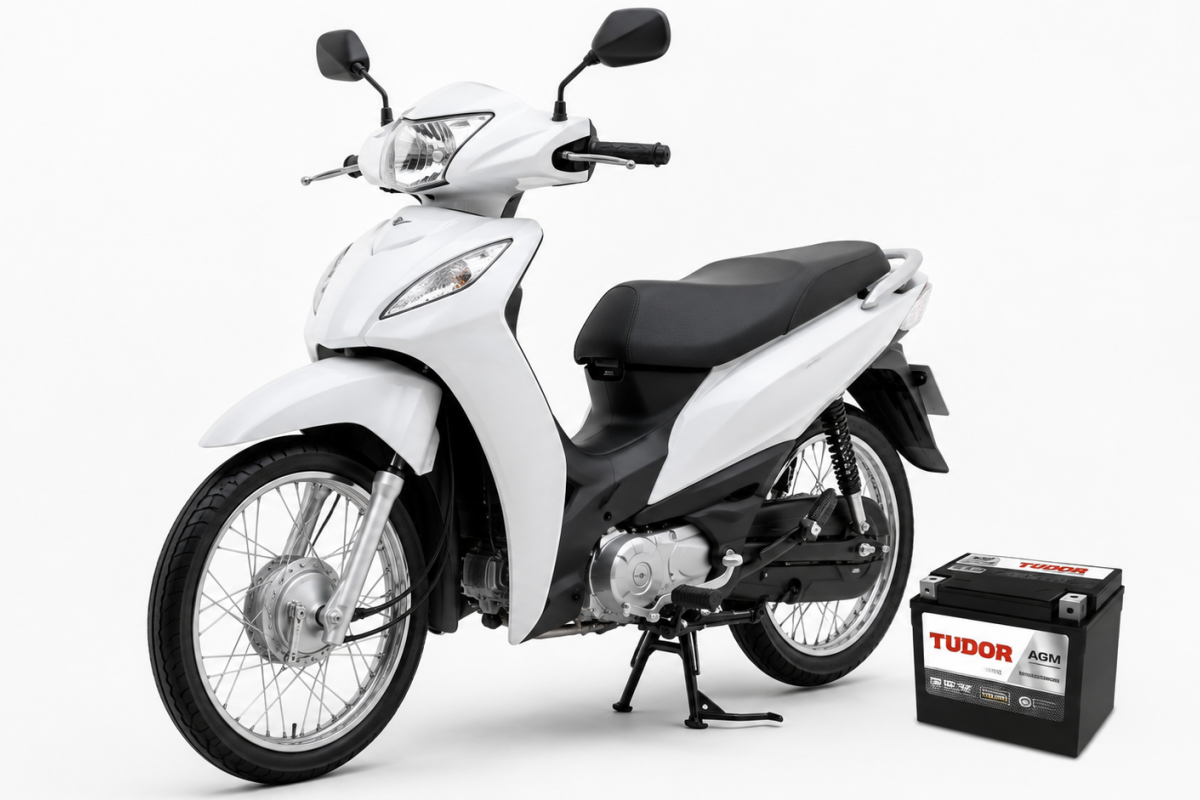
Honda Biz estacionada com destaque para a bateria
Motorcycle Batteries

Ideal battery for the Honda Biz: learn how to choose the right one

The Honda Biz is one of the most popular motorcycles in Brazil. Manufactured since 1998, it is part of the daily lives of millions of riders. Whether for daily commuting, work, deliveries, or short trips, it stands out for its practicality, fuel economy, and reliability. Although many owners simply search for “battery for Honda Biz,” not every version uses the same model. In addition, this motorcycle’s typical usage profile, usually marked by many short trips and frequent starts, requires a battery capable of delivering consistent performance throughout its service life. In this article, you will learn which battery is ideal for each Honda Biz version, which characteristics should be considered, and why choosing the correct application makes all the difference.

Continue reading

motocicleta em estrada de terra destacando as vibrações durante o uso
Motorcycle Batteries

How does vibration affect motorcycle battery life?

Motorcycles are constantly exposed to operating conditions that place heavy demands on the battery. In addition to frequent starts and temperature variations, there is another factor that often goes unnoticed but has a major impact on component durability: vibration. While riding, especially on uneven roads, dirt roads, or routes with frequent impacts, the battery is subjected to continuous movement that can accelerate internal wear. Therefore, understanding how vibration affects battery operation helps explain why some applications require more resistant technologies and why choosing the right battery makes a difference in motorcycle reliability.

Continue reading