What damages a motorcycle battery: most common causes
A motorcycle battery works in a much harsher environment than many people imagine. Constant vibration, engine heat, intense urban use in work motorcycles, and long periods of inactivity in leisure motorcycles cause this component to suffer continuous wear over time.
In addition, modern motorcycles now require greater electrical stability to power electronic injection systems, ECUs, digital dashboards, and several electronic components.
In this scenario, understanding what really accelerates battery wear helps not only to avoid unexpected failures, but also to preserve the reliability of the motorcycle’s electrical system.
In many cases, the problem is not only the age of the battery, but the way it is used on a daily basis.
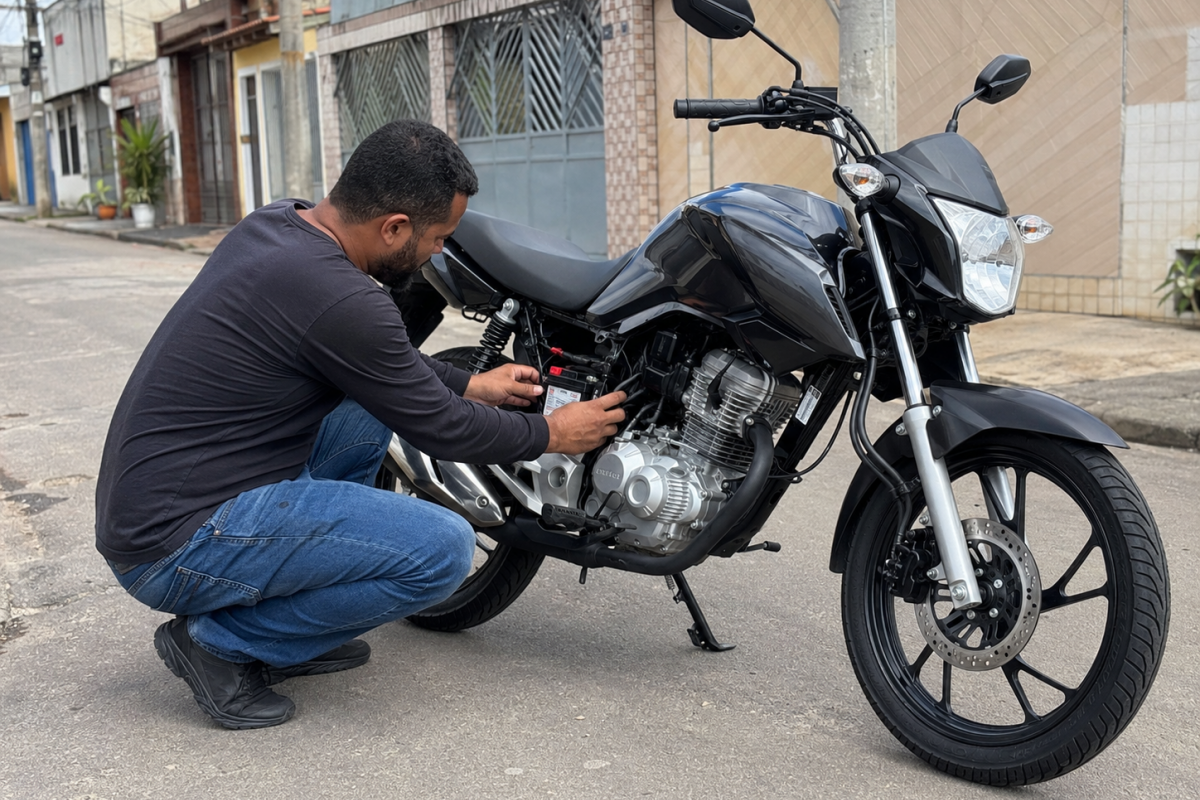
Why does a motorcycle battery suffer more wear?
Motorcycles subject the battery to a higher level of stress than cars.
Among the main factors are:
- Constant vibration
- Exposure to engine heat
- Frequent starts in professional urban use
- Short routes in quick urban commutes
- Long periods without use for leisure motorcycles
- Lower energy capacity
In addition, motorcycle charging systems tend to be more sensitive, which makes any loss of efficiency more noticeable in the motorcycle’s operation.
This combination favors internal degradation processes, such as sulfation, plate corrosion, and increased internal resistance.
Does leaving a motorcycle unused for a long time damage the battery?
Yes. This is one of the most common factors behind premature wear.
Even when not in use, every battery suffers a natural loss of charge, a process known as self-discharge.
When the motorcycle remains unused for a long time, without the charging system operating, the battery starts to operate in a partial state of charge. This favors the formation of lead sulfate crystals on the internal plates.
Over time, these crystals harden and can no longer be reversed during recharging, reducing the battery’s ability to store and supply energy.
This process is called sulfation and is among the main causes of premature failure in motorcycles.
This behavior is also explored in depth in does a parked motorcycle drain the battery? Understand why.
Do short routes harm the battery?
Yes.
On very short routes, the alternator is not always able to fully replace the energy consumed during starting.
In practice:
- The battery discharges to start the motorcycle
- But it does not receive enough time for full recovery
When this happens repeatedly, the battery starts to work constantly with a partial charge, accelerating:
- Sulfation
- Increased internal resistance
- Loss of electrical capacity
This scenario is very common in motorcycles used only for quick urban commutes.
Can excessive vibration damage the battery?
It can, especially in batteries that are not suitable for motorcycles.
Constant vibration can cause:
- Detachment of the active mass from the plates
- Internal structural wear
- Increased electrical resistance
- Reduced starting capacity
In more severe cases, the detached material can cause a small and constant internal short circuit.
That is why the battery’s mechanical resistance makes a direct difference in durability.
This topic is explored in depth in the article about the difference between sealed and conventional batteries: which one to use.
Does engine heat influence service life?
Yes.
In many motorcycles, especially higher-displacement models, the battery is installed close to the engine, remaining constantly exposed to high temperatures.
Heat accelerates:
- Corrosion of the internal grids
- Evaporation of the electrolyte
- Chemical degradation of the plates
This reduces charge retention capacity and accelerates battery aging.
The impact is usually even greater in motorcycles used daily in heavy traffic or in higher-displacement motorcycles.
Can alarms and accessories drain the battery?
Yes.
Alarms, trackers, USB chargers, and auxiliary lighting can generate continuous consumption even when the motorcycle is turned off.
This consumption is called parasitic drain.
When there is current leakage above normal levels, the battery gradually loses charge during periods of inactivity.
In motorcycles that already have a worn battery, this can completely prevent starting after just a few days parked.
You can read more content about this in why the motorcycle drains overnight.
Does using the wrong battery accelerate wear?
Yes.
A battery that is incompatible with the motorcycle’s electrical requirements can constantly operate outside its ideal condition.
The most common problems are:
- Excessive effort during starting
- Inadequate recharging
- Voltage drop
- Overheating
- Premature wear
In addition, incorrect dimensions or polarity can cause improper installation, increasing vibration and the risk of electrical failures.
That is why the correct choice should consider:
- Ah
- CCA
- Dimensions
- Polarity
- Appropriate technology
This topic is explored in depth in how to choose the ideal battery for your motorcycle.
How do you know if the battery is already wearing out?
The battery usually shows signs before total failure.
The most common symptoms are:
- Weaker starting
- Dashboard flickering
- Frequent need for recharging
- Headlight losing intensity
- Recurring difficulty starting
- Rapid loss of charge
These symptoms indicate increased internal resistance and loss of electrical support capacity.
This process usually evolves gradually, as we show in how to know if the motorcycle battery is bad.
How does AGM technology help increase durability?
The battery’s internal construction directly affects its resistance to the severe use of motorcycles.
Tudor motorcycle batteries use AGM technology with a VRLA system, where the electrolyte is absorbed in compacted fiberglass mats.
This structure offers:
- Greater resistance to vibration
- Lower risk of leakage
- Low self-discharge
- Greater electrical stability
- Maintenance-free operation
In addition, the lead-calcium alloys used by Tudor help reduce sulfation and improve charge acceptance during urban use.
Conclusion
The service life of a motorcycle battery is directly linked to the motorcycle’s usage conditions and the quality of the installed application.
Motorcycles left unused for long periods, short routes, intense vibration, excessive heat, and parasitic consumption are among the factors that most accelerate battery wear.
That is why understanding the mechanisms that cause degradation helps prevent unexpected failures and increases the reliability of the motorcycle’s electrical system.
Within this scenario, using a battery developed specifically for motorcycle use makes a real difference in durability, electrical stability, and safety during daily use.
The Tudor motorcycle line uses AGM VRLA technology developed to withstand exactly this type of demand, offering greater vibration resistance, low self-discharge, and consistent performance throughout its service life.
To confirm the correct application for your motorcycle, consult Tudor’s technical catalog or rely on specialized guidance to ensure the right choice.
Frequently Asked Questions about what damages a motorcycle battery
Does leaving a motorcycle unused really damage the battery?
Yes. Long periods without use favor self-discharge and accelerate internal sulfation.
Do short routes harm a motorcycle battery?
Yes. The alternator may not be able to fully replace the energy consumed during starting.
Does vibration reduce battery service life?
Yes. Constant vibration can cause internal structural wear in the battery plates.
How do I know if the battery is already worn?
Weak starting, electrical fluctuation, and frequent loss of charge are among the most common signs.
Read also

Ideal motorcycle battery for Honda NXR Bros: how to choose correctly from 125 to 160 cc
The Honda NXR Bros is one of the most versatile motorcycles in the Brazilian market. Designed for mixed use, it can easily handle both urban environments and dirt roads or uneven routes. This characteristic causes the Bros battery to work under more severe conditions than motorcycles used exclusively in urban environments. In addition to frequent starts from daily use, the motorcycle also faces constant vibration, impacts, dust, heat, and shaking on uneven terrain. That is why choosing the correct battery for the NXR Bros goes far beyond amperage. The application needs to ensure electrical stability, vibration resistance, and starting reliability under different usage conditions. In this scenario, Tudor AGM batteries with a VRLA system were developed precisely to withstand this type of demand.
Continue reading
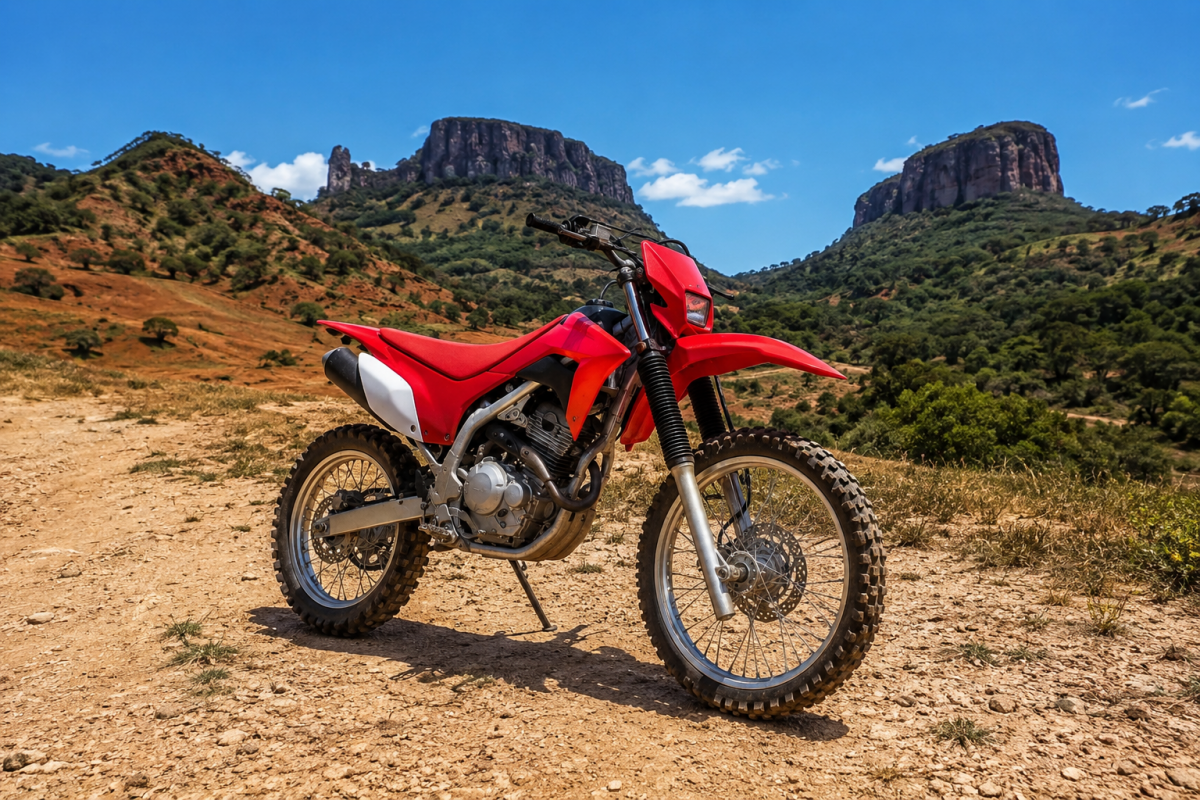
Best battery for trail and off-road motorcycles: what really makes a difference
Trail and off-road motorcycles operate under some of the harshest possible conditions for a battery. Intense vibration, constant impacts, mud, dust, heat, and extreme RPM variations make the electrical system work far beyond conventional urban use. In this scenario, the battery is no longer just a component responsible for starting. It begins to play an essential role in the motorcycle’s electrical stability, especially in models with electronic injection, ECU, and onboard electronic systems. That is why choosing the right battery for an off-road motorcycle means seeking structural resistance, electrical stability, and reliability under severe usage conditions. The Tudor motorcycle line uses AGM technology with a VRLA system precisely to withstand this type of extreme application.
Continue reading
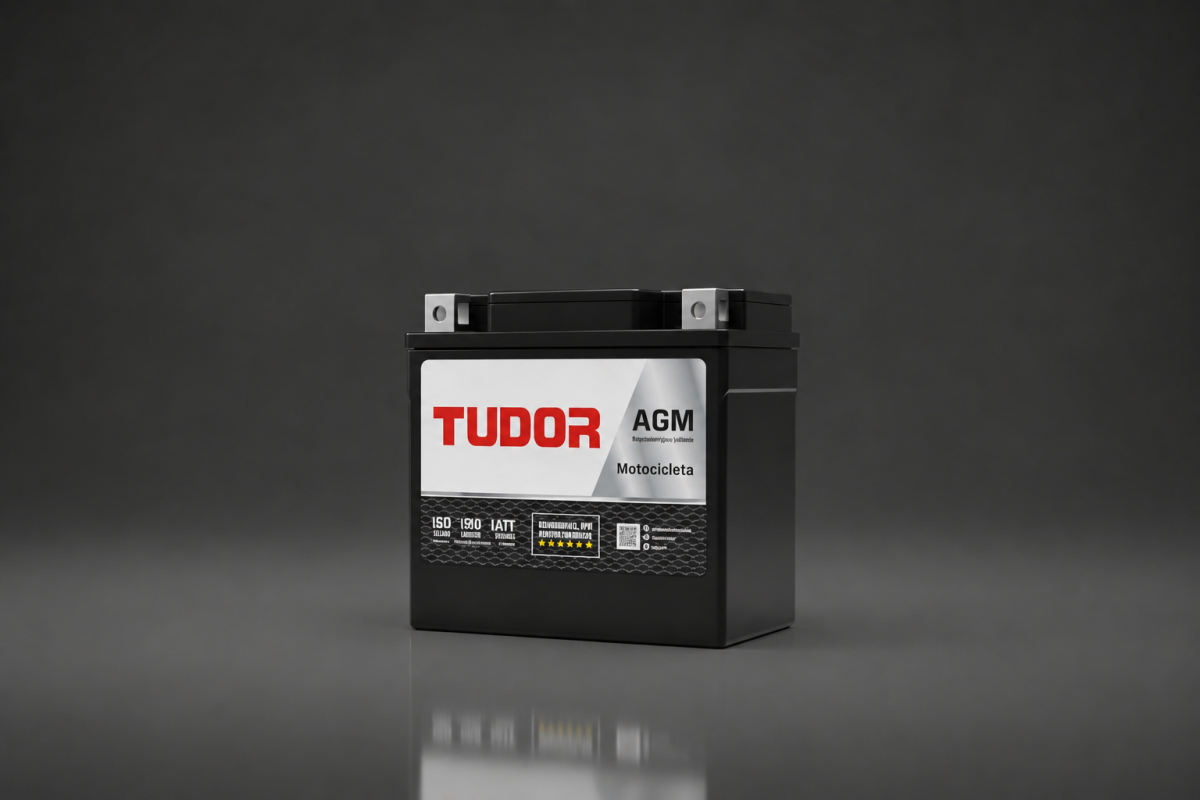
Tudor motorcycle line: how to choose the right battery for each usage profile
Modern motorcycles demand much more from the battery than just starting power. Today, systems such as electronic injection, digital dashboards, electronic modules, and more sophisticated lighting have made electrical stability an essential factor for the correct operation of the motorcycle. In this scenario, choosing the ideal battery is no longer just a matter of physical fit. The motorcycle’s usage profile, the number of starts, the type of route, and the electrical demand directly influence the battery’s durability and performance. The Tudor motorcycle line was developed precisely to meet different levels of demand, using AGM technology with a VRLA system and specific applications for each motorcycle category.
Continue reading