Tudor Baterias

Link copiado para a área de transferência!
Automotive Battery

Which Battery Should I Buy for My Car? A Technical Selection Guide

Choosing the right battery goes far beyond checking the physical size or picking the cheapest option available. A battery is part of your vehicle’s electrical design. It must meet specific technical criteria for capacity (Ah), starting power, battery technology, and compatibility with the energy management system. That’s why the real question isn’t just “which battery should I buy?”, but: Which battery is compatible with my car’s electrical system design? In this technical guide, you’ll learn exactly which criteria to evaluate before buying.
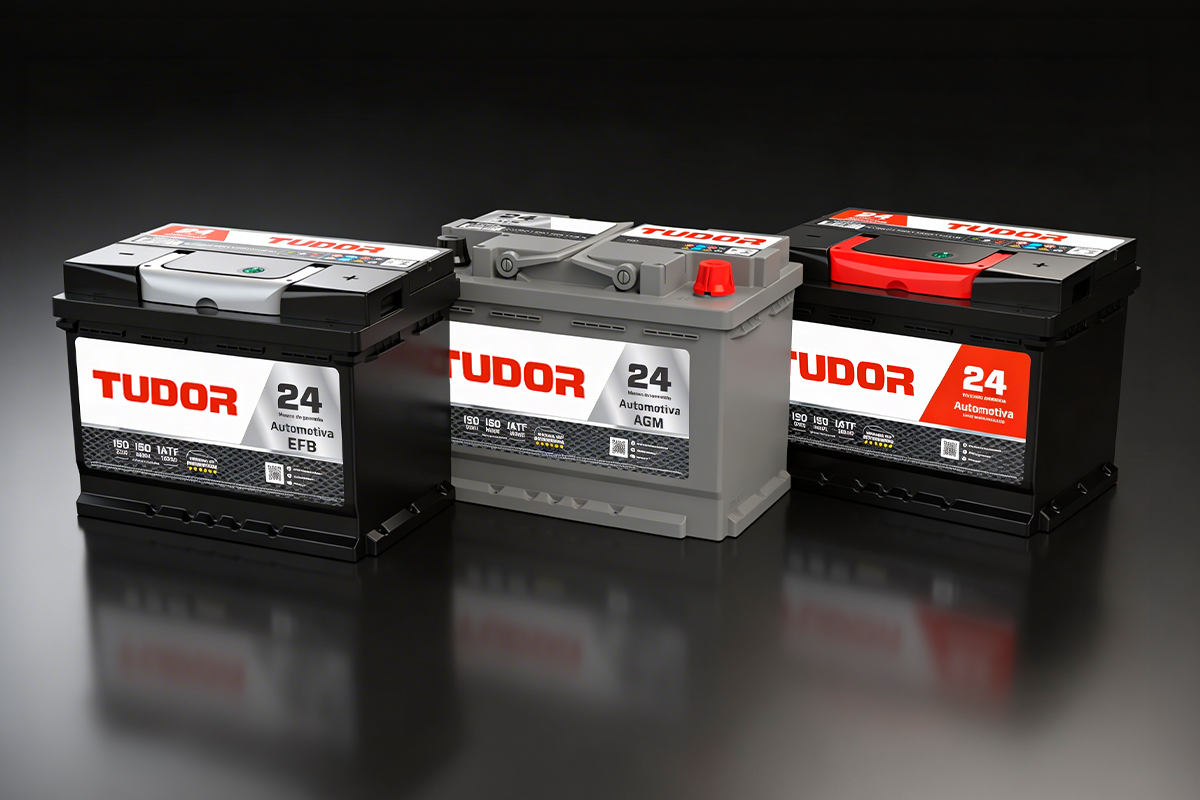
linha tudor: baterias agm, efb e leve

What you must confirm before buying a battery

Many people think it’s enough to choose a battery with the same amp-hour rating as the previous one. That’s only one piece of the puzzle.

To ensure real compatibility, you need to confirm:

  • Battery case standard
  • Dimensions and overall height
  • Terminal polarity (positive/negative position)
  • Capacity (Ah)
  • CCA
  • Correct battery technology
  • Compatibility with BMS (when applicable)

Ignoring any of these points can lead to electrical instability, intermittent faults, and prematurely reduced battery life.

Battery case standard: DIN or JIS?

The first criterion is physical and structural.

Automotive batteries follow international standards that define dimensions, hold-down base, and terminal design.

DIN standard

  • Very common in European vehicles and most locally produced models
  • Recessed terminals
  • Typically 175 mm or 190 mm in height

JIS standard

  • Common in Japanese and Asian vehicles
  • Raised terminals
  • Specific base dimensions

Installing a battery with the wrong standard can prevent the hood from closing, put excessive tension on cables, or compromise the hold-down, increasing vibration and reducing service life.

Physical compatibility is just as important as electrical compatibility.

Polarity: a non-negotiable technical detail

Polarity defines the position of the positive and negative terminals.

Your vehicle’s original cables are designed for a specific layout. Installing a battery with reversed polarity can require crossing cables or, in the worst case, cause accidental polarity inversion, instantly damaging electronic modules.

Before buying, check the position of the positive terminal by looking at the terminals from the front.

This is a technical requirement that doesn’t allow improvised adaptation.

Capacity (Ah): energy storage

Capacity (Ah) indicates how long the battery can supply power before it needs to be recharged.

Installing a battery with lower Ah than specified can cause:

  • Excessive charge cycles
  • Alternator overload
  • Frequent discharge
  • Reduced durability

This topic is explored further in the article about using a larger battery in a car.

The rule of thumb is simple: follow the original specification.

CCA: more than starting power

CCA (Cold Cranking Amps) measures the maximum current the battery can deliver to start the engine.

Even in warm climates, CCA is an indicator of the battery’s internal resistance.
The lower the internal resistance:

  • The smaller the voltage drop during starting
  • The better the protection for electronics
  • The less strain on the starter motor

Undersized CCA may still allow the engine to start, but can lead to voltage fluctuations and intermittent faults.

The full concept is explained in the article on what battery CCA means.

Battery technology: standard, EFB, or AGM?

Not all vehicles use the same battery technology.

Vehicles with Start-Stop require EFB or AGM.
Vehicles with higher electronic load may require AGM as mandatory.

Installing an inferior technology is a technical downgrade and can compromise battery life.

The structural differences are detailed in the article on the difference between AGM and EFB batteries.

The correct technology must always follow the automaker’s specification.

Compatibility with the BMS

Modern vehicles use a Battery Management System (BMS), a sensor that monitors battery charge and state of health.

In these cars, the alternator operates with variable voltage to:

  • Save fuel
  • Protect the battery
  • Improve energy efficiency

If the installed battery technology isn’t compatible with the BMS programming, the following may occur:

  • Overcharging
  • Overheating
  • A drastic reduction in service life

In addition, many vehicles require an electronic reset after replacement, as explained in the automotive battery replacement guide.

Reserve Capacity (RC): safety in case of charging failure

Reserve Capacity indicates how long the battery can keep essential systems running if the alternator stops charging.

In vehicles with high-tech electrical loads, adequate RC provides enough time to drive to a safe location.

This factor is especially relevant for SUVs and models with higher electronic density.

Can I choose a battery only by my car model?

The model helps, but it’s not enough.

Different trims and versions may require:

  • Different CCA
  • Different technology
  • Higher capacity (Ah)
  • A specific construction standard

Model-based guides, such as best battery for the VW Polo, show how requirements can vary by version.

Conclusion

In summary, choosing which battery to buy for your car requires careful technical evaluation.

Before deciding, verify:

  • DIN or JIS standard
  • Physical dimensions
  • Polarity
  • Capacity (Ah)
  • CCA
  • Required technology
  • BMS compatibility
  • Reserve Capacity (RC)

A battery is not a generic component. It is part of your vehicle’s electrical system design.

Tudor’s battery line is engineered under strict technical standards to meet different formats and levels of electrical demand, preserving stability and reliability.

If you have any doubts about the correct application for your vehicle, contacting Tudor’s technical team is the safest way to ensure the right choice.

Read also

teste de bateria descarregada
Automotive Battery

Why does the battery discharge quickly? Understand the most common causes

<p>When a car battery starts discharging quickly, the problem is usually related to usage, electrical failure, or natural wear. Even new batteries can lose charge if a component is drawing more power than it should. Even new batteries can lose charge if a component is drawing more power than it should.</p>

Continue reading

luz de bateria acesa indicando bateria fraca
Automotive Battery

Signs of a Weak Battery: 5 Symptoms That Indicate It’s Time to Replace It

<p>Identifying the signs of a weak battery helps prevent your car from suddenly stopping. The battery usually gives warnings before it completely fails, and understanding these symptoms helps you take action at the right time. Below are the 5 main signs that your battery is weak, explained in a simple and practical way.</p>

Continue reading

pessoa apontando para bateria
Automotive Battery

What is battery CCA? A simple explanation

<p>The term CCA appears on almost every automotive battery, but many drivers don’t know exactly what it means or why this number is so important when choosing a battery. Here’s a clear and straightforward explanation of what CCA is and its role in how your car works.</p>

Continue reading