Automotive battery and alternator: what is the relationship between them?
It is common for a driver to experience difficulty starting, find the battery dead, and quickly conclude that it is time to replace it. However, the problem is not always the battery.
The battery and the alternator work together to keep the vehicle's electrical system running correctly. When one of these components fails, the other ends up being affected as well, which can generate very similar symptoms and make diagnosis difficult.
Therefore, understanding how the battery and alternator work together is essential to identify the source of possible failures and ensure that the electrical system operates safely and efficiently. When the battery needs to be replaced, it is also important to check whether the charging system is operating correctly to preserve the performance of the new component.
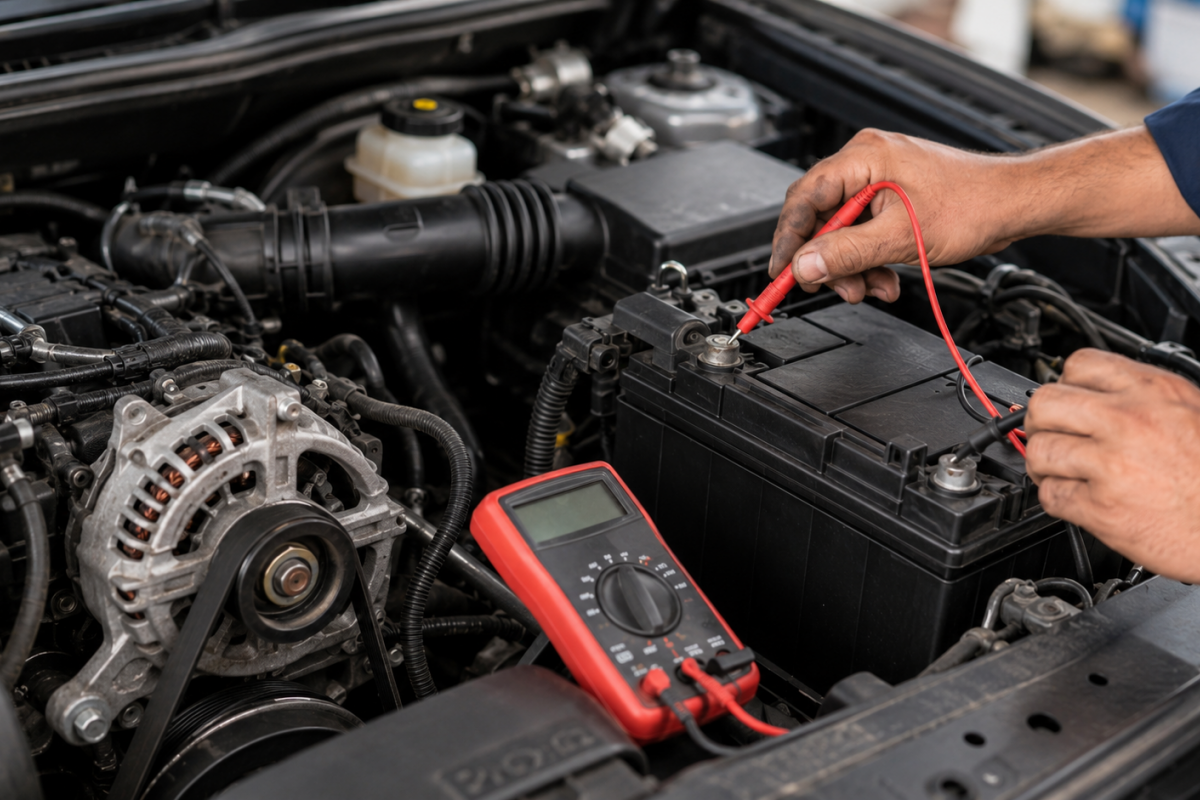
What is the function of the battery and the alternator?
Although they work together, the battery and alternator perform different functions.
The battery is responsible for supplying energy to start the engine and powering the electrical systems when the vehicle is turned off.
After the engine starts running, the alternator begins generating energy to power the vehicle's electrical consumers and recharge the battery.
In practice, the battery starts the vehicle and the alternator ensures it remains charged during use.
When either of these components stops working correctly, the entire electrical system may experience failures.
What happens when the alternator has problems?
If the alternator stops generating energy correctly, the battery begins to power all the vehicle's electrical systems on its own.
Since it was not designed for this, its charge decreases rapidly to the point where it can no longer provide enough energy for a new start.
Even when the battery already needs to be replaced, a faulty alternator can compromise the performance of the new battery and reduce its useful life. Therefore, whenever there are recurring charging problems, it is worth evaluating the vehicle's charging system as well.
The most common symptoms include:
- battery discharging frequently;
- difficulty starting;
- battery warning light on the dashboard;
- oscillation in headlight intensity;
- failures in electronic systems;
- constant need for recharging.
If these signs appear, it is also worth checking the article why the battery discharges quickly, where we explain other situations that can cause charge loss.
Can the alternator also damage the battery?
Yes.
Just as a lack of charge harms the battery, excess charge can also reduce its useful life.
When the alternator's voltage regulator fails, the battery may receive a voltage above the specified level.
This condition is known as overcharging.
Overcharging accelerates internal degradation processes, such as:
- premature corrosion (oxidation) of positive grids;
- excessive heating;
- premature loss of charge capacity;
- accelerated aging of internal components.
On the other hand, when the alternator generates less energy than required, what is known as undercharging occurs.
In this scenario, the battery remains constantly below the ideal charge level, promoting sulfation and reducing its energy storage capacity.
How to identify whether the problem is in the battery or the alternator?
Since the symptoms are similar, simply observing the vehicle's behavior is not always sufficient.
Some signs usually indicate a failure in the charging system:
- new battery discharges in a short time;
- recurring difficulty starting;
- battery warning light remains on;
- electrical accessories operate irregularly;
- voltage outside recommended values during testing.
When the battery shows recurring symptoms, the ideal is that, during the technical assessment, the alternator and other components of the charging system are also checked. This way, in addition to installing a new battery, it is possible to ensure it operates under adequate conditions. If you still have questions about the first signs of battery wear, it is also worth checking the content signs of a weak battery, where we show how to identify when the component is truly reaching the end of its useful life.
Why evaluate the battery and alternator at the same time?
Battery replacement should be accompanied by an assessment of the charging system whenever there are signs of recurring electrical failures. This is because a new battery installed in a vehicle with alternator problems may operate under inadequate conditions, reducing its performance and useful life.
In a short time, the new battery may also discharge or suffer premature wear, as it will continue to operate under inadequate conditions.
Likewise, replacing the alternator without checking the condition of the battery may compromise the performance of the electrical system if the battery is already degraded.
Therefore, the diagnosis must always consider the complete set:
- battery;
- alternator;
- voltage regulator;
- electrical connections;
- charging system.
This assessment allows the source of the failure to be identified and the most appropriate solution to be defined.
How to preserve the vehicle's charging system?
Some simple precautions help extend the useful life of both the battery and the alternator:
- carry out preventive maintenance;
- periodically check cables and terminals;
- avoid inappropriate electrical modifications;
- use the battery specified for the vehicle;
- promptly investigate any sign of electrical oscillation.
These precautions reduce the risk of unexpected failures and contribute to the efficient operation of the electrical system.
When battery replacement is truly necessary, following the correct procedure also makes a difference. In the article automotive battery replacement, we show the main precautions during this process.
How does Tudor contribute to the performance of the electrical system?
Although the alternator is responsible for recharging the battery, the quality of the battery itself also influences the vehicle's electrical stability.
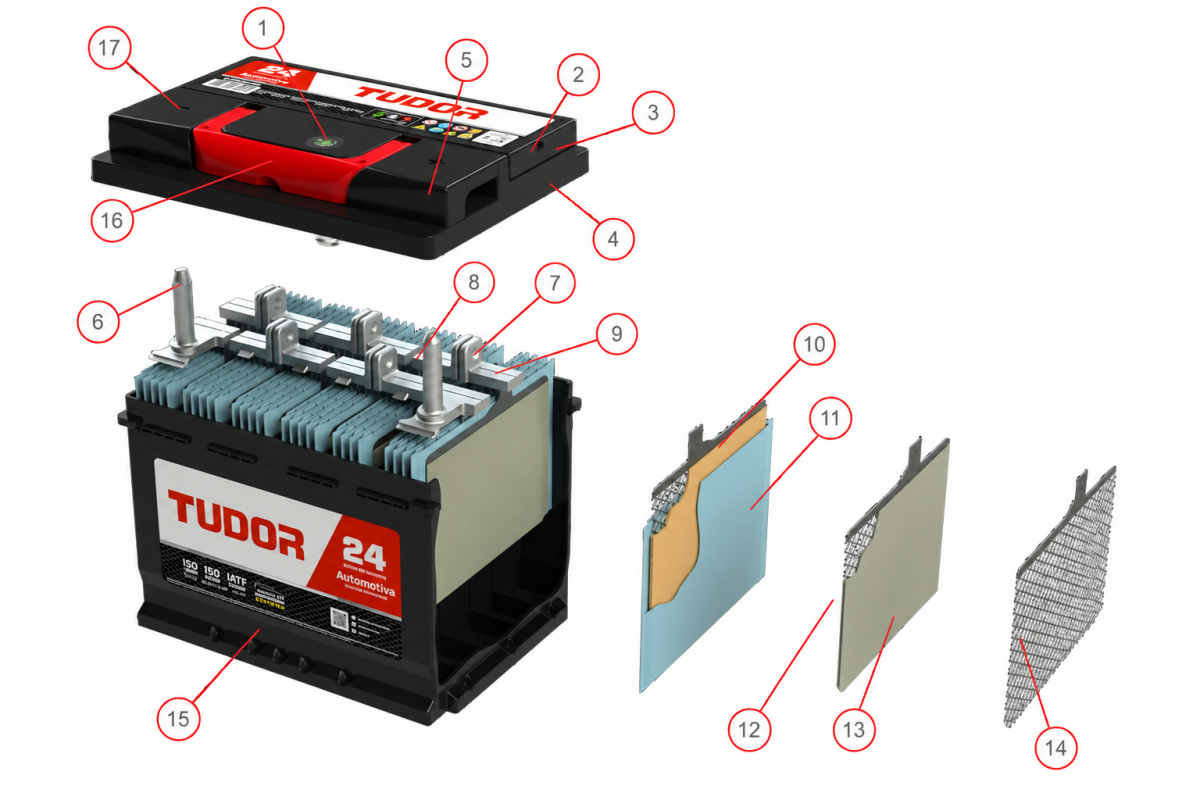
Tudor automotive batteries are produced with laminated and expanded plate technology, which contributes to more uniform distribution of electrical current, lower internal resistance, and consistent performance throughout the useful life.
When correctly applied and used in conjunction with a charging system in good condition, they help provide greater reliability for the vehicle's electrical operation.
Conclusion
Battery and alternator work in an integrated manner and depend on each other to ensure the proper functioning of the electrical system.
While the battery provides energy for starting and powers some systems when the vehicle is turned off, the alternator is responsible for generating energy during engine operation and keeping the battery charged.
Therefore, whenever there is difficulty starting, frequent discharge, or other signs of electrical instability, the most recommended approach is to evaluate the entire charging system.
A correct diagnosis avoids unnecessary expenses, extends the battery's useful life, and contributes to more reliable vehicle operation.
To continue learning about automotive batteries, follow the technical content available on the Tudor blog. For questions about the correct battery application for your vehicle, rely on the guidance of Tudor's technical team.
Frequently asked questions
Can a faulty alternator discharge the battery?
Yes. When the alternator does not generate enough energy, the battery begins to power the vehicle's electrical systems on its own and discharges quickly.
Can the battery be damaged because of the alternator?
It can. Both undercharging and overcharging caused by failures in the charging system can reduce the battery's useful life.
How to tell if the problem is in the battery or the alternator?
The ideal is to run tests on the charging system. Since the symptoms are similar, simply observing the vehicle's behavior is usually not sufficient to identify the cause of the failure.
Is it worth replacing the battery without testing the alternator?
No. If the alternator is faulty, the new battery may also experience problems in a short time.
Read also

What happens when a car sits unused for a long time?
Not every vehicle is driven long distances every day. Many people own a second car, use their vehicle only on weekends, or leave it unused during extended trips. Although this situation may seem harmless, long periods without use can directly affect the automotive battery. Even with the engine turned off, some vehicle systems continue to consume power, and the battery itself naturally loses charge over time. If this period is prolonged, the risk of discharge, sulfation, and reduced service life increases significantly. Understanding what happens when a car remains unused for a long time helps preserve the battery and avoid surprises when it is time to use the vehicle again.
Continue reading

How temperature influences the useful life of the automotive battery
The automotive battery is constantly exposed to different environmental conditions. In some regions, intense heat predominates for much of the year. In others, lower temperatures become a challenge for the vehicle's electrical system. Although many drivers associate battery problems only with usage time, temperature is one of the factors that most influences its durability and performance. Both excessive heat and intense cold affect the chemical reactions that take place inside the battery, accelerating wear processes and reducing its ability to supply energy.
Continue reading
How Tudor ensures quality and safety for its automotive batteries
In modern vehicles, the battery is no longer just a component responsible for starting the engine. Today, it directly supports the vehicle’s electrical stability, powering electronic modules, multimedia systems, electric steering, sensors, and intelligent energy management systems. This means that any electrical fluctuation can directly affect the vehicle’s operation. For this reason, construction quality, voltage stability, and operational safety have become fundamental factors in the development of an automotive battery. Within this scenario, Tudor works with rigorous industrial processes, advanced technical control, and technologies developed to ensure consistent performance throughout the battery’s service life.
Continue reading