Best battery for high-displacement motorcycles: how to choose the ideal one
High-displacement motorcycles operate under more demanding conditions than smaller models. More powerful engines, higher compression ratios, and the presence of advanced electronic systems make the battery even more critical for ensuring reliable starts and electrical stability.
In these models, choosing a battery cannot be based solely on size or price. Capacity, cold cranking amps (CCA), construction technology, and compatibility with the electrical system are factors that directly influence performance and durability.

Why do high-displacement motorcycles demand more from the battery?
Larger engines require more power at startup. In addition, medium and high-displacement motorcycles often have electronic fuel injection, control modules, digital dashboards, ABS, and other systems that depend on stable voltage.
When the battery cannot supply enough current, ignition difficulties, electronic failures, or loss of performance may occur. This type of problem is more common when the battery is not compatible with the application, so the correct choice is essential, as we explained in the article on how to choose the ideal battery for your motorcycle.
Which battery should you use in a high-displacement motorcycle?
One of the most important factors when choosing a battery for high-displacement motorcycles is the starting current, known as CCA.
Engines with higher compression require more effort from the starter motor, and a battery with low CCA can cause slow starts or ignition failure. Additionally, voltage drops during startup may affect the operation of sensitive electronic modules.
Battery capacity (Ah) must also follow the manufacturer’s recommendation to ensure the electrical system operates reliably.
Is AGM or VRLA technology better for more powerful motorcycles?
High-displacement motorcycles generate more vibration and operate under higher electrical loads. Therefore, batteries with advanced construction offer better performance and longer lifespan.
VRLA batteries feature a sealed system with internal gas recombination, reducing electrolyte loss and increasing safety. AGM technology uses internal mats that hold the plates firmly in place, improving mechanical resistance.
This type of construction is recommended for more powerful motorcycles because it withstands vibration, temperature variations, and intensive use with less internal wear.
To better understand the differences between battery types, it's also worth checking the difference between sealed and conventional motorcycle batteries.
Vibration resistance and electrical stability make a difference
Sport, touring, and high-displacement motorcycles often operate under demanding conditions, with strong acceleration, high RPMs, and increased electrical load.
When a battery does not have a reinforced internal structure, wear can occur more quickly, reducing lifespan and increasing the risk of failure.
In addition, modern motorcycles have multiple electronic systems that depend on stable voltage. When the battery fails to maintain this stability, intermittent faults, starting difficulties, or frequent discharge may occur.
Situations like battery drain can also be linked to irregular use, as we showed in the article about why motorcycles run out of battery at night.
Battery compatibility with the electrical system is essential
The motorcycle’s charging system is designed to work with a specific battery. Using a model outside the recommended specifications may overload the regulator, stator, or other components.
Therefore, beyond battery quality, it is essential to choose the correct model for each application.
This ensures greater durability and prevents electrical system issues, especially in more powerful motorcycles where demands are higher.
Why are Tudor batteries recommended for high-displacement motorcycles?
Batteries developed for demanding applications feature reinforced construction, strict quality control, and technologies that ensure greater electrical stability.
The Tudor motorcycle battery line uses sealed technology, vibration-resistant construction, and specifications compatible with various models, including mid- and high-displacement motorcycles.
This application-driven development allows the battery to deliver the necessary current at startup and maintain stable operation even under more severe conditions, as we also explained in the article about Tudor batteries for motorcycles: the engineering behind high performance.
Conclusion
In summary, high-displacement motorcycles demand more from their batteries. Therefore, the selection should consider starting current, capacity, construction technology, and compatibility with the electrical system.
Batteries designed for this type of application offer greater durability, better performance, and more reliability in motorcycle operation.
If in doubt, consult Tudor’s specialized technical team to choose the most suitable model.
Read also

Ideal motorcycle battery for Honda NXR Bros: how to choose correctly from 125 to 160 cc
The Honda NXR Bros is one of the most versatile motorcycles in the Brazilian market. Designed for mixed use, it can easily handle both urban environments and dirt roads or uneven routes. This characteristic causes the Bros battery to work under more severe conditions than motorcycles used exclusively in urban environments. In addition to frequent starts from daily use, the motorcycle also faces constant vibration, impacts, dust, heat, and shaking on uneven terrain. That is why choosing the correct battery for the NXR Bros goes far beyond amperage. The application needs to ensure electrical stability, vibration resistance, and starting reliability under different usage conditions. In this scenario, Tudor AGM batteries with a VRLA system were developed precisely to withstand this type of demand.
Continue reading
Best battery for trail and off-road motorcycles: what really makes a difference
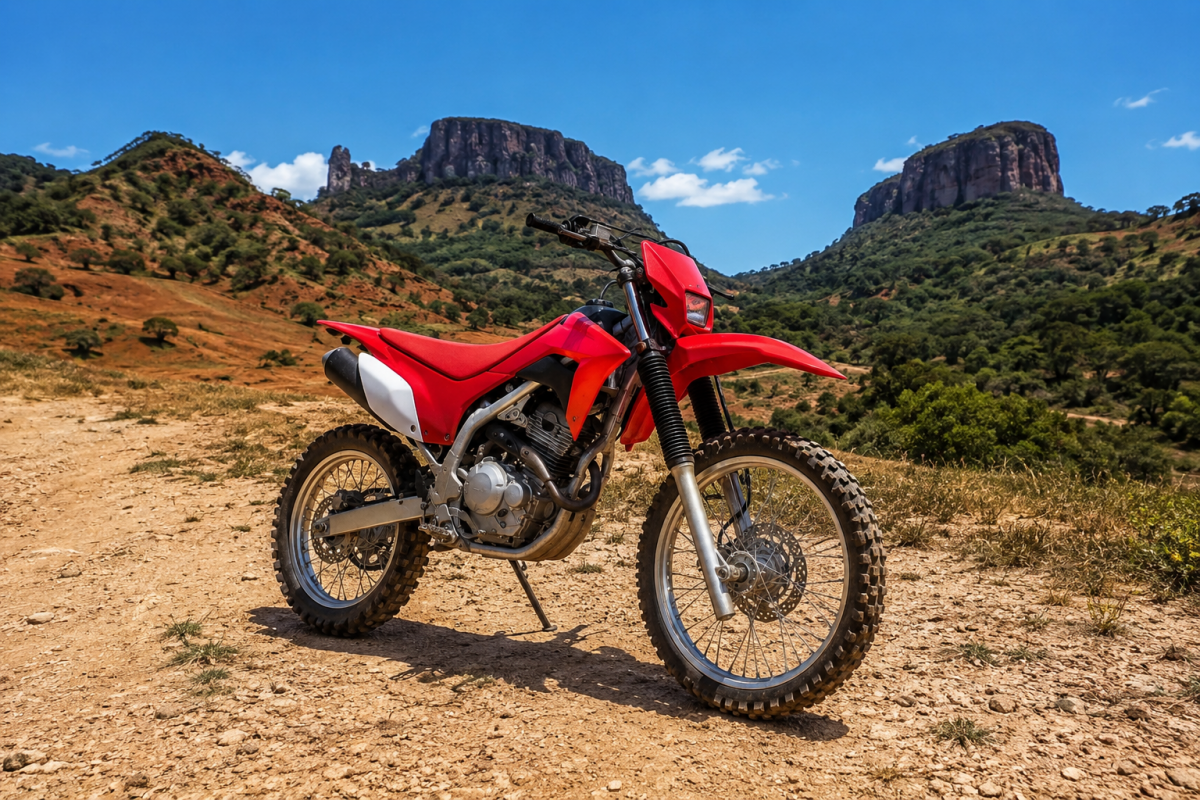
Trail and off-road motorcycles operate under some of the harshest possible conditions for a battery. Intense vibration, constant impacts, mud, dust, heat, and extreme RPM variations make the electrical system work far beyond conventional urban use. In this scenario, the battery is no longer just a component responsible for starting. It begins to play an essential role in the motorcycle’s electrical stability, especially in models with electronic injection, ECU, and onboard electronic systems. That is why choosing the right battery for an off-road motorcycle means seeking structural resistance, electrical stability, and reliability under severe usage conditions. The Tudor motorcycle line uses AGM technology with a VRLA system precisely to withstand this type of extreme application.
Continue reading
Tudor motorcycle line: how to choose the right battery for each usage profile
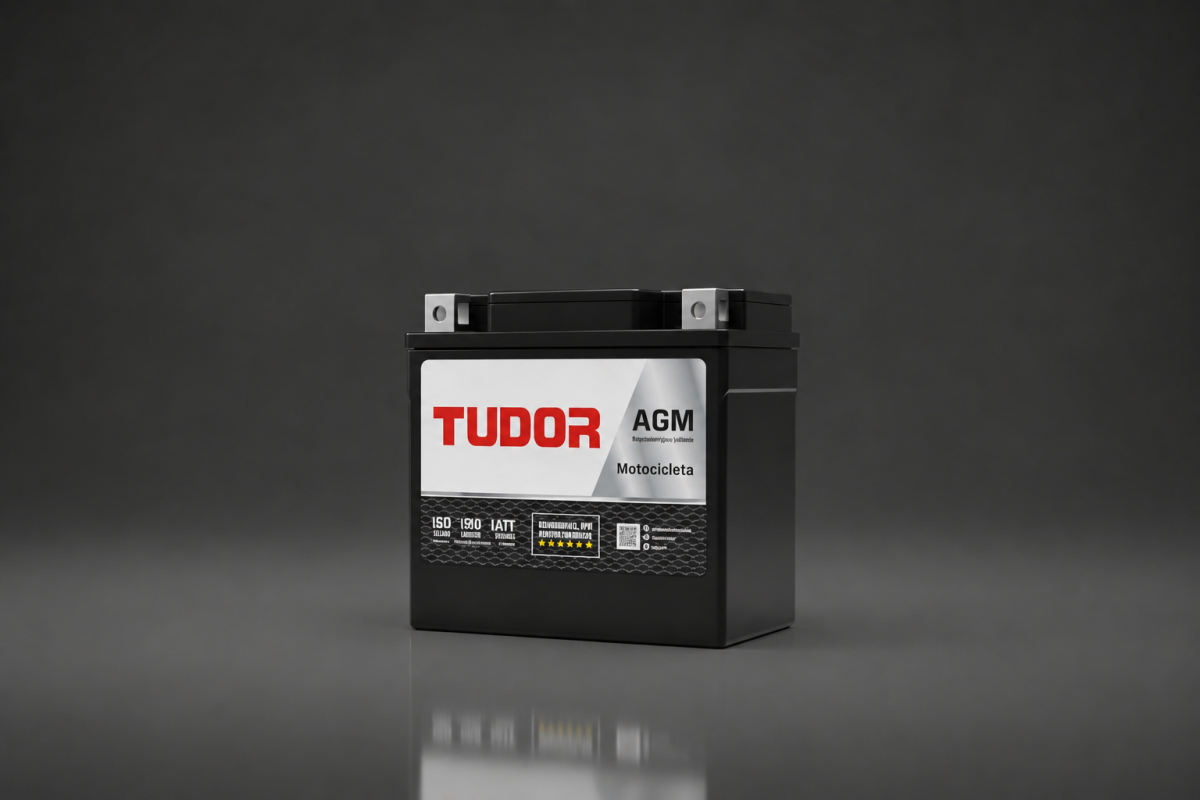
Modern motorcycles demand much more from the battery than just starting power. Today, systems such as electronic injection, digital dashboards, electronic modules, and more sophisticated lighting have made electrical stability an essential factor for the correct operation of the motorcycle. In this scenario, choosing the ideal battery is no longer just a matter of physical fit. The motorcycle’s usage profile, the number of starts, the type of route, and the electrical demand directly influence the battery’s durability and performance. The Tudor motorcycle line was developed precisely to meet different levels of demand, using AGM technology with a VRLA system and specific applications for each motorcycle category.
Continue reading