How to Choose the Ideal Battery for Your Motorcycle: Compatibility Guide
Choosing the ideal battery for your motorcycle requires more than just comparing brands and prices. The right decision depends on compatibility between the battery and the motorcycle model, considering factors such as voltage, capacity, dimensions, terminal position, and application type.
In practice, using an incompatible battery can cause starting difficulties, electrical failures, improper fit, and reduced lifespan. That’s why, to make the right replacement choice, it’s essential to understand which criteria truly matter.
In this guide, you will learn how to determine the correct battery for your motorcycle, what to check during replacement, and which mistakes to avoid to ensure performance, safety, and durability.

How to Know Which Battery Is Compatible with Your Motorcycle?
A compatible battery is one that meets the specifications recommended by the motorcycle manufacturer. This includes correct voltage, adequate capacity, compatible dimensions, and proper terminal positioning.
The safest way to confirm compatibility is by cross-checking three references:
- Motorcycle manual
- Original battery specification
- Reliable application chart
This helps prevent incorrect replacements and reduces the risk of installing a battery that may look similar but is not designed for that application.
What Should Be Analyzed in Battery Compatibility?
Motorcycle battery compatibility involves physical measurements, terminal position, voltage, capacity, and technology.
Even when two batteries appear similar, small differences can compromise performance. That’s why it’s not enough to choose a similar model. You must choose the correct one.
Does Battery Voltage Matter?
Yes. The voltage must be exactly as specified for the motorcycle. In most models, the battery is 12V, but this should always be confirmed in the manual or the original part.
Using a different voltage can compromise the electrical system and cause starting issues.
Does Capacity (Ah) Also Need to Match?
Yes. The battery capacity, indicated in Ah, must meet the motorcycle’s requirements.
If this value is not compatible, the battery may struggle to deliver stable energy, especially during startup. This affects performance and reduces lifespan.
Does Battery Size Matter?
It matters a lot. The battery must fit properly in the motorcycle compartment, without adaptations.
If the dimensions are incorrect, installation may be inadequate, leading to excessive vibration, poor contact, and accelerated wear.
Can Terminal Position Vary?
Ideally, no. The terminal position must match the motorcycle’s configuration.
If the terminals are reversed compared to the original setup, installation may become difficult and even unsafe. This is a simple but critical detail.
Are Sealed and Conventional Motorcycle Batteries the Same?
No. Sealed and conventional motorcycle batteries are not the same, as they differ in construction, maintenance, and application.
The choice between them must follow the motorcycle’s recommendation and usage requirements. Instead of adapting one type to replace another, the safest approach is to follow the correct application.
To better understand this difference, it’s worth checking the content about the difference between sealed and conventional motorcycle batteries.
Can I Use a More Powerful Battery?
Not always. Using a different battery than specified does not necessarily improve performance.
In practice, what matters most is not using a stronger battery, but using the correct battery for that motorcycle model. Compatibility comes before any power comparison.
What Happens If the Battery Is Incorrect?
If the battery is incorrect, the motorcycle may experience weak starting, electrical failures, and difficulty recharging.
There may also be fitting issues, improper cable connections, and reduced battery lifespan. In many cases, the issue is not battery quality, but incorrect application.
How Does Usage Influence the Choice?
Usage matters because each routine places different demands on the battery. Motorcycles used daily require frequent starts and stable electrical performance. On the other hand, motorcycles that remain unused for long periods tend to suffer more from charge loss.
When Should You Replace the Battery?
Replacement should be considered when the motorcycle starts showing difficulty starting, electrical failures, or recurring charge loss. These signs usually indicate battery wear or system inefficiency.
How to Choose the Ideal Battery Without Mistakes?
The safest way is to consult the motorcycle specifications and ensure the chosen battery matches in voltage, capacity, dimensions, terminal position, and technology.
This analysis prevents incorrect replacements and increases the chances of achieving better performance and longer lifespan.
Conclusion
In summary, choosing the ideal battery for your motorcycle is a matter of compatibility. When the correct specifications are followed, the motorcycle gains reliability, performance, and durability.
Before replacing the battery, always check the manufacturer’s recommendations and look for a solution suitable for your motorcycle model. Relying on expert guidance and batteries designed for different applications, such as those from Tudor, makes a difference in ensuring a safer and more efficient choice.
Read also

Ideal motorcycle battery for Honda NXR Bros: how to choose correctly from 125 to 160 cc
The Honda NXR Bros is one of the most versatile motorcycles in the Brazilian market. Designed for mixed use, it can easily handle both urban environments and dirt roads or uneven routes. This characteristic causes the Bros battery to work under more severe conditions than motorcycles used exclusively in urban environments. In addition to frequent starts from daily use, the motorcycle also faces constant vibration, impacts, dust, heat, and shaking on uneven terrain. That is why choosing the correct battery for the NXR Bros goes far beyond amperage. The application needs to ensure electrical stability, vibration resistance, and starting reliability under different usage conditions. In this scenario, Tudor AGM batteries with a VRLA system were developed precisely to withstand this type of demand.
Continue reading
Best battery for trail and off-road motorcycles: what really makes a difference
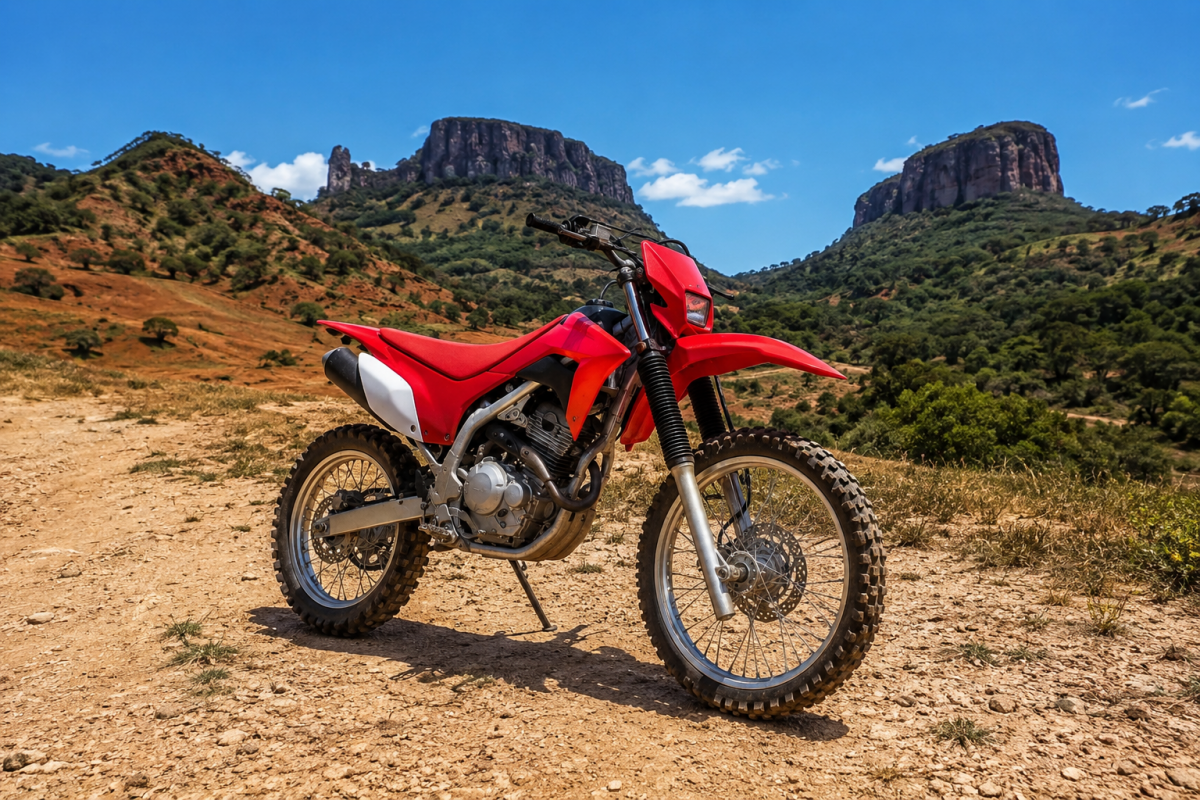
Trail and off-road motorcycles operate under some of the harshest possible conditions for a battery. Intense vibration, constant impacts, mud, dust, heat, and extreme RPM variations make the electrical system work far beyond conventional urban use. In this scenario, the battery is no longer just a component responsible for starting. It begins to play an essential role in the motorcycle’s electrical stability, especially in models with electronic injection, ECU, and onboard electronic systems. That is why choosing the right battery for an off-road motorcycle means seeking structural resistance, electrical stability, and reliability under severe usage conditions. The Tudor motorcycle line uses AGM technology with a VRLA system precisely to withstand this type of extreme application.
Continue reading
Tudor motorcycle line: how to choose the right battery for each usage profile
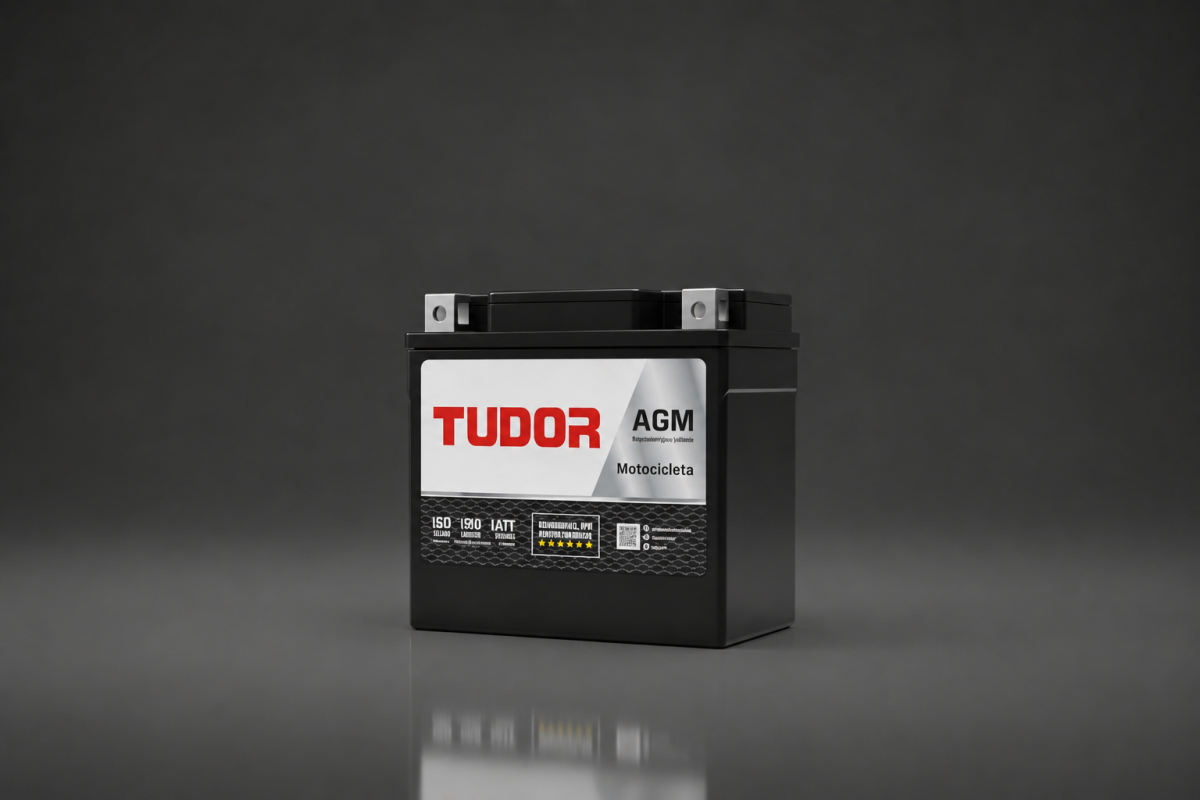
Modern motorcycles demand much more from the battery than just starting power. Today, systems such as electronic injection, digital dashboards, electronic modules, and more sophisticated lighting have made electrical stability an essential factor for the correct operation of the motorcycle. In this scenario, choosing the ideal battery is no longer just a matter of physical fit. The motorcycle’s usage profile, the number of starts, the type of route, and the electrical demand directly influence the battery’s durability and performance. The Tudor motorcycle line was developed precisely to meet different levels of demand, using AGM technology with a VRLA system and specific applications for each motorcycle category.
Continue reading