Boat Battery: How Long It Lasts and How to Preserve It
A boat battery lasts, on average, 2 to 4 years - and where it falls within that range depends directly on care: recharging after every use, storing it fully charged during breaks, protecting the terminals, and following the inspection routine the marine environment demands.
A boat puts the battery through a complete severe-duty regime: hull vibration and impact, humidity and salt spray, growing onboard consumption - and the typical Brazilian calendar of concentrated use followed by weeks between outings.
This article shows what consumes a boat battery’s service life and the practices that take it to the top end of the range - season after season.
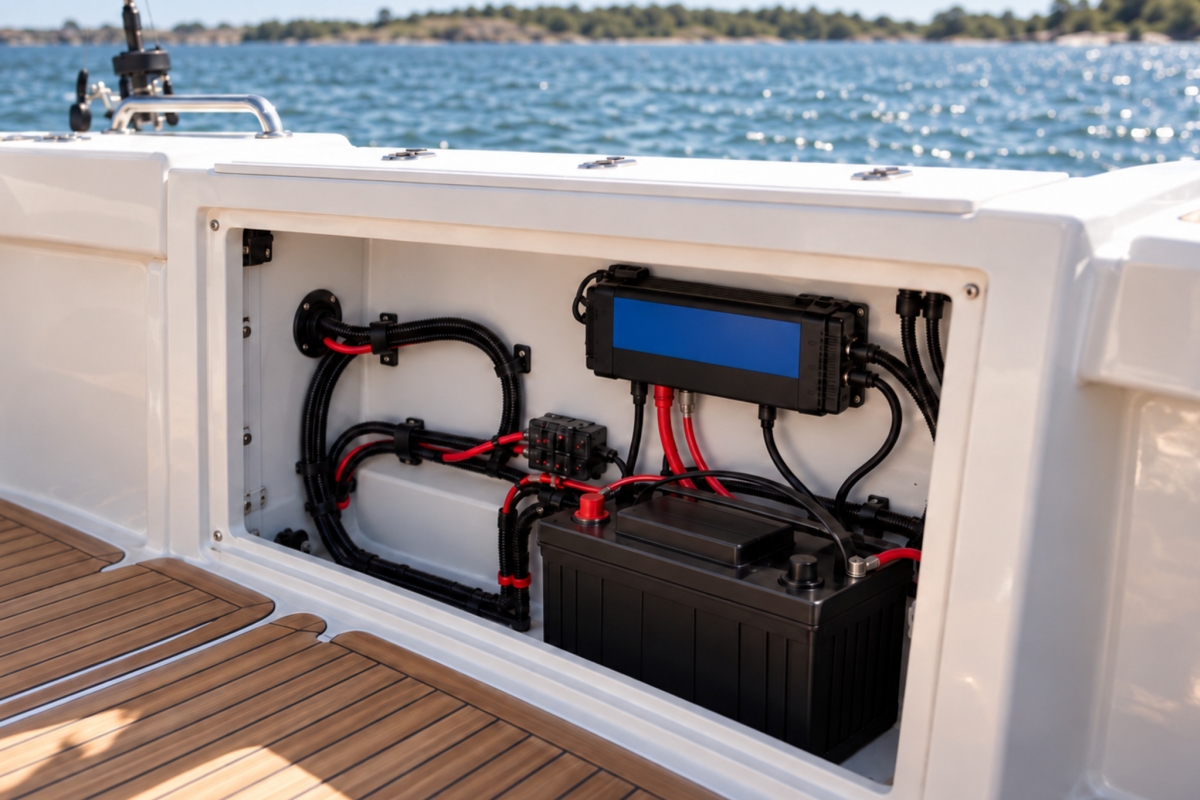
How long does a boat battery last?
With correct use and care, the range is 2 to 4 years. What shortens it: storing the battery discharged (the shortcut to sulfation), long pauses without maintenance charging, loose mounting taking repeated vibration, terminals corroded by salt spray, and onboard consumption draining more than the engine run time replenishes. What extends it: the simple routine in this guide - and choosing the right marine construction from the start.
Why is a boat so demanding on the battery?
Because it combines every punishment: the hull transmits impact and vibration with every wave; the environment adds moisture, salt, and heat; and modern use adds audio, sonar, lighting, and electronics consuming power for hours - often with the engine off. It is the complete severe-duty package described in the definitive marine battery guide; the overview by vessel type is in batteries for boats, speedboats, and yachts.
What battery does a boat use?
Boats use 12V dual-purpose marine batteries - starting and service in the same case - with capacity based on vessel size and equipment: from mid-range capacities (90Ah to 105Ah) in equipped leisure boats to larger capacities in service banks. The double rule is: follow the engine manufacturer’s specification for starting, and calculate onboard consumption for service.
Habits that take the battery to the top of the range
- Recharge after every use - never store the boat with the battery half charged.
- For long pauses, use a maintenance charger or perform full monthly recharges.
- Keep terminals clean, tight, and protected: salt spray works every day.
- Mount the battery absolutely firmly in the compartment - looseness turns into a vibration hammer.
- For off-season storage, follow the complete storage procedure.
- The full best practices are in the marine battery durability tips.
The Brazilian calendar: concentrated use, long pauses
A typical boat lives in two rhythms: the summer marathon - weekly outings, accessories running all day - and the quieter weeks during the rest of the year. Each rhythm requires its own care: at peak use, recharging after every outing sustains the sequence; during pauses, a maintenance charger (or monthly full recharge) prevents waiting from becoming deep discharge. The battery that handles both rhythms well is the one that reaches its fourth season.
Signs that the boat battery is reaching the end
Progressively sluggish starting, electronics restarting with the engine off, audio losing strength too soon, and recharges that do not hold - the confirmation steps are in how to tell if a marine battery is weak. If the symptoms persist after a full recharge, the battery has served its seasons: a scheduled replacement at the dock always costs less than a tow in the middle of the water.
How does Tudor extend the seasons?
The Tudor Marine line is built for the real calendar of Brazilian boating: sealed construction with corrosion-resistant grids for salt spray, reinforced structure against impact and vibration, low self-discharge for the weeks between outings, and a charge indicator for every visit - with a 15-month warranty, the longest in the category.
Conclusion
Two to four years: a boat battery lasts as long as the routine allows. Timely recharging, protected terminals, and fully charged storage are the minutes of care that separate a battery that retires in the second season from one that starts on the first turn through the fourth.
To choose a battery that matches your boating calendar, see how to choose the ideal marine battery and talk to a Tudor specialist.
Frequently Asked Questions
How long does a boat battery last?
On average, 2 to 4 years - with care determining which end of the range you reach: recharge after use, store fully charged, and protect the terminals to maximize life.
What damages a boat battery the most?
Storing it discharged (sulfation), long pauses without maintenance charging, loose mounting under vibration, and terminal corrosion from salt spray.
What battery does a boat use?
A 12V dual-purpose marine battery, with capacity based on vessel size and equipment - typically 90Ah to 105Ah in equipped boats, and more in service banks.
Do I need to recharge the boat battery after every use?
Yes: immediate recharging is the number-one habit - returning the battery to storage fully charged prevents sulfation and preserves its seasons.
Does a boat drain the battery while parked?
Yes: self-discharge plus onboard loads continue during idle weeks. A maintenance charger or full monthly recharges solve the problem.
When should a boat battery be replaced?
When sluggish starting and recharges that will not hold persist after a full charge - scheduled replacement at the dock beats a tow on the water
Read also
How to Install a Marine Battery Correctly and Avoid Electrical Failures on the Boat
Installing a marine battery correctly requires four precautions: a ventilated and protected compartment, absolutely secure mounting against hull vibration, connections made in the safe sequence with salt-spray protection, and charging-system validation before sailing. On a boat, a poor installation wastes no time showing itself: vibration turns looseness into a hammer against the plates, and salt spray turns an unprotected terminal into a poor connection - the two leading causes of electrical failure onboard. This guide covers the complete procedure, from location to validation, including two-battery systems.
Continue reading
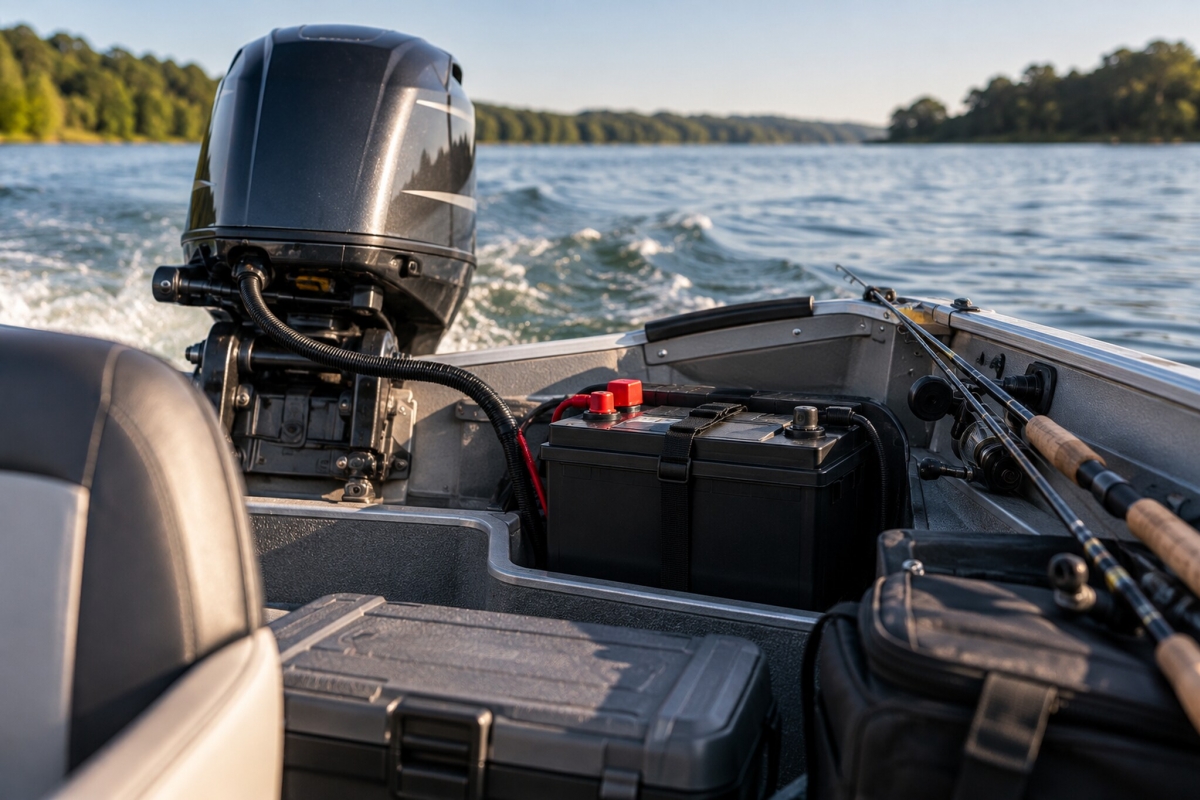
Which Battery for an Aluminum Boat (Voadeira): Guide by Size and Use
The right battery for an aluminum boat — the popular voadeira — is a compact 12V marine battery, typically ranging from 60Ah to 75Ah, defined by the outboard motor manufacturer’s specifications: electric starting determines the minimum current, while the fish finder and fishing accessories add to the service load. The voadeira is one of the most common types of boats in Brazil: from the rivers of the Amazon to the reservoirs of the Southeast, it is the fisherman’s boat — simple, lightweight, and transported on a trailer. And it is precisely this demanding routine that defines the battery it needs. This guide organizes the choice by boat size and use, explains the numbers that matter, and covers the care required in the harshest marine environment.
Continue reading
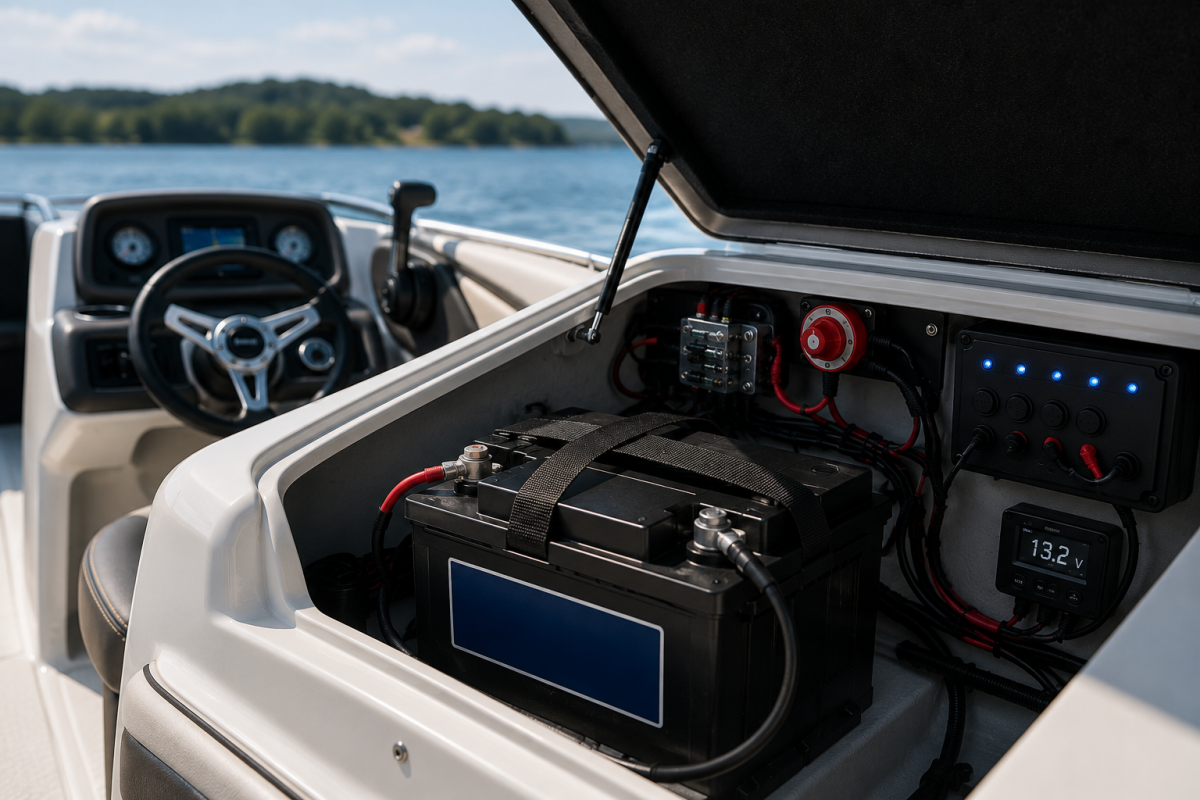
What is a deep-cycle marine battery and when is it recommended?
Not every marine battery performs the same function. While some are designed to deliver a high current when starting the engine, others are designed to power electrical equipment for long periods, whether the vessel is underway or anchored. This is where the deep-cycle battery stands out. Its construction was developed to withstand successive discharge and recharge cycles, providing continuous energy for systems that require autonomy during navigation. In this article, you will understand what characterizes a deep-cycle marine battery, when it is recommended, and why choosing the correct application makes all the difference to vessel performance.
Continue reading