How to Install a Marine Battery Correctly and Avoid Electrical Failures on the Boat
Installing a marine battery correctly requires four precautions: a ventilated and protected compartment, absolutely secure mounting against hull vibration, connections made in the safe sequence with salt-spray protection, and charging-system validation before sailing.
On a boat, a poor installation wastes no time showing itself: vibration turns looseness into a hammer against the plates, and salt spray turns an unprotected terminal into a poor connection - the two leading causes of electrical failure onboard.
This guide covers the complete procedure, from location to validation, including two-battery systems.

Where should the battery be installed on the boat?
The ideal compartment is ventilated, protected from direct spray and sunlight, away from fuel and spark sources, and accessible for inspection - a hidden battery is a forgotten battery. The base should be firm, level, and drained so the battery never sits in accumulated water.
Vessel size and layout determine the options - the fundamentals by vessel type are in the guide to batteries for boats, speedboats, and yachts.
Mounting: the number-one rule of marine installation
If marine installation had only one rule, it would be this: the battery must not move - no looseness, not even a finger’s width. Use a proper tray or battery box with secure straps: constant hull vibration is relentless on loose mounting, silently damaging the internal plates on every outing.
Connection steps
- Switch off all equipment and the master switch before starting.
- Position and secure the battery before connecting any cable.
- Connect the positive cable first, then the negative cable (for removal, reverse the order: negative first).
- Apply the correct terminal torque - loose connections heat up and fail; excessive torque damages the post.
- Protect the terminals with suitable grease against salt spray.
- Organize and secure the cables: loose wiring also suffers from vibration.
Two-battery systems: starting + service
Vessels with many accessories use a dual-battery arrangement: one dedicated to engine starting and another to onboard service (audio, GPS, sonar, refrigerator), usually with a selector switch. The service battery works in deep cycle duty - discharging for hours while powering equipment - and the installation must keep the circuits organized and identified so onboard consumption never compromises engine starting.
Validation: before the first outing
With everything connected, start the engine and measure charging voltage: the system should recharge the battery within the specified range. Test onboard equipment, check for heating at the terminals after a few minutes, and repeat the mounting inspection. From then on, the care routine takes over - the complete practices are in the marine battery durability tips.
Installed it correctly? The season benefits from the routine
A correct installation is maintained with quick inspections: mounting and terminals at every outing, rinsing the compartment after saltwater use, and a load test at the start of the season. At the first sign of sluggish starting, confirm the diagnosis before sailing - the steps are in how to tell if a marine battery is weak.
Installation mistakes that cause electrical failures
- Loose mounting - the number-one mistake, and the quietest one.
- Unprotected terminals: salt spray corrodes them and the poor connection appears at the worst possible moment.
- A compartment with no ventilation or with standing water.
- Undersized cables or cables left unsecured along their route.
- A battery with the wrong specification for the vessel - the correct foundation is in what is a marine battery and, for compact specifications, the guide to the battery for an aluminum boat.
- Skipping charging-system validation before sailing.
How does Tudor make correct installation easier?
The Tudor Marine line is built for this environment: reinforced structure against impact and vibration, grids with high resistance to salt-spray corrosion, ergonomic handles for working inside the compartment, and maintenance-free batteries with a charge indicator - backed by a 15-month warranty, the longest in the category. Before purchase, the technical team confirms the specification for your vessel via WhatsApp.
Conclusion
A well-installed marine battery is insurance against electrical failure: firm mounting, protected terminals, organized circuits, and a validated charging system. One hour of care at the dock is worth an entire season without surprises on the water.
To install the right battery from the start, see which Tudor Marine battery is ideal for your vessel and talk to a specialist.
Frequently Asked Questions
What is the cable connection order when installing a marine battery?
Positive first, negative last - with equipment and the master switch off. For removal, reverse the order: negative first.
How do I protect a marine battery from salt spray?
Use suitable protective grease on the terminals, keep the compartment ventilated and protected from spray, and inspect the contacts periodically for corrosion.
Does a boat battery need its own battery box?
It is highly recommended: a box or tray with straps provides the secure mounting required against hull vibration and protects against spray.
What is a dual-battery system on a boat?
One battery is dedicated to starting and the other to onboard service, usually with a selector switch - so equipment consumption never compromises engine starting.
Why does a boat have electrical failures after a battery replacement?
The most common causes are installation-related: loose mounting, terminals without proper torque or protection, loose cables, and a charging system that was not validated after the work.
How often should I inspect the boat’s battery installation?
Perform a quick mounting and terminal inspection at every outing, and a full check - including a load test - at the start of each season or after long idle periods.
Read also
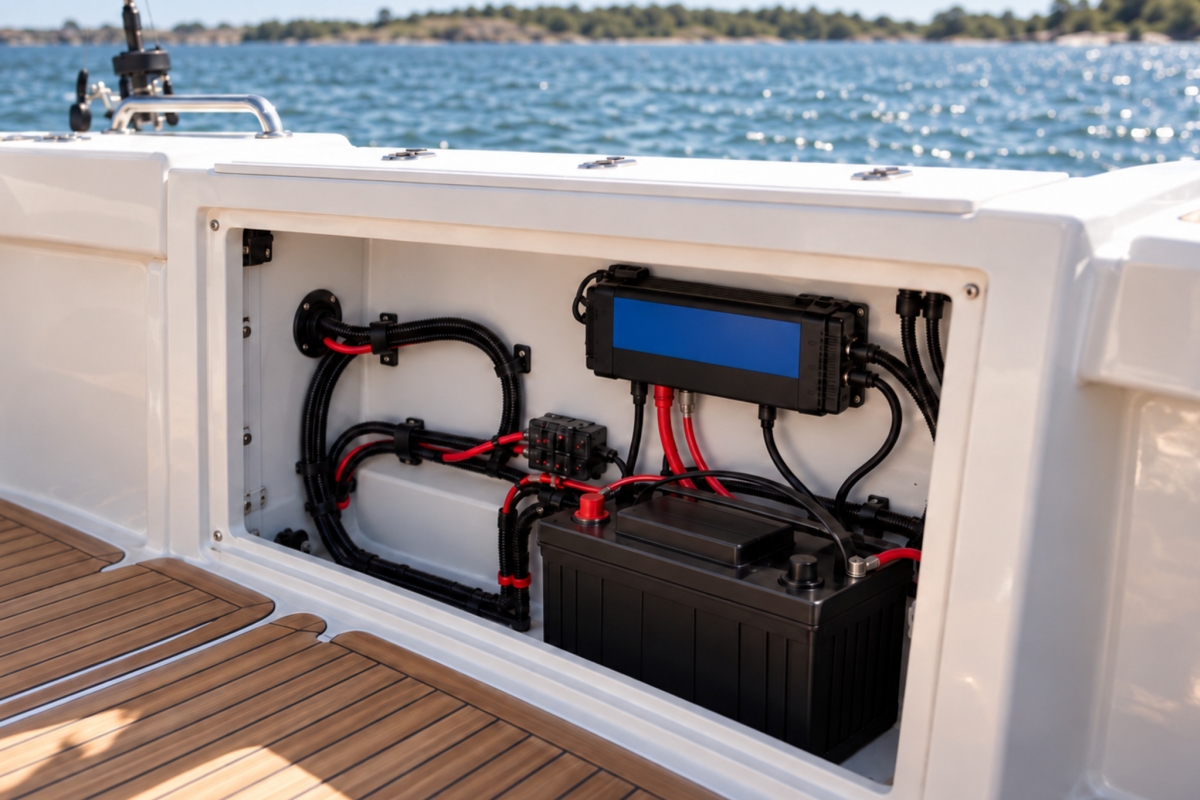
Boat Battery: How Long It Lasts and How to Preserve It
A boat battery lasts, on average, 2 to 4 years - and where it falls within that range depends directly on care: recharging after every use, storing it fully charged during breaks, protecting the terminals, and following the inspection routine the marine environment demands. A boat puts the battery through a complete severe-duty regime: hull vibration and impact, humidity and salt spray, growing onboard consumption - and the typical Brazilian calendar of concentrated use followed by weeks between outings. This article shows what consumes a boat battery’s service life and the practices that take it to the top end of the range - season after season.
Continue reading
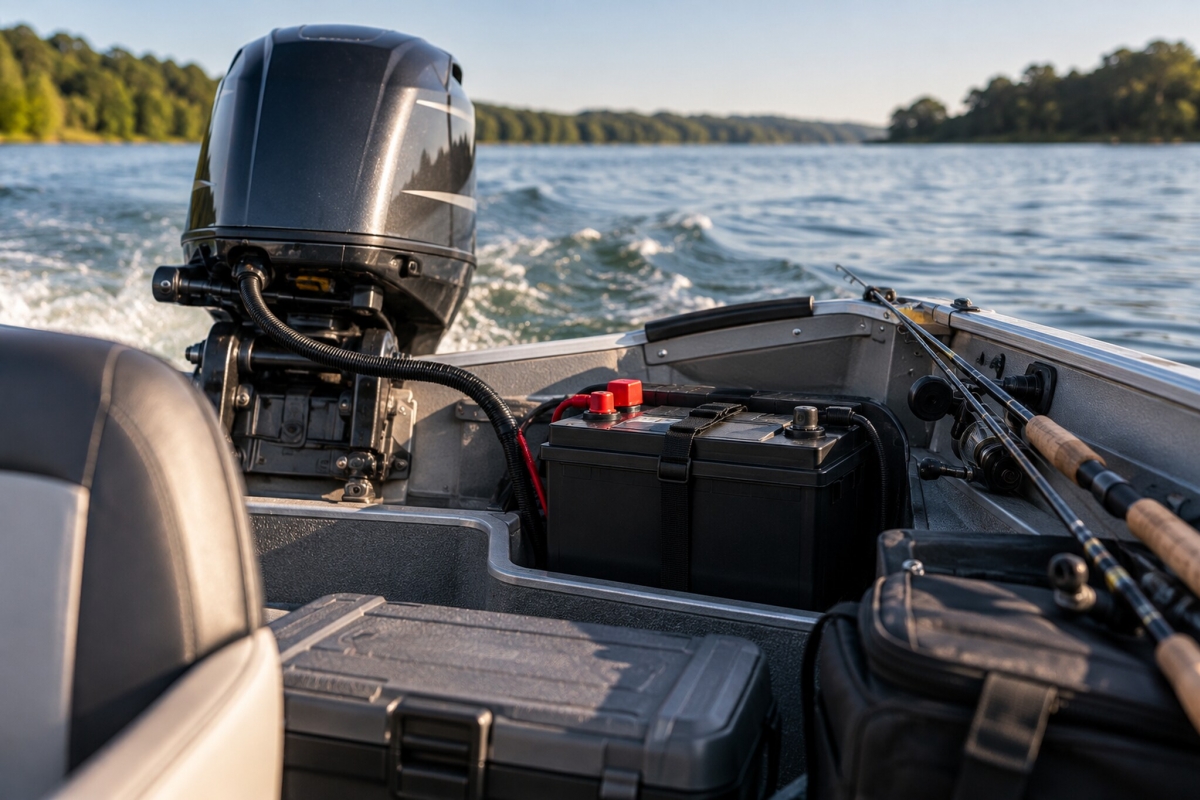
Which Battery for an Aluminum Boat (Voadeira): Guide by Size and Use
The right battery for an aluminum boat — the popular voadeira — is a compact 12V marine battery, typically ranging from 60Ah to 75Ah, defined by the outboard motor manufacturer’s specifications: electric starting determines the minimum current, while the fish finder and fishing accessories add to the service load. The voadeira is one of the most common types of boats in Brazil: from the rivers of the Amazon to the reservoirs of the Southeast, it is the fisherman’s boat — simple, lightweight, and transported on a trailer. And it is precisely this demanding routine that defines the battery it needs. This guide organizes the choice by boat size and use, explains the numbers that matter, and covers the care required in the harshest marine environment.
Continue reading
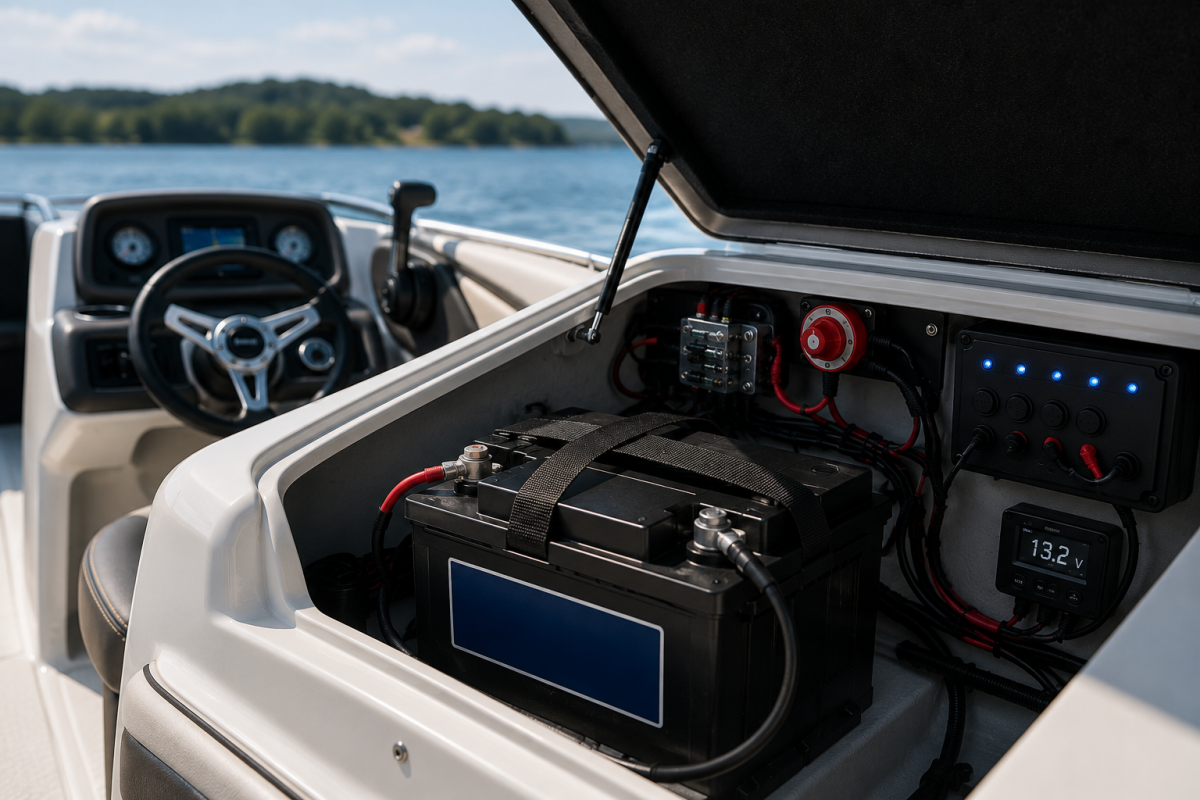
What is a deep-cycle marine battery and when is it recommended?
Not every marine battery performs the same function. While some are designed to deliver a high current when starting the engine, others are designed to power electrical equipment for long periods, whether the vessel is underway or anchored. This is where the deep-cycle battery stands out. Its construction was developed to withstand successive discharge and recharge cycles, providing continuous energy for systems that require autonomy during navigation. In this article, you will understand what characterizes a deep-cycle marine battery, when it is recommended, and why choosing the correct application makes all the difference to vessel performance.
Continue reading