Signs of a Weak Battery: 5 Symptoms That Indicate It’s Time to Replace It
Identifying the signs of a weak battery helps prevent your car from suddenly stopping. The battery usually gives warnings before it completely fails, and understanding these symptoms helps you take action at the right time. Below are the 5 main signs that your battery is weak, explained in a simple and practical way.
1. Slow engine start
If the car takes longer than normal to start, this is one of the clearest signs of a weak battery.
The start feels heavier because the battery is not supplying enough power to the starter motor.
Common signs:
- Longer cranking sound
- Repeated attempts to start
- The car almost starts but fails
2. Dim or flickering headlights
Headlights losing brightness, especially at night or at idle, indicate a voltage drop in the battery.
The lights flicker because the battery is delivering less power than needed.
You may notice:
- Yellowish headlights
- Dimming when turning on the air conditioning
- Interior lights flickering
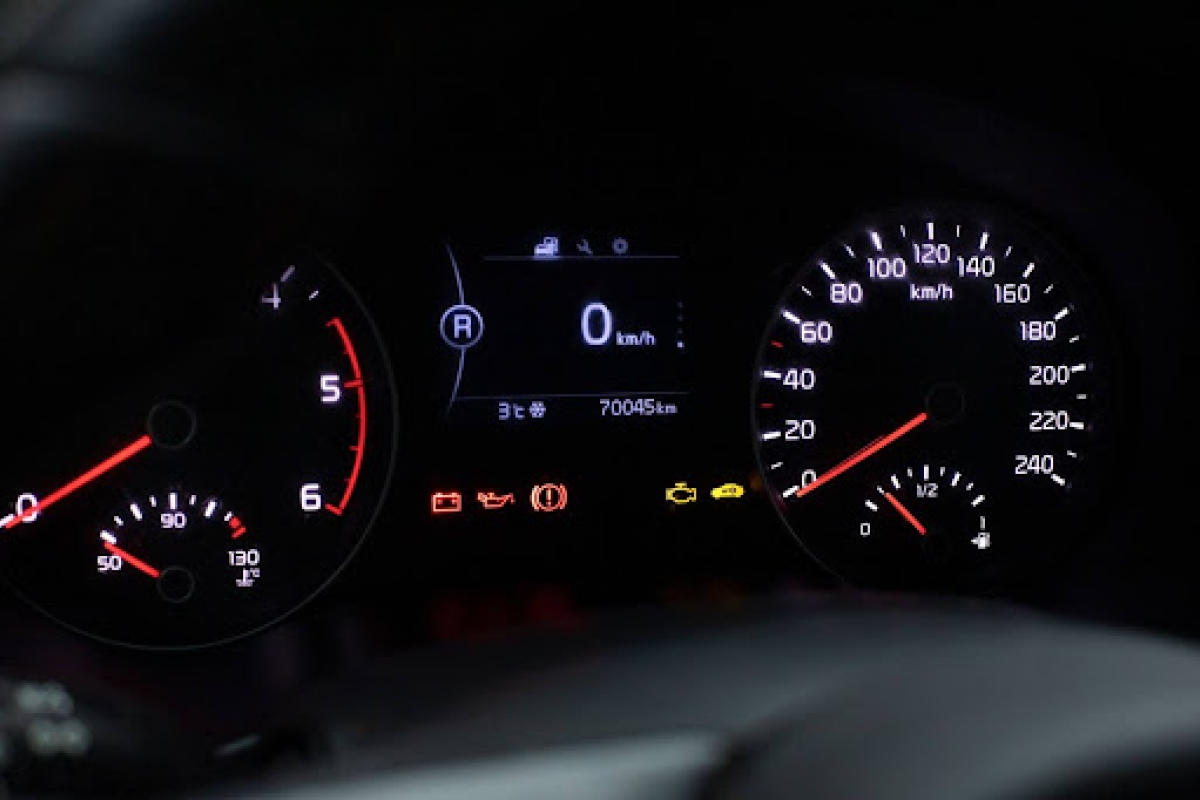
3. Dashboard flickering or resetting
A dashboard that turns off, flickers, or resets when starting the car is a classic sign of a weak battery. The vehicle’s electronic modules are sensitive to voltage drops.
Common situations:
- Clock resetting
- Gauges restarting
- Warning lights flickering
4. Infotainment system turning off or restarting
Multimedia systems are usually the first to feel power fluctuations.
If the system turns on and off by itself, restarts, or loses settings, the battery may be losing charge.
This is one of the signs that most confuses drivers, as it may seem like a device problem, but it is often just low voltage.
5. Engine stalling at idle
If the car stalls while stopped, especially with headlights and air conditioning on, it may be a weak battery.
When voltage drops too much, the engine loses stability.
Common situations:
- Car stalls at traffic lights
- RPM drops when using accessories
- Engine fluctuation at low speed
How to confirm if the battery is weak?
The most reliable way to confirm a weak battery is by performing a voltage test or a load test with proper equipment.
The most common tests are:
- Resting voltage measurement (below 12.4V indicates loss of charge)
- Load test: simulates effort and reveals internal failures
- Charging system test: checks if the alternator is charging properly
- Visual inspection: terminals, corrosion, and leaks
These tests help differentiate a truly weak battery from electrical system problems.
In summary, the most frequent signs are:
- Slow engine start
- Dim or flickering headlights
- Dashboard resetting
- Infotainment system turning off
- Engine stalling at idle
Identifying these symptoms and performing basic tests helps avoid unexpected failures and makes proper diagnosis easier.
On the Tudor blog, you can find other technical content that deepens your understanding of automotive batteries and how the car’s electrical system works. One of the most common topics is related to the causes that make a battery lose charge earlier than expected, covered in this article about why the battery discharges quickly.
Read also

What happens when a car sits unused for a long time?
Not every vehicle is driven long distances every day. Many people own a second car, use their vehicle only on weekends, or leave it unused during extended trips. Although this situation may seem harmless, long periods without use can directly affect the automotive battery. Even with the engine turned off, some vehicle systems continue to consume power, and the battery itself naturally loses charge over time. If this period is prolonged, the risk of discharge, sulfation, and reduced service life increases significantly. Understanding what happens when a car remains unused for a long time helps preserve the battery and avoid surprises when it is time to use the vehicle again.
Continue reading
Automotive battery and alternator: what is the relationship between them?
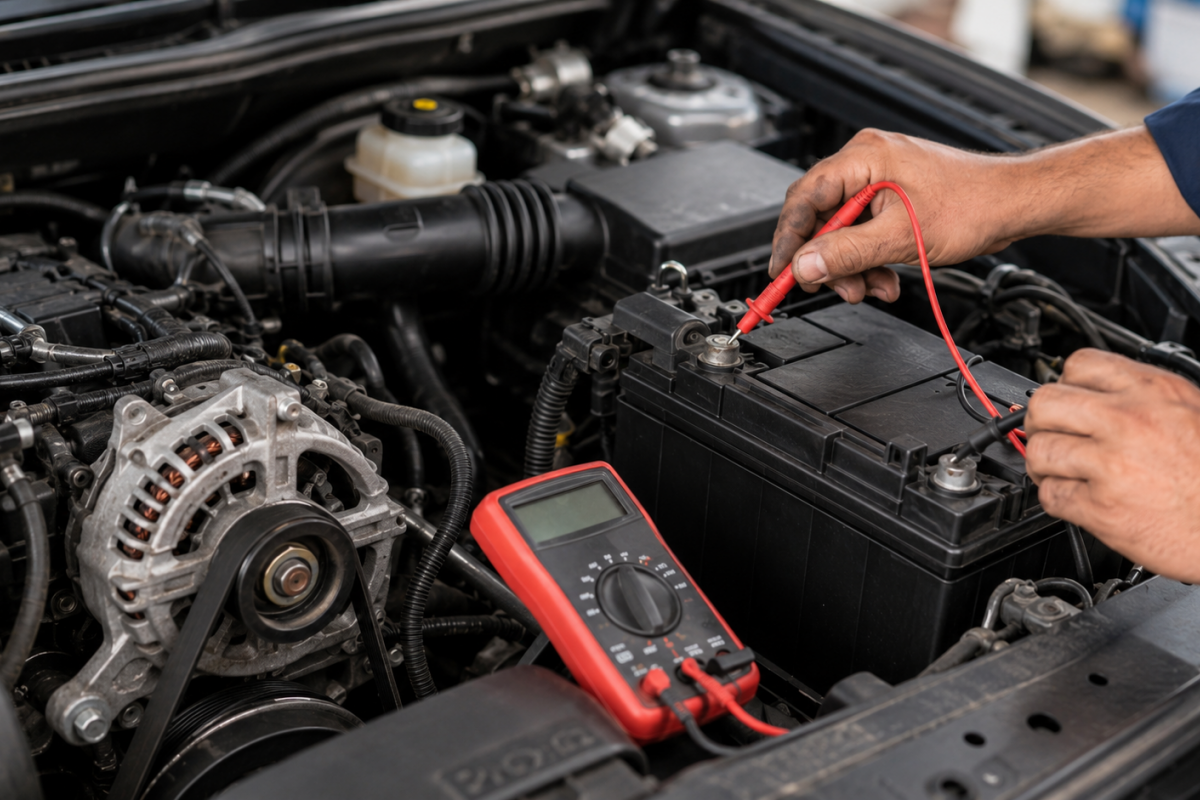
It is common for a driver to experience difficulty starting, find the battery dead, and quickly conclude that it is time to replace it. However, the problem is not always the battery. The battery and the alternator work together to keep the vehicle's electrical system running correctly. When one of these components fails, the other ends up being affected as well, which can generate very similar symptoms and make diagnosis difficult. Therefore, understanding how the battery and alternator work together is essential to identify the source of possible failures and ensure that the electrical system operates safely and efficiently. When the battery needs to be replaced, it is also important to check whether the charging system is operating correctly to preserve the performance of the new component.
Continue reading
How temperature influences the useful life of the automotive battery
The automotive battery is constantly exposed to different environmental conditions. In some regions, intense heat predominates for much of the year. In others, lower temperatures become a challenge for the vehicle's electrical system. Although many drivers associate battery problems only with usage time, temperature is one of the factors that most influences its durability and performance. Both excessive heat and intense cold affect the chemical reactions that take place inside the battery, accelerating wear processes and reducing its ability to supply energy.
Continue reading