Best Battery for a 24V Truck: What to Look for in the Specifications
The best battery for a 24V truck is actually a pair: two identical 12V batteries - same capacity, same CCA, same age - that meet the vehicle manufacturer’s specification, typically in the 150Ah to 220Ah range depending on truck size and operation.
This paired nature changes everything when buying: in a 24V system, there is no such thing as choosing one good battery; you need to choose a good pair and keep it balanced.
This guide organizes the specifications that matter, in the order they should be checked.
What does “battery for 24V” mean?
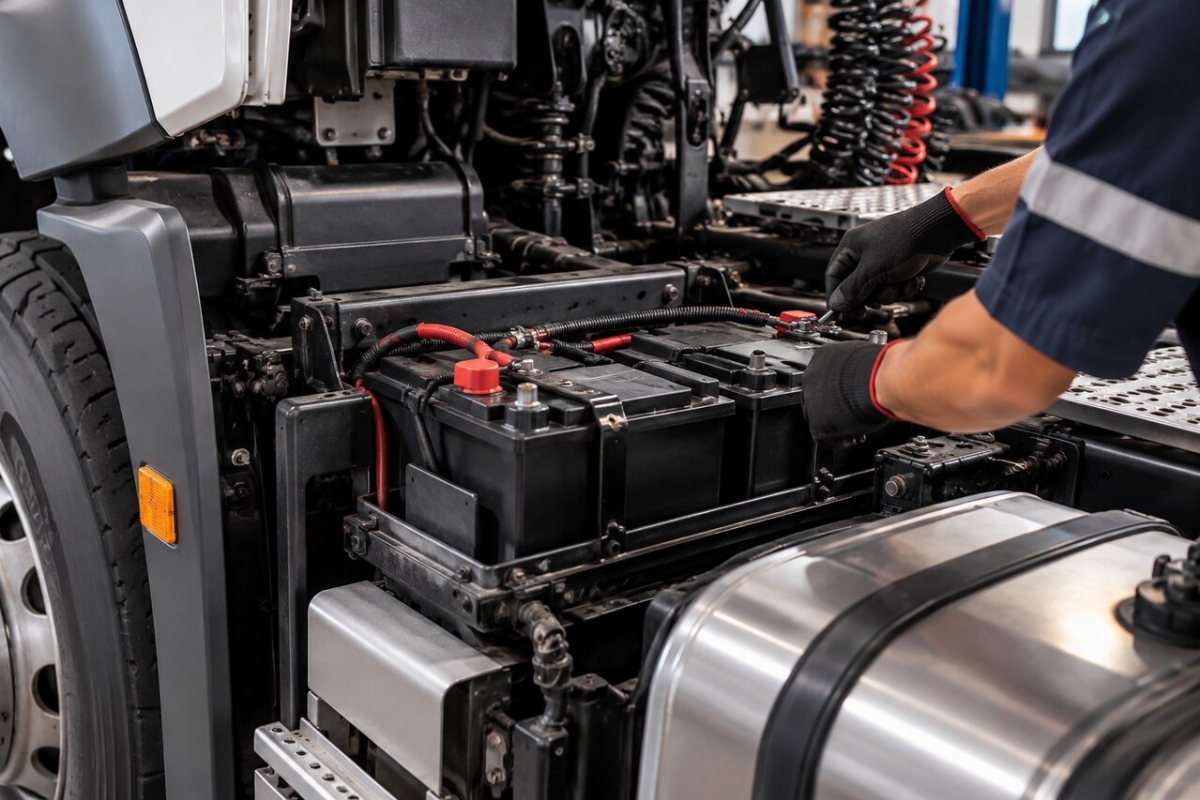
A 24V truck does not use one 24V battery: it uses two 12V batteries connected in series, adding their voltages together. The pair behaves like a single power source - and ages as one. The full architecture is explained in how many batteries does a truck use, and system identification is covered in the guide how to tell if a truck is 12V or 24V.
The specifications that define the choice
- Capacity (Ah): the available energy - from 150Ah to 180Ah in medium and medium-heavy trucks, and 220Ah in heavy long-haul trucks.
- CCA: cold cranking amps, critical for diesel engines - especially on cold mornings and in colder regions, since temperature directly affects starting.
- Polarity and dimensions: the pair must fit the tray and line up with the cables.
- Technology: maintenance-free batteries reduce inspection stops in intensive operation.
- Manufacturing date: recent on both units - preferably from the same batch.
- Origin and warranty: invoice and factory warranty for both batteries.
How these specifications translate to each route profile - urban, mixed, or severe - is explained in the guide to the ideal battery by type of operation.
Balanced pair: the number-one rule of 24V
In a series circuit, the current that passes through one battery passes through the other. If one is weaker - older, lower-capacity, or at a different state of charge - it limits and unbalances the pair: the stronger unit is overworked, the weaker one sags, and both age prematurely.
That is why purchase decisions are always made in pairs: buy both together, install both together, and later replace both together.
What capacity for each 24V operation?
Buying mistakes that cost dearly in a 24V system
- Buying only one battery “to test” - the imbalance starts on day one.
- Mixing different brands or capacities in the pair.
- Accepting units with manufacturing dates that are too far apart.
- Ignoring the specified CCA to save money at purchase.
- Skipping the check of polarity and tray dimensions.
And the right purchase deserves an equally good installation: the complete truck battery replacement checklist covers the safe sequence, torque, and charging-system validation.
24V fleets: standardize the pair, simplify the operation
For fleets, the pair logic becomes policy: defining one battery model per vehicle profile simplifies replacement inventory, eliminates the risk of improvised mixed pairs in a rushed workshop, and allows batch replacements to be scheduled based on real service-life history by route. A standardized pair is the logistics version of a balanced pair.
How does Tudor support 24V systems?
Tudor’s heavy-duty line offers matched pairs from 150Ah to 220Ah, with high CCA for the category, reinforced vibration resistance, and maintenance-free batteries - the full technical overview is in the Complete Guide to Truck Batteries. Via WhatsApp, the technical team confirms the exact pair for your model, year, and operation.
Conclusion
In a 24V system, the best battery is the best pair: the manufacturer’s specification met twice, identical units, and balance maintained from purchase to replacement. Once that is confirmed, starting stops being a concern - on any morning.
To compare capacities and choose the ideal pair, see truck batteries by capacity and talk to a Tudor specialist.
Frequently Asked Questions
Is there a single 24V battery for trucks?
Trucks use two 12V batteries connected in series to make 24V. The correct purchase is always the pair: two units identical in capacity, CCA, and age.
What is the ideal capacity for a 24V truck?
Medium and medium-heavy trucks use pairs from 150Ah to 180Ah; heavy long-haul trucks use 220Ah pairs. The definitive reference is the vehicle manufacturer’s specification.
Can I mix different brands in a 24V pair?
It is not recommended. Differences in construction and condition between the units unbalance the series circuit and accelerate wear on both.
What matters more in a 24V truck: Ah or CCA?
Both: CCA provides the cranking power the diesel engine needs; capacity supports the operation’s electrical consumption. The best battery meets both manufacturer specifications.
When should the batteries in a 24V truck be replaced?
Always as a pair when persistent wear symptoms appear - slow cranking, unequal voltages between the units, or frequent emergency jump-starts.
Should a fleet standardize its 24V batteries?
Yes: one model per vehicle profile simplifies inventory, avoids improvised mixed pairs, and makes it possible to schedule batch replacements based on operating history.
Read also

Signs of a Weak Truck Battery: Symptoms Every Driver Should Know
The main signs of a weak truck battery are slow or heavy cranking, dashboard lights flickering, cab accessories restarting, frequent need for emergency jump-starts and, in 24V systems, unequal behavior between the two batteries in the pair. A battery rarely dies without warning - and in a truck, ignoring the warning is expensive: a roadside breakdown means towing, lost operating time, and missed deadlines. This guide organizes the symptoms by category so you can recognize the pattern and schedule replacement before the breakdown chooses the moment for you.
Continue reading

How Many Batteries Does a Truck Use? Understanding the Most Common Configurations
A truck uses one or two batteries, depending on its electrical system: light-duty vehicles and VUCs operate on 12V with a single battery, while medium-duty, medium-heavy, and heavy-duty trucks use two 12V batteries connected in series, forming a 24V system. The number of batteries is not the driver's choice - it is a design decision made by the manufacturer, based on the engine size and the vehicle's electrical demand. In this article, you'll understand why these two configurations exist, what changes in each one, and why, when used as a pair, the two batteries need to be treated as a single unit.
Continue reading

Checklist for Replacing a Truck Battery Without Mistakes
Replacing a truck battery without mistakes requires three steps: confirming the correct specifications before purchase (capacity, CCA, polarity, and system voltage), performing the replacement in the proper sequence - negative first when removing, positive first when installing - and checking the charging system afterward. It may seem simple, but many of the problems unfairly attributed to a new battery actually begin during the replacement: loose mounting, improperly tightened terminals, an unbalanced pair in a 24V system, and even reversed polarity. This checklist covers the entire process, from purchase checks to the proper disposal of the old battery.
Continue reading