How Many Batteries Does a Truck Use? Understanding the Most Common Configurations
A truck uses one or two batteries, depending on its electrical system: light-duty vehicles and VUCs operate on 12V with a single battery, while medium-duty, medium-heavy, and heavy-duty trucks use two 12V batteries connected in series, forming a 24V system.
The number of batteries is not the driver's choice - it is a design decision made by the manufacturer, based on the engine size and the vehicle's electrical demand.
In this article, you'll understand why these two configurations exist, what changes in each one, and why, when used as a pair, the two batteries need to be treated as a single unit.

Why Do Some Trucks Have Two Batteries?
Larger diesel engines require a great deal of energy to crank during startup. Increasing the system voltage to 24V makes it possible to deliver this power with lower currents, thinner cables, and less electrical loss. The practical way to reach 24V is to connect two 12V batteries in series: the positive terminal of one is connected to the negative terminal of the other, and the voltages are added together.
Engine size also explains the starting power requirement: the larger the displacement, the greater the current required - especially in cold conditions, since temperature directly affects starting performance and battery life for any battery.
What Are the Most Common Configurations?
| Truck Size | System | Typical Configuration |
|---|---|---|
| Light-duty and VUCs | 12V | 1 battery (around 100Ah) |
| Medium-duty and medium-heavy | 24V | 2 12V batteries in series (150Ah to 180Ah) |
| Heavy-duty and long-haul | 24V | 2 12V batteries in series (220Ah) |
To confirm your vehicle's system in just a few minutes - using the owner's manual, the number of batteries, and the dashboard voltmeter - see the quick guide on how to tell whether a truck is 12V or 24V.
Two Batteries, One Single Unit
In a 24V system, the two batteries work together as a single power source. That's why the rule is absolute: same model, same capacity, same age, and same state of charge. A different battery - older, weaker, or with a different capacity - unbalances the series connection and accelerates wear on both batteries.
This is why batteries should always be replaced as a pair. Replacing only one may seem like a way to save money, but it can ultimately lead to two premature replacements.
Signs That the Battery Set Needs Attention
· Slow starting even with relatively new batteries.
· One battery heating up or consuming more than the other.
· Different resting voltages between the two units.
· Increasingly frequent emergency recharges.
· Lights and accessories fluctuating during startup.
The symptoms of the battery set follow the same logic as the signs of a weak battery in any vehicle - with the added factor that, in a pair, a problem with one battery affects the other. And, just as with cars, a complete diagnosis includes the charging system: the battery and alternator work together.
Are There Any Special Configurations?
Yes. Specific equipment and applications - platforms, cranes, refrigerated bodies - may have additional auxiliary batteries dedicated to the equipment and separate from the starting circuit. In these cases, sizing is based on the equipment's power consumption, and the correct specification is detailed in the guide to the ideal battery for each type of operation.
Can a 12V Truck Be Converted to 24V?
No - and this is a common question. Voltage is a design decision made by the manufacturer: the starter motor, lighting, electronic modules, and entire wiring harness are designed for the original voltage. Conversion would require replacing the entire system, with no benefit that would justify the cost and risk.
The correct approach is the opposite: respect the factory architecture and make sure the installed batteries exactly match its specifications - quantity, capacity, CCA, and polarity.
How Does Tudor Serve Each Configuration?
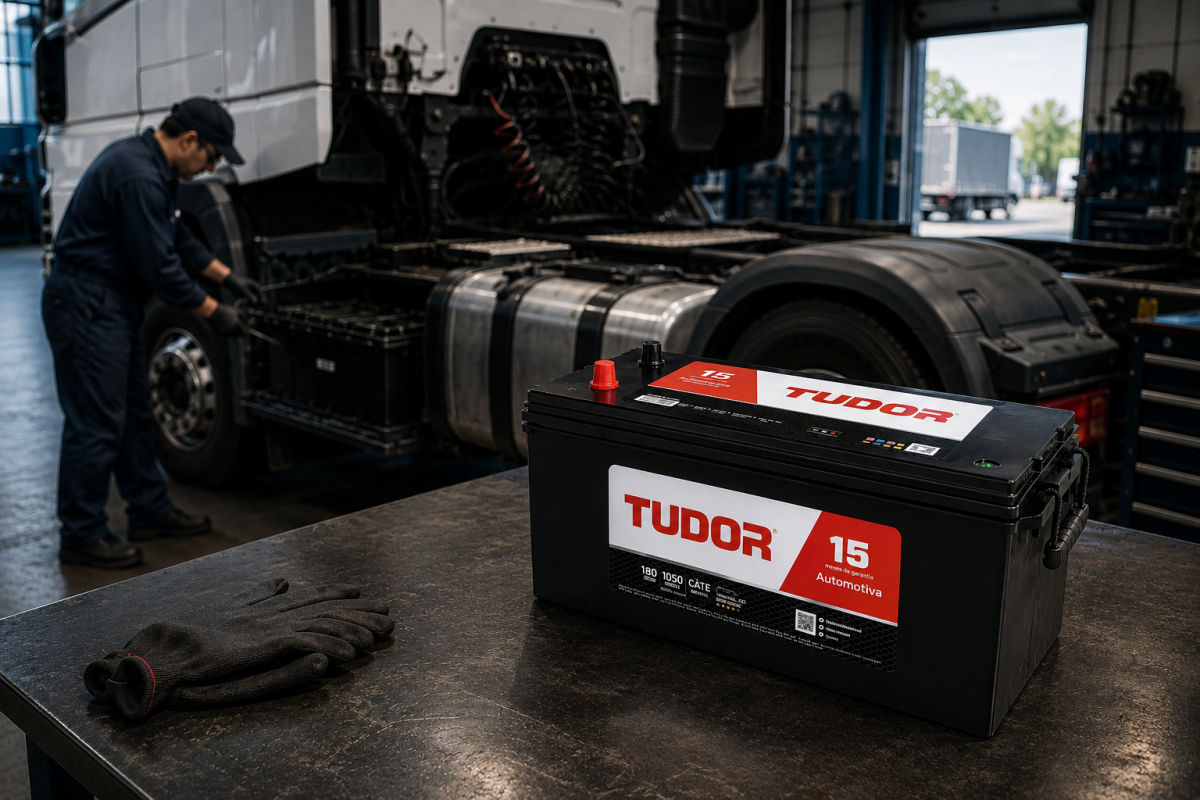
Tudor's heavy-duty line covers both architectures: single batteries of around 100Ah for 12V systems and balanced pairs from 150Ah to 220Ah for 24V systems - always with high CCA, vibration resistance, and maintenance-free operation. The complete overview of the category is available in the Complete Guide to Truck Batteries.
Conclusion
One battery in light-duty vehicles, two in series in medium-duty and heavy-duty trucks: the number follows the electrical system defined by the manufacturer. What is in the driver's hands is treating the pair as a single unit - buying matching batteries, replacing them together, and keeping the connections in good condition.
To find the right configuration for your truck, visit how to choose the right truck battery and speak with a Tudor specialist.
Frequently Asked Questions
How Many Batteries Does a Truck Have?
One in light-duty trucks and VUCs (12V system) and two connected in series in medium-duty, medium-heavy, and heavy-duty trucks (24V system).
Why Does a Heavy-Duty Truck Use Two Batteries?
To form the 24V system: two 12V batteries connected in series add their voltages together, delivering the starting power required by large diesel engines with lower currents.
Do the Two Truck Batteries Need to Be Identical?
Yes: same model, capacity, age, and state of charge. Differences between the units unbalance the series connection and accelerate wear on the set.
Can I Add a Third Battery to the Truck?
Only as an auxiliary battery bank dedicated to equipment or accessories, separate from the starting circuit and sized according to power consumption - never by altering the original system configuration.
Does a Pickup Truck Use One or Two Batteries?
Pickup trucks and light utility vehicles use one battery in a 12V system. Two batteries are used in larger trucks with 24V systems.
Can I Connect 12V Accessories to a 24V Truck?
Only with a suitable voltage converter. Connecting 12V accessories directly to a 24V system will damage the equipment - and improvised connections to just one battery in the pair will unbalance the system.
Read also

Checklist for Replacing a Truck Battery Without Mistakes
Replacing a truck battery without mistakes requires three steps: confirming the correct specifications before purchase (capacity, CCA, polarity, and system voltage), performing the replacement in the proper sequence - negative first when removing, positive first when installing - and checking the charging system afterward. It may seem simple, but many of the problems unfairly attributed to a new battery actually begin during the replacement: loose mounting, improperly tightened terminals, an unbalanced pair in a 24V system, and even reversed polarity. This checklist covers the entire process, from purchase checks to the proper disposal of the old battery.
Continue reading
What Is the Ideal Truck Battery? Technical Selection Guide by Type of Operation
The ideal truck battery is the one that meets the manufacturer's specification for capacity, CCA, and polarity, sized for the type of operation: around 100Ah for urban light trucks, 150Ah to 180Ah for medium and medium-heavy trucks, and 220Ah for long-haul heavy-duty trucks - in pairs in 24V systems. In practice, two identical trucks may require different batteries: the operation - how many starts per day, which auxiliary equipment is installed, and how much power is consumed with the engine off - is what defines the actual energy demand. This guide organizes the choice into objective technical criteria so that the next replacement can be planned and accurate.
Continue reading

How to Tell Whether a Truck Is 12V or 24V: a Quick Guide to Avoid Mistakes
To determine whether a truck is 12V or 24V, check three things: the owner's manual, the number of installed batteries, and the dashboard voltmeter. Two 12V batteries connected in series indicate a 24V system; a single battery indicates a 12V system. This information may seem like a detail, but it defines the entire purchase: capacity, replacement method, and even the correct emergency-recharging procedure change from one system to the other. In this quick guide, you will learn how to identify your truck's system in minutes and understand what this difference changes in practice.
Continue reading