Tudor Baterias

Link copiado para a área de transferência!
Automotive Battery

Best Battery for the Fiat Strada: The Exact Spec for Each Application

The Fiat Strada is one of the most versatile pickup trucks in the Brazilian market. It’s used for everything from heavy-duty cargo transport in commercial and agricultural settings to urban and family use. That wide range of applications directly impacts the electrical system. A Strada Working 1.4 used for city deliveries faces a very different start-and-stop routine than a newer Strada Volcano 1.3 automatic used for mixed driving. Choosing the right battery means considering not only model year and engine, but also how the vehicle is used. In this technical guide, we detail the recommended capacity (Ah) and minimum CCA specs for each phase of the Strada.
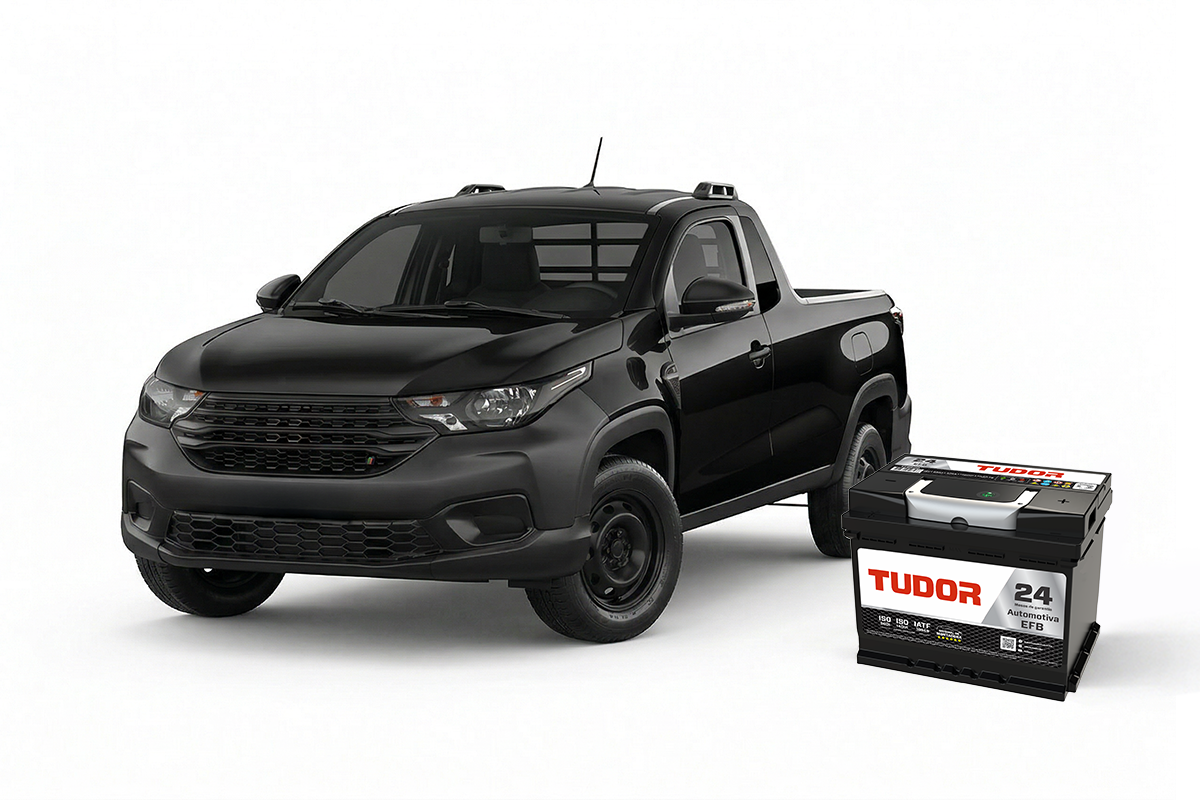
bateria automotiva tudor para fiat strada

What defines the correct battery for the Strada?

Your choice should consider:

  • Vehicle generation
  • Engine
  • Trim/version
  • Presence of electric power steering
  • Use profile (urban, commercial, or severe duty)

In addition, it’s essential to follow:

  • Original capacity (Ah)
  • Recommended minimum CCA
  • DIN physical standard
  • Proper mounting/hold-down

Reducing the specification can compromise durability and cause electrical instability.

Technical specs by generation

Always confirm your owner’s manual for your specific trim, but in general the recommendations follow this pattern:

Model / Generation Production Years Engine Options Capacity (Ah) Minimum CCA
Strada (Phase 1 to 4) 1998–2020 1.4 Fire / 1.5 / 1.6 45Ah–50Ah 330A–440A
Strada Adventure 2002–2020 1.8 8V / 1.8 16V E.torQ 60Ah 480A–540A
New Strada (G2) 2020+ 1.4 Fire / 1.3 Firefly 50Ah–60Ah 440A–520A

Commercial use and short-cycle driving

One of the biggest challenges for the Strada is professional use.

Urban deliveries and rural work often create what’s known as a short-cycle routine:

  • Many starts per day
  • Short trips
  • Not enough time for a full recharge

In these conditions, the battery frequently operates at partial state of charge.

Choosing 60Ah (when technically compatible) can provide higher Reserve Capacity (RC), reducing the risk of deep discharge.

Proper sizing is also discussed in the article about using a larger battery in a car.

Why CCA matters on the New Strada

The New Strada introduced electric power steering in many trims.

This system draws current spikes during low-speed maneuvers.

If CCA is undersized or the battery is degraded, you may see:

  • Headlight brightness fluctuations
  • Momentary steering stiffness
  • Infotainment reboots
  • Intermittent dashboard warnings

The technical concept of CCA is explained in the article on what battery CCA means.

Vibration resistance and proper mounting

As a pickup, the Strada is more exposed to vibration, especially in rural use or under load.

It typically uses the DIN standard with a B13 base hold-down.

It’s essential to ensure:

  • Correct hold-down clamp torque
  • Proper battery positioning
  • Compatible dimensions

Excessive vibration accelerates shedding of active material from the internal plates, reducing service life.

This is one of the main mistakes that shorten battery lifespan.

When should you replace the Strada battery?

Key warning signs include:

  • Slow cranking
  • Difficulty starting after the vehicle sits
  • Electrical instability
  • Dashboard warning lights

Replacement should follow the correct technical procedure, as explained in the automotive battery replacement guide.

Conclusion

In summary, the best battery for the Fiat Strada is the one that matches:

  • Year and generation
  • Engine
  • Use profile
  • Specified capacity (Ah)
  • Recommended minimum CCA
  • Correct physical standard and proper mounting

For commercial use, an extra electrical safety margin is even more important.

Tudor offers batteries developed to handle everything from urban driving to severe-duty work cycles.

If you’re unsure about the ideal application for your Strada, contacting Tudor’s technical team is the safest way to ensure compatibility and durability.

Read also

qualidade e segurança das baterias automotivas Tudor
Automotive Battery

How Tudor ensures quality and safety for its automotive batteries

In modern vehicles, the battery is no longer just a component responsible for starting the engine. Today, it directly supports the vehicle’s electrical stability, powering electronic modules, multimedia systems, electric steering, sensors, and intelligent energy management systems. This means that any electrical fluctuation can directly affect the vehicle’s operation. For this reason, construction quality, voltage stability, and operational safety have become fundamental factors in the development of an automotive battery. Within this scenario, Tudor works with rigorous industrial processes, advanced technical control, and technologies developed to ensure consistent performance throughout the battery’s service life.

Continue reading

baterias da linha automotiva Tudor
Automotive Battery

Tudor automotive line: technologies, durability, and differentials

The Tudor Automotive line was developed to meet different levels of electrical demand. This means that the right battery does not depend only on the size and model of the car, but also on the technology required by the vehicle, the type of use, and the demand of the electrical system. In practice, Tudor’s differentials appear in the battery construction, starting capacity, electrical stability, and resistance to more severe use. This helps explain why there are different lines within the automotive category.

Continue reading

pessoa olhando as especificações da bateria que influencia no preço final
Automotive Battery

Automotive battery price: what influences the final value

The price of an automotive battery can vary significantly, even among models that seem similar. This happens because the value does not depend only on the brand, but also on factors such as capacity, starting current, technology, and application. In practice, looking only at the lowest price can lead to the wrong choice. To buy well, the ideal approach is to understand what really changes from one battery to another and why this impacts the final value.

Continue reading