Best Battery for SUVs: Durability and Resistance in Severe Use
SUVs represent one of the most demanding segments for automotive battery engineering. Unlike compact urban vehicles, these models deal with greater mass, high-torque engines, and a high density of onboard technology, which makes the battery a critical component for vehicle reliability. In these vehicles, the battery does more than provide starting power. It acts as an electrical stability element, responsible for supporting modules, sensors, and comfort systems even under severe operating conditions. In this guide, you will understand which factors truly define the best battery for SUVs and how to choose the right technology to ensure durability and resistance.
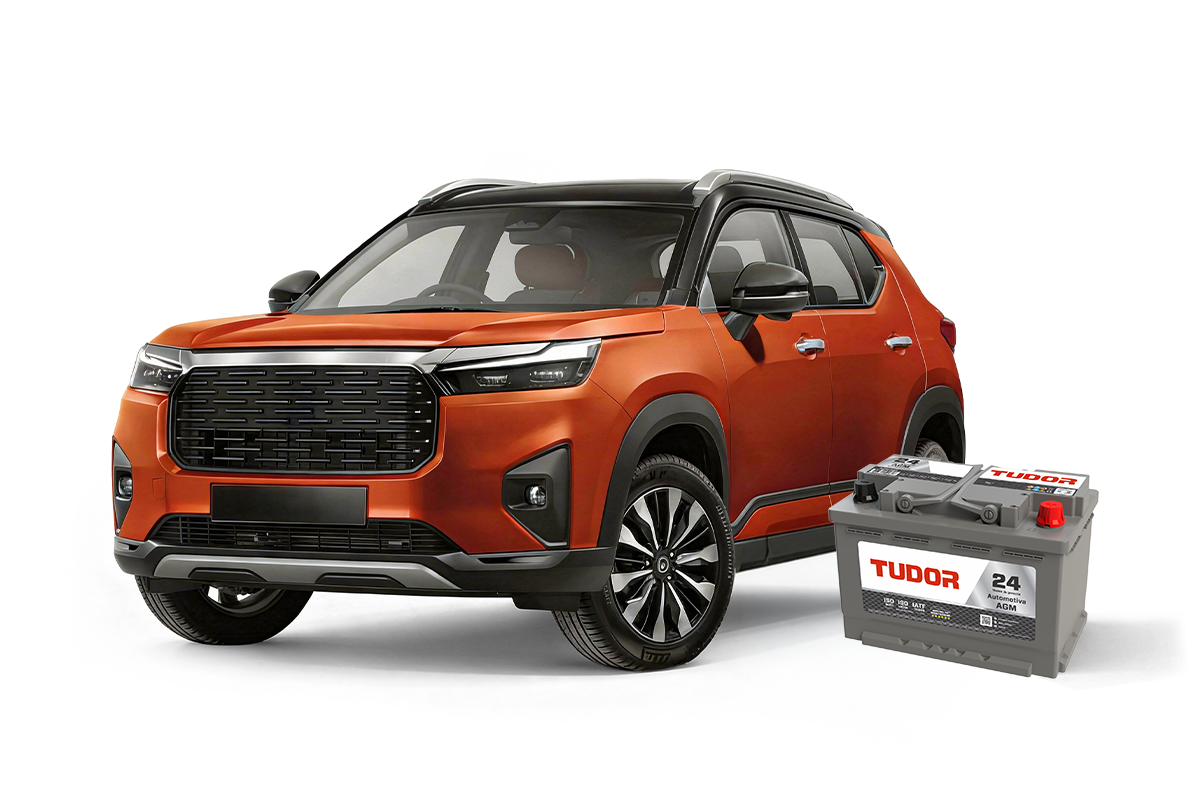
Why Do SUVs Require More Robust Batteries?
The electrical demand of SUVs is higher due to several combined factors:
- Greater vehicle weight, requiring more effort during engine start
- More powerful engines, often turbocharged or diesel
- Electric or electro-hydraulic steering systems
- Advanced driver assistance systems
- Larger infotainment systems and sensors that remain active even when the vehicle is off
This combination causes the battery to operate under intense and constant loads, especially in severe urban use conditions that accelerate wear and help explain many cases in which a battery discharges quickly even without an apparent fault.
Vibration and Impact: A Critical Factor in SUVs
One of the main challenges for batteries in SUVs is continuous exposure to vibrations, particularly in vehicles designed for off-road use or that frequently travel on uneven roads.
Excessive vibration can cause:
- Detachment of active material from the plates
- Internal sedimentation
- Internal short circuits
- Accelerated loss of capacity
This type of structural wear is common in batteries not designed for this operating regime and directly impacts how long an automotive battery lasts, reducing its actual service life.
Heat and Thermal Management in the Engine Bay
Modern SUVs, especially those equipped with turbocharged engines, operate at higher thermal levels. Excessive heat accelerates internal corrosion and compromises the battery’s chemical stability.
More robust batteries use metallic alloys and internal structures that promote:
- Better heat dissipation
- Faster voltage recovery
- Lower plate degradation
This behavior is essential to prevent common symptoms of a weak battery, such as electrical fluctuations and intermittent failures in electronic modules.
Reserve Capacity and Stability of Onboard Electronics
The number of electronic modules in an SUV places a constant load on the battery. For this reason, Reserve Capacity (RC) becomes an essential technical index.
A battery with adequate RC ensures:
- Stable power supply to systems at rest
- Protection against voltage drops
- Proper operation of onboard electronics
When RC is insufficient, electrical symptoms may appear that are often mistaken for electronic defects but are actually directly related to the battery, such as those described in the article about signs of a weak battery.
The Importance of CCA in SUVs
CCA (Cold Cranking Amps) is even more relevant in SUVs due to the greater effort required from the starter motor.
When CCA is inadequate:
- The engine may start normally
- Voltage drops shortly afterward
- Electronic systems begin to malfunction
For this reason, SUVs benefit from batteries with CCA equal to or higher than the minimum specified for the vehicle.
EFB and AGM Technologies as the Standard in Modern SUVs
Many modern SUVs use Start-Stop systems and intelligent charge management, which require more advanced battery technologies.
EFB
Recommended for mid-size SUVs with standard Start-Stop systems, offering greater resistance to charge and discharge cycles.
AGM
Recommended for larger SUVs or those with more sophisticated systems, providing maximum electrical stability and greater resistance to vibration.
Understanding the differences between these technologies helps avoid common mistakes during battery replacement.
How the Tudor Line Meets Severe SUV Usage
The Tudor battery lineup was developed to meet different levels of electrical demand, covering SUVs from different generations and severe usage applications.
Tudor Standard Automotive Batteries
Recommended for SUVs without Start-Stop systems, providing good starting power and electrical stability.
Tudor EFB Batteries
Designed for SUVs with standard Start-Stop systems and intense urban use.
Tudor AGM Batteries
Recommended for SUVs with high electrical demand, offering greater thermal, mechanical, and electrical resistance.
This portfolio allows the correct technology to be applied without improper adaptations.
Summary
The best battery for SUVs is the one that combines structural robustness, thermal stability, and electrical capacity compatible with the vehicle’s operating conditions.
Choosing correctly means:
- Evaluating vibration, heat, and electrical demand
- Considering CCA and reserve capacity
- Using the appropriate battery technology
With the correct specification and proper technical guidance, the battery stops being a point of failure and becomes an element of reliability.
The Tudor battery line meets these requirements, offering suitable solutions for SUVs in different usage conditions.
To continue learning about automotive batteries and understand which model is best for your vehicle, visit the Tudor blog and explore other technical articles.
If you still have questions, Tudor’s specialized technical support can help guide you in choosing the ideal battery for your SUV according to its version and usage pattern. ????????
Read also

What happens when a car sits unused for a long time?
Not every vehicle is driven long distances every day. Many people own a second car, use their vehicle only on weekends, or leave it unused during extended trips. Although this situation may seem harmless, long periods without use can directly affect the automotive battery. Even with the engine turned off, some vehicle systems continue to consume power, and the battery itself naturally loses charge over time. If this period is prolonged, the risk of discharge, sulfation, and reduced service life increases significantly. Understanding what happens when a car remains unused for a long time helps preserve the battery and avoid surprises when it is time to use the vehicle again.
Continue reading
Automotive battery and alternator: what is the relationship between them?
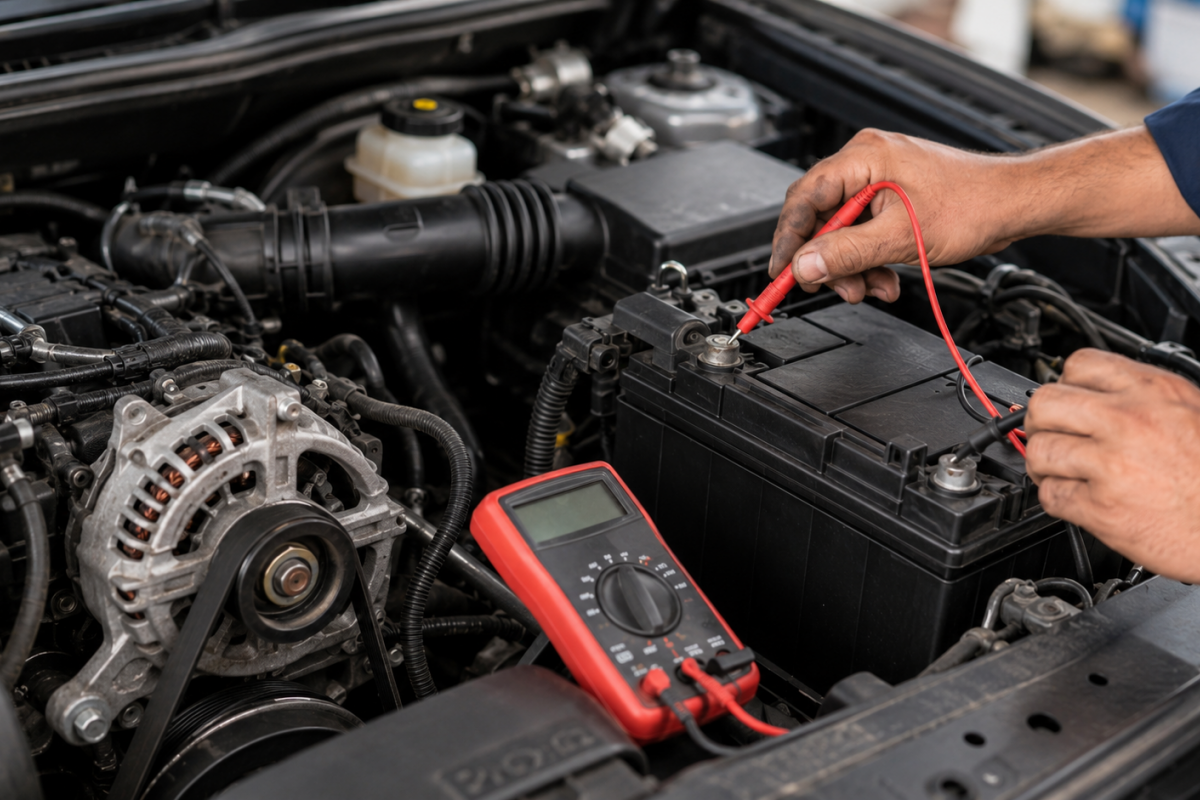
It is common for a driver to experience difficulty starting, find the battery dead, and quickly conclude that it is time to replace it. However, the problem is not always the battery. The battery and the alternator work together to keep the vehicle's electrical system running correctly. When one of these components fails, the other ends up being affected as well, which can generate very similar symptoms and make diagnosis difficult. Therefore, understanding how the battery and alternator work together is essential to identify the source of possible failures and ensure that the electrical system operates safely and efficiently. When the battery needs to be replaced, it is also important to check whether the charging system is operating correctly to preserve the performance of the new component.
Continue reading
How temperature influences the useful life of the automotive battery
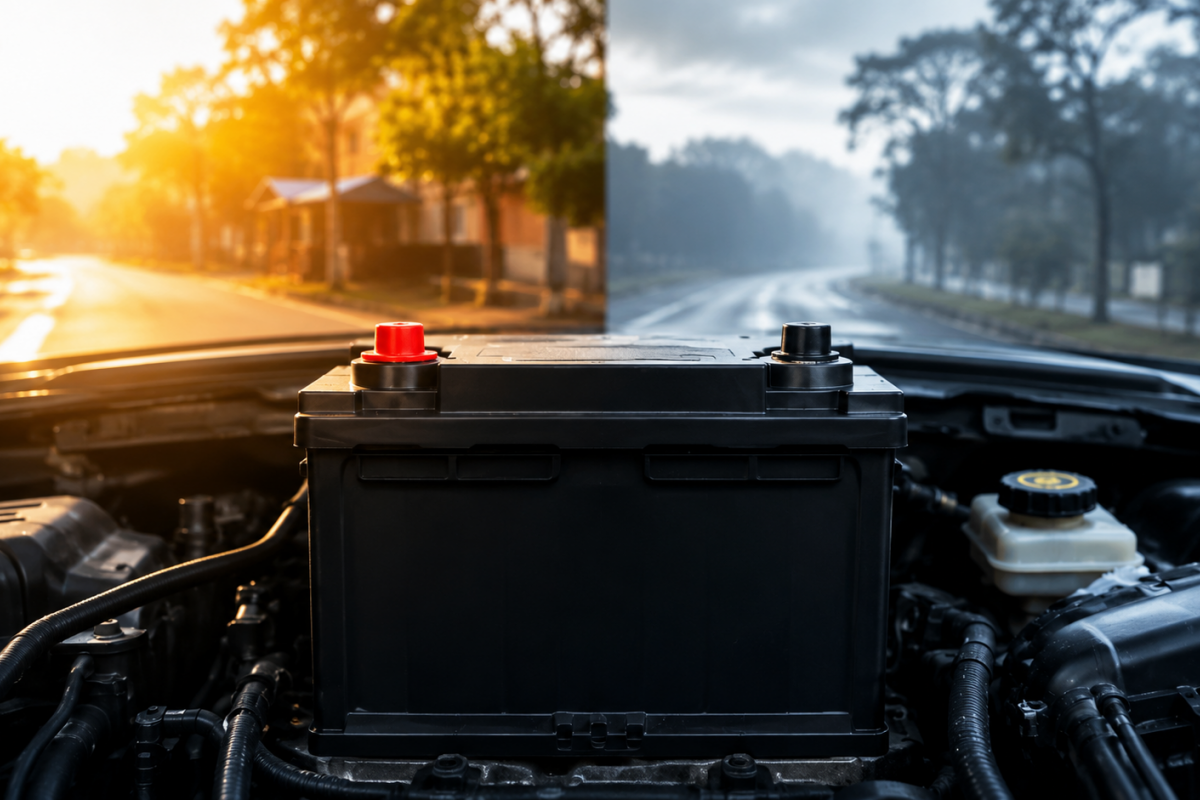
The automotive battery is constantly exposed to different environmental conditions. In some regions, intense heat predominates for much of the year. In others, lower temperatures become a challenge for the vehicle's electrical system. Although many drivers associate battery problems only with usage time, temperature is one of the factors that most influences its durability and performance. Both excessive heat and intense cold affect the chemical reactions that take place inside the battery, accelerating wear processes and reducing its ability to supply energy.
Continue reading