Complete Guide to Truck Batteries: 12V and 24V systems, types, maintenance, service life, and how to choose the ideal one
The truck battery is the component that ensures the diesel engine starts and powers the vehicle's electrical equipment. It operates in 12V or 24V systems, with capacities ranging from about 100Ah to 220Ah, and the right choice depends on the size of the truck, the operation, and the manufacturer's specification.
For those who make a living from transportation, the battery is not a minor detail: an electrical failure means cargo stopped, deadlines missed, and extra costs. Even so, replacements are often made in a rush, without checking capacity, cranking current, or even the vehicle's electrical system.
This guide brings together, in one place, everything drivers, fleet owners, and maintenance managers need to know about truck batteries - from how 12V and 24V systems work to the maintenance that extends service life.
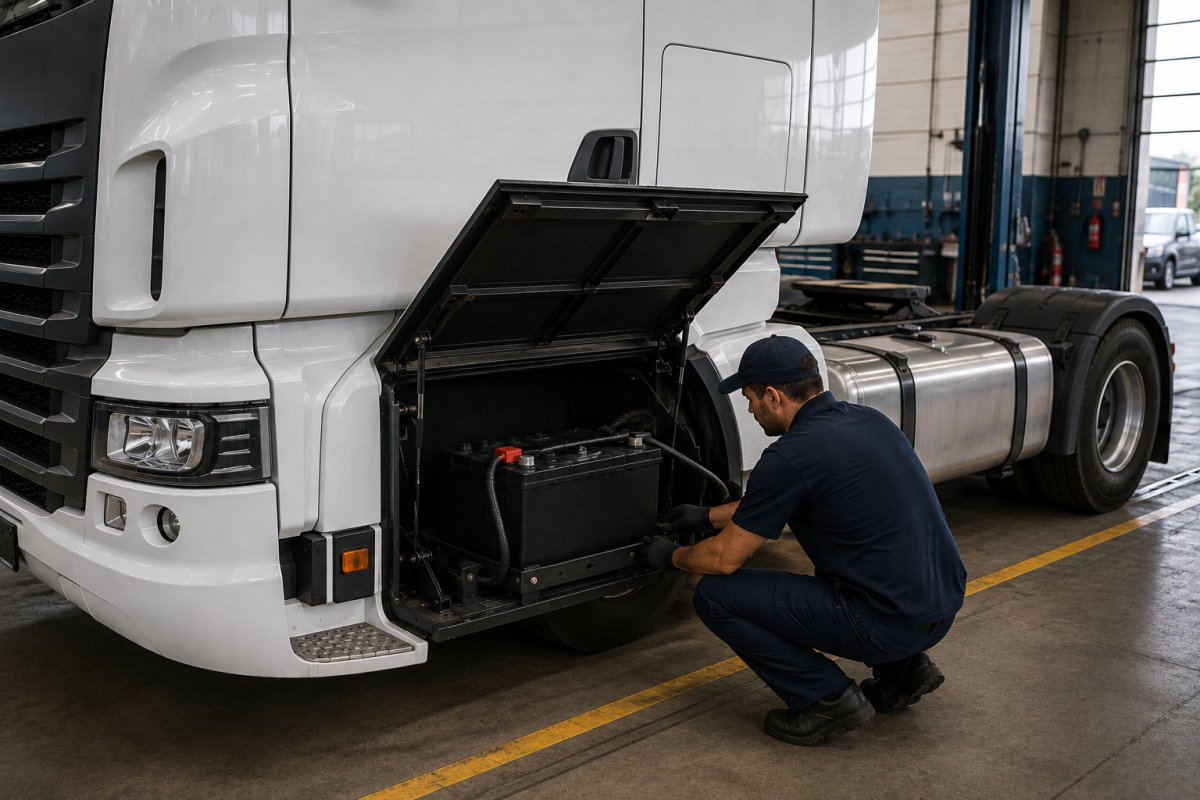
How does the battery work in a truck?
The battery performs three functions in a truck: supplying the high current required by the starter motor, stabilizing the electrical system voltage, and powering loads when the engine is off - lighting, tracker, multimedia, and, in many cases, a refrigerator and other cab equipment.
After the engine starts, the alternator takes over power generation and recharges the battery. That is why charging-system problems often appear disguised as battery problems - a proper diagnosis always evaluates the system as a whole - the relationship between battery and alternator, explained for cars, applies equally here.
What is the difference between 12V and 24V systems?
Light trucks and some medium trucks use a 12V system with a single battery. Medium, medium-heavy, and heavy-duty trucks normally operate on 24V, with two 12V batteries connected in series - the voltages add up, and the pair behaves as a single 24V power source.
This difference changes everything when it is time to replace the batteries: in a 24V system, both batteries must have the same capacity, the same age, and the same state of charge. Mixing a new battery with a used one unbalances the series connection and accelerates wear on both. If you are unsure about your vehicle, check the owner's manual and the dashboard voltmeter before making any decision.
What battery capacities are available for trucks?
Capacity, measured in ampere-hours (Ah), indicates how much energy the battery stores. In trucks, the most common ranges are organized as follows:
In addition to capacity, CCA (cold cranking amps) deserves attention: large-displacement diesel engines require high current to crank, especially in cold regions and during early-morning starts. A battery with CCA below the specified value will fail precisely when the engine is under the greatest demand.
What battery technologies are available for trucks?
The most relevant development for the operation is the maintenance-free battery: it requires no water topping-up, has a charge indicator for visual monitoring, and has lower self-discharge. For high-mileage operations, this means fewer inspection stops and less risk of neglect - a battery that no one opens is a battery no one forgets to top up.
Another point to consider is internal construction: batteries designed for road use have reinforced plate fixation and vibration-resistant separators. Two batteries with the same capacity can have very different service lives on the same route - the difference lies in this invisible engineering.
How do you choose the right battery for a truck?
The technical choice starts with four confirmations: the vehicle manufacturer's specification (capacity, CCA, and polarity), the electrical system (12V or 24V), the actual consumption of the operation - auxiliary equipment, refrigerator, air conditioning, onboard electronics - and the dimensions of the battery tray.
The most common mistake is buying on price alone, ignoring origin and warranty. The second is underestimating cab consumption: a long-haul truck used for overnight stays consumes energy for hours with the engine off, and the battery capacity must keep up. The safe approach is to translate the operation into numbers before buying.
How should maintenance be performed to extend service life?
- Check the mounting: vibration is one of the main causes of premature battery failure on the road.
- Keep the terminals clean and properly tightened - corrosion buildup and looseness cause poor contact and starting failure.
- Avoid deep discharges: accessories left on for hours with the engine off shorten service life - the mistakes that reduce battery lifespan are repeated in every category.
- During long stops, check the charge before returning to operation - the process is the same as for a car that sits unused for a long time.
- When replacing the battery, check capacity, polarity, mounting, and terminal torque to protect the new battery.
- In 24V systems, always replace the complete pair with identical batteries.
What are the signs that a truck battery needs to be replaced?
- Starting becomes increasingly slower, even with the engine warm.
- Dashboard lights fluctuate during starting.
- Cab accessories restart or lose performance.
- Emergency recharging is needed more than once in the same month.
- Swollen case, leaks, or terminals with advanced corrosion.
- Charge loss after short weekend stops.
None of these signs gets better on its own - in the automotive world, the signs of a weak battery follow the same logic, and the physics is identical in a truck. When two or more appear together, the cost of a planned replacement is always lower than the cost of a breakdown - towing, a lost day of work, and a missed deadline. The step-by-step guide to a proper replacement is a useful reference.
How long does a truck battery last?
Under normal conditions, average service life is between 2 and 4 years. Severe operation, intense heat, excessive vibration, and charging-system faults shorten this period. The battery's behavior provides warning signs: slower starting, fluctuating lights, and the need for emergency recharging indicate that replacement should be scheduled - before a breakdown occurs.
How does Tudor support people who make a living from transportation?
The Tudor heavy-duty line covers capacities from 100Ah to 220Ah, with reinforced construction against vibration, high CCA within the category, and maintenance-free batteries. Production is domestic, with facilities in Bauru, São Paulo, and Governador Valadares, Minas Gerais, and distribution reaches the entire country through more than 85 centers - enabling fast replacement wherever your operation is located.
Conclusion
Choosing the right truck battery protects the operation: fewer unplanned stops, reliable starting, and predictable costs. Understanding the electrical system, following the manufacturer's specification, and keeping maintenance up to date are the three pillars of this decision.
To find out which capacity is right for your truck and your operation, access which truck battery to choose and speak with a Tudor specialist via WhatsApp.
And to keep learning about onboard energy, follow the technical content on the Tudor blog.
Frequently Asked Questions
Does a truck use a 12V or 24V battery?
It depends on the vehicle. Light trucks use a 12V system with one battery; medium, medium-heavy, and heavy-duty trucks normally use 24V, with two 12V batteries connected in series. The owner's manual and the number of installed batteries confirm the system.
Can I replace only one battery in a 24V system?
It is not recommended. Both batteries should be replaced together, with the same capacity and age. Mixing a new battery with a used one unbalances the series connection and accelerates wear on the pair.
What is the ideal battery capacity for a truck?
Light trucks and VUCs use around 100Ah; medium and medium-heavy trucks use 150Ah to 180Ah; long-haul heavy-duty trucks use 220Ah - generally in pairs in 24V systems. The definitive reference is the manufacturer's specification.
What is CCA in a truck battery?
It is cold cranking amps: the amount of current the battery can deliver to crank the engine at low temperature. Diesel engines require high CCA; below the specified value, starting can fail under the most demanding conditions.
How long does a truck battery last?
On average, 2 to 4 years, depending on the operation, climate, vibration, and condition of the charging system. Signs such as slow starting and fluctuating lights indicate that replacement should be scheduled.
Read also
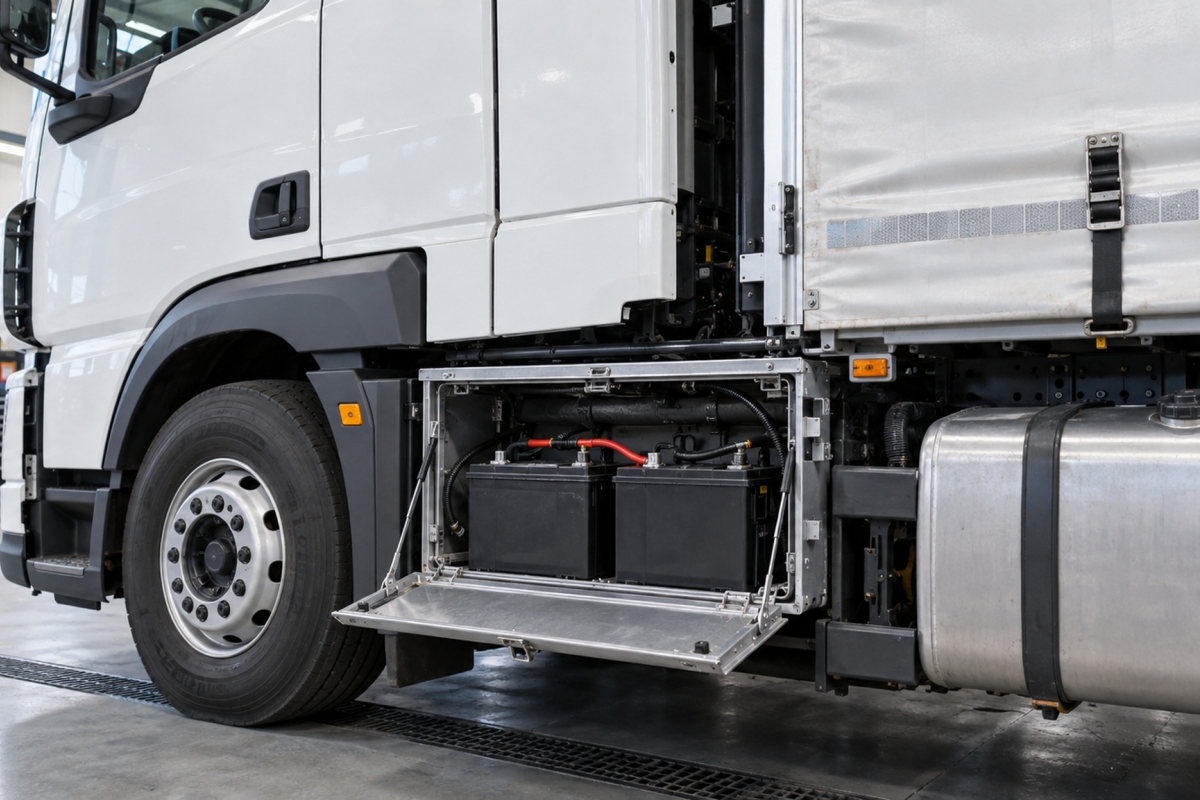
How Many Batteries Does a Truck Use? Understanding the Most Common Configurations
A truck uses one or two batteries, depending on its electrical system: light-duty vehicles and VUCs operate on 12V with a single battery, while medium-duty, medium-heavy, and heavy-duty trucks use two 12V batteries connected in series, forming a 24V system. The number of batteries is not the driver's choice - it is a design decision made by the manufacturer, based on the engine size and the vehicle's electrical demand. In this article, you'll understand why these two configurations exist, what changes in each one, and why, when used as a pair, the two batteries need to be treated as a single unit.
Continue reading

Checklist for Replacing a Truck Battery Without Mistakes
Replacing a truck battery without mistakes requires three steps: confirming the correct specifications before purchase (capacity, CCA, polarity, and system voltage), performing the replacement in the proper sequence - negative first when removing, positive first when installing - and checking the charging system afterward. It may seem simple, but many of the problems unfairly attributed to a new battery actually begin during the replacement: loose mounting, improperly tightened terminals, an unbalanced pair in a 24V system, and even reversed polarity. This checklist covers the entire process, from purchase checks to the proper disposal of the old battery.
Continue reading
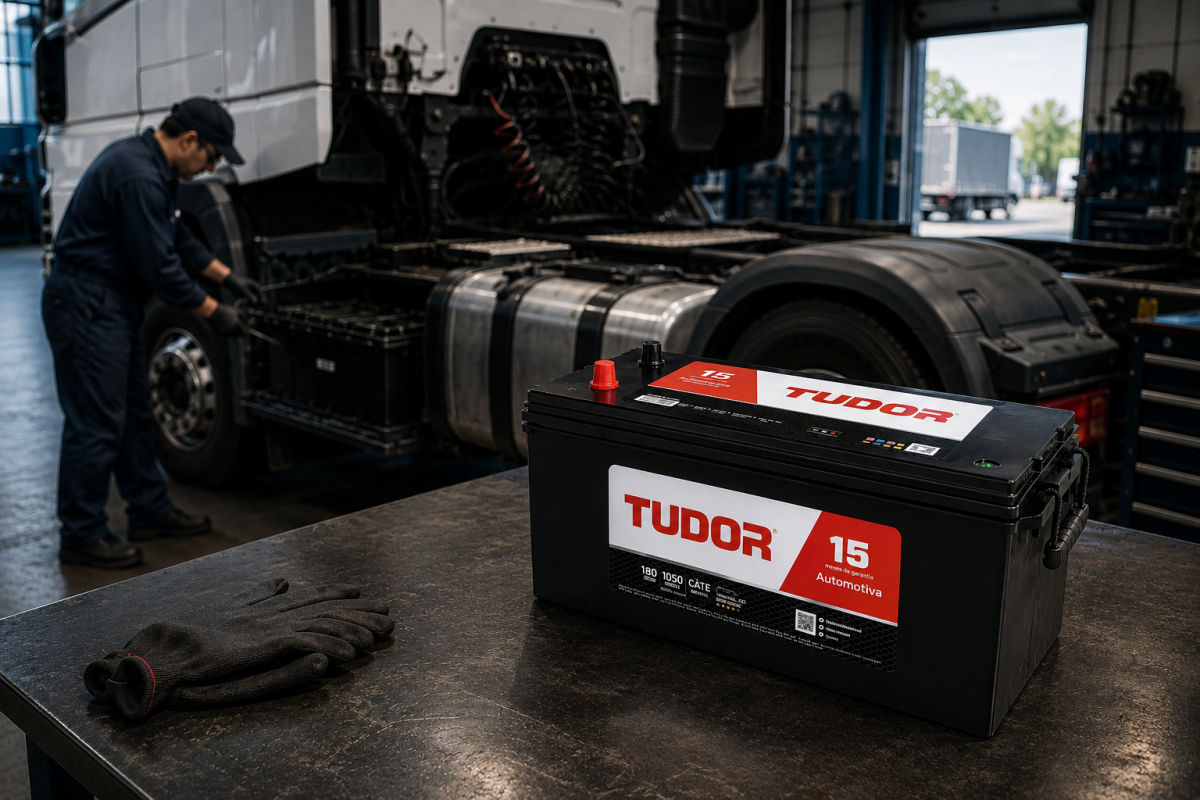
What Is the Ideal Truck Battery? Technical Selection Guide by Type of Operation
The ideal truck battery is the one that meets the manufacturer's specification for capacity, CCA, and polarity, sized for the type of operation: around 100Ah for urban light trucks, 150Ah to 180Ah for medium and medium-heavy trucks, and 220Ah for long-haul heavy-duty trucks - in pairs in 24V systems. In practice, two identical trucks may require different batteries: the operation - how many starts per day, which auxiliary equipment is installed, and how much power is consumed with the engine off - is what defines the actual energy demand. This guide organizes the choice into objective technical criteria so that the next replacement can be planned and accurate.
Continue reading