How to Tell Whether a Truck Is 12V or 24V: a Quick Guide to Avoid Mistakes
To determine whether a truck is 12V or 24V, check three things: the owner's manual, the number of installed batteries, and the dashboard voltmeter. Two 12V batteries connected in series indicate a 24V system; a single battery indicates a 12V system.
This information may seem like a detail, but it defines the entire purchase: capacity, replacement method, and even the correct emergency-recharging procedure change from one system to the other.
In this quick guide, you will learn how to identify your truck's system in minutes and understand what this difference changes in practice.

Why are some trucks 12V and others 24V?
Larger engines require more energy for starting - especially in cold weather, since temperature directly affects starting and service life. Raising the voltage to 24V allows the same power to be delivered with lower current, thinner cables, and lower losses - which is why medium, medium-heavy, and heavy-duty trucks use 24V systems, while light trucks and VUCs remain at 12V.
There is also a practical effect on the vehicle infrastructure: in a 24V system, electrical components - starter motor, lighting, modules - are specified for that voltage. That is why there is no such thing as simply “adapting” one system to the other: voltage is a manufacturer design decision, and everything in the truck follows it.
How do you identify your truck's electrical system?
- Owner's manual: the electrical specification states the system's nominal voltage.
- Number of batteries: two 12V batteries side by side, connected in series (positive of one to negative of the other), form 24V.
- Dashboard voltmeter: at rest, a 24V system reads around 24 to 25V; a 12V system reads around 12 to 12.8V.
- Battery-compartment label: many manufacturers indicate the voltage next to the battery tray.
What changes when replacing the battery?
In a 12V system, replacement involves a single battery, checking capacity, CCA, and polarity - and using a capacity above the original requires the same care as when considering using a larger battery in a car. In a 24V system, the rule changes: the two batteries work in series and must be replaced together, with the same capacity, the same age, and the same state of charge.
Mixing a new battery with a used one is the most common - and most expensive - mistake. The weaker battery limits and unbalances the pair, accelerating wear on both. This imbalance also intensifies the mistakes that reduce battery lifespan.
What happens if I use the wrong voltage?
Installing or connecting equipment at the wrong voltage has immediate consequences: 12V accessories connected to 24V can burn out; incompatible chargers damage the battery; and emergency recharging between systems with different voltages can destroy expensive electronic modules. When in doubt, there is only one rule: confirm the voltage before making any connection.
What are the signs of imbalance in a 24V battery pair?
- One battery consumes more water or runs hotter than the other (in conventional batteries).
- Different resting voltages between the two units.
- Weak starting even when one of the batteries tests well.
- Very short service life for the newer battery in the pair.
Imbalance is silent: the pair still works, but the weaker battery overloads the stronger one. That is why replacing the pair together is not a commercial recommendation - it is the physics of a series circuit.
Precautions for emergency recharging in a 24V system
The traditional jump-start also requires attention to voltage: connecting a 12V system directly to a 24V system, or reversing the cable order, can damage electronic modules and the battery itself. In the event of a breakdown, confirm the voltage of both vehicles and follow the procedure in the manual. And remember that a complete diagnosis includes the charging system: battery and alternator work together.
Does the owner's manual always include this information?
Yes - the manual's electrical specification states the nominal voltage and the recommended battery, including capacity and CCA. If the manual is not available, the combination of the number of batteries and the voltmeter reading provides the answer in practice. And if you are still unsure, sending a photo of the battery compartment to a Tudor specialist via WhatsApp can settle the question in minutes.
How does Tudor support both systems?
The Tudor heavy-duty line covers the capacities used in 12V and 24V systems - from 100Ah to 220Ah - with high CCA, vibration-resistant construction, and maintenance-free batteries. For 24V systems, the recommendation is always a balanced pair, and the technical team can provide the exact specification via WhatsApp.
Conclusion
Determining whether a truck is 12V or 24V takes only minutes and prevents costly mistakes: just check the manual, the number of batteries, and the voltmeter. Once the system is identified, choosing the right battery becomes a technical and safe process.
Want to confirm the right battery for your truck? Access how to choose the right truck battery and speak with a Tudor specialist.
Before replacing it, it is also worth checking the signs of a weak battery and the step-by-step guide to a safe replacement.
Frequently Asked Questions
How can I quickly tell whether a truck is 12V or 24V?
Check the number of batteries: two 12V batteries in series indicate a 24V system. The owner's manual and the dashboard voltmeter confirm the voltage.
Can I use one 24V battery instead of two 12V batteries?
Truck 24V systems use two 12V batteries connected in series. Replacement must follow the manufacturer's original configuration exactly.
Can I replace only one battery in a 24V system?
It is not recommended. Both batteries should have the same capacity, age, and state of charge; mixing a new battery with a used one unbalances and wears the pair.
Can I jump-start a 24V truck with a 12V car?
Do not connect systems with different voltages directly: there is a risk of damaging electronic modules and batteries. Follow the procedure in the vehicle manual.
Is the dashboard voltmeter reliable for identifying the system?
Yes, as a reference reading: at rest, a 12V system reads around 12 to 12.8V and a 24V system around 24 to 25V. For the complete battery specification, also confirm the information in the manual.
Are pickup trucks and light commercial vehicles 12V or 24V?
In general, pickup trucks, light commercial vehicles, and VUCs operate on 12V with a single battery. 24V systems are found in medium, medium-heavy, and heavy-duty trucks.
Read also

How Many Batteries Does a Truck Use? Understanding the Most Common Configurations
A truck uses one or two batteries, depending on its electrical system: light-duty vehicles and VUCs operate on 12V with a single battery, while medium-duty, medium-heavy, and heavy-duty trucks use two 12V batteries connected in series, forming a 24V system. The number of batteries is not the driver's choice - it is a design decision made by the manufacturer, based on the engine size and the vehicle's electrical demand. In this article, you'll understand why these two configurations exist, what changes in each one, and why, when used as a pair, the two batteries need to be treated as a single unit.
Continue reading

Checklist for Replacing a Truck Battery Without Mistakes
Replacing a truck battery without mistakes requires three steps: confirming the correct specifications before purchase (capacity, CCA, polarity, and system voltage), performing the replacement in the proper sequence - negative first when removing, positive first when installing - and checking the charging system afterward. It may seem simple, but many of the problems unfairly attributed to a new battery actually begin during the replacement: loose mounting, improperly tightened terminals, an unbalanced pair in a 24V system, and even reversed polarity. This checklist covers the entire process, from purchase checks to the proper disposal of the old battery.
Continue reading
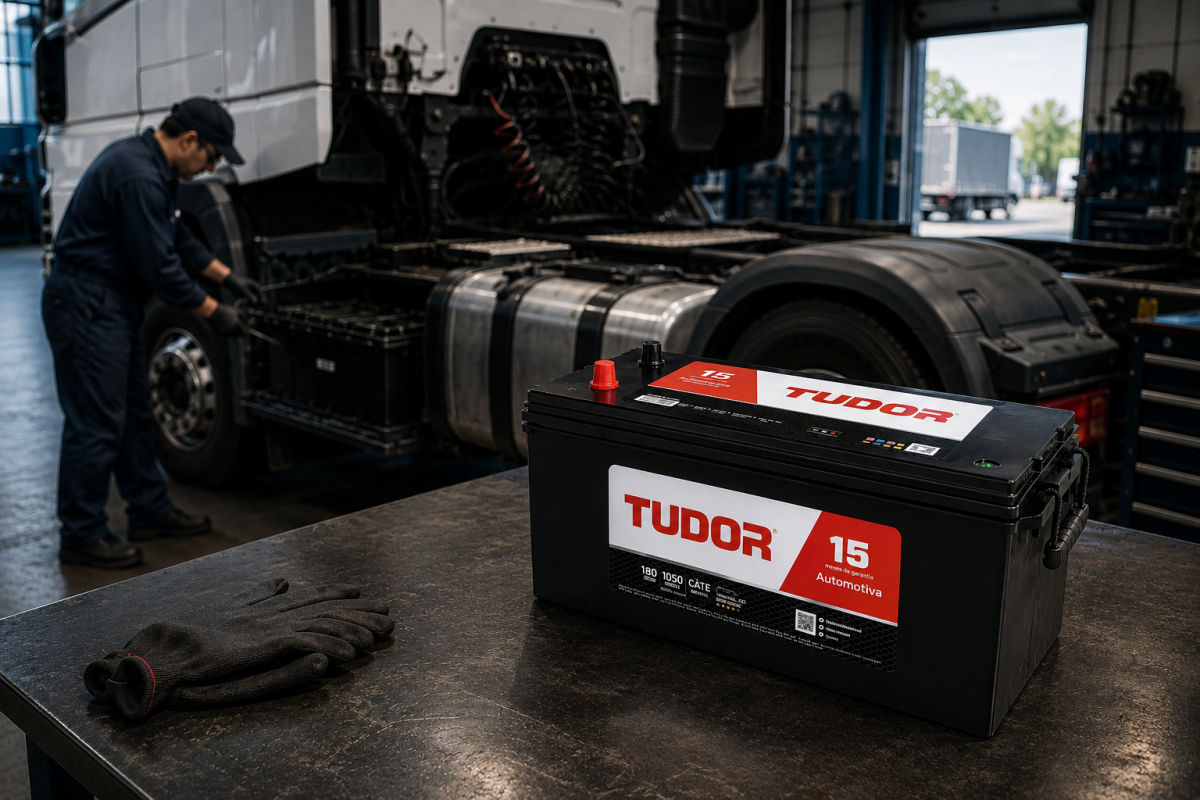
What Is the Ideal Truck Battery? Technical Selection Guide by Type of Operation
The ideal truck battery is the one that meets the manufacturer's specification for capacity, CCA, and polarity, sized for the type of operation: around 100Ah for urban light trucks, 150Ah to 180Ah for medium and medium-heavy trucks, and 220Ah for long-haul heavy-duty trucks - in pairs in 24V systems. In practice, two identical trucks may require different batteries: the operation - how many starts per day, which auxiliary equipment is installed, and how much power is consumed with the engine off - is what defines the actual energy demand. This guide organizes the choice into objective technical criteria so that the next replacement can be planned and accurate.
Continue reading