What Is the Ideal Truck Battery? Technical Selection Guide by Type of Operation
The ideal truck battery is the one that meets the manufacturer's specification for capacity, CCA, and polarity, sized for the type of operation: around 100Ah for urban light trucks, 150Ah to 180Ah for medium and medium-heavy trucks, and 220Ah for long-haul heavy-duty trucks - in pairs in 24V systems.
In practice, two identical trucks may require different batteries: the operation - how many starts per day, which auxiliary equipment is installed, and how much power is consumed with the engine off - is what defines the actual energy demand.
This guide organizes the choice into objective technical criteria so that the next replacement can be planned and accurate.
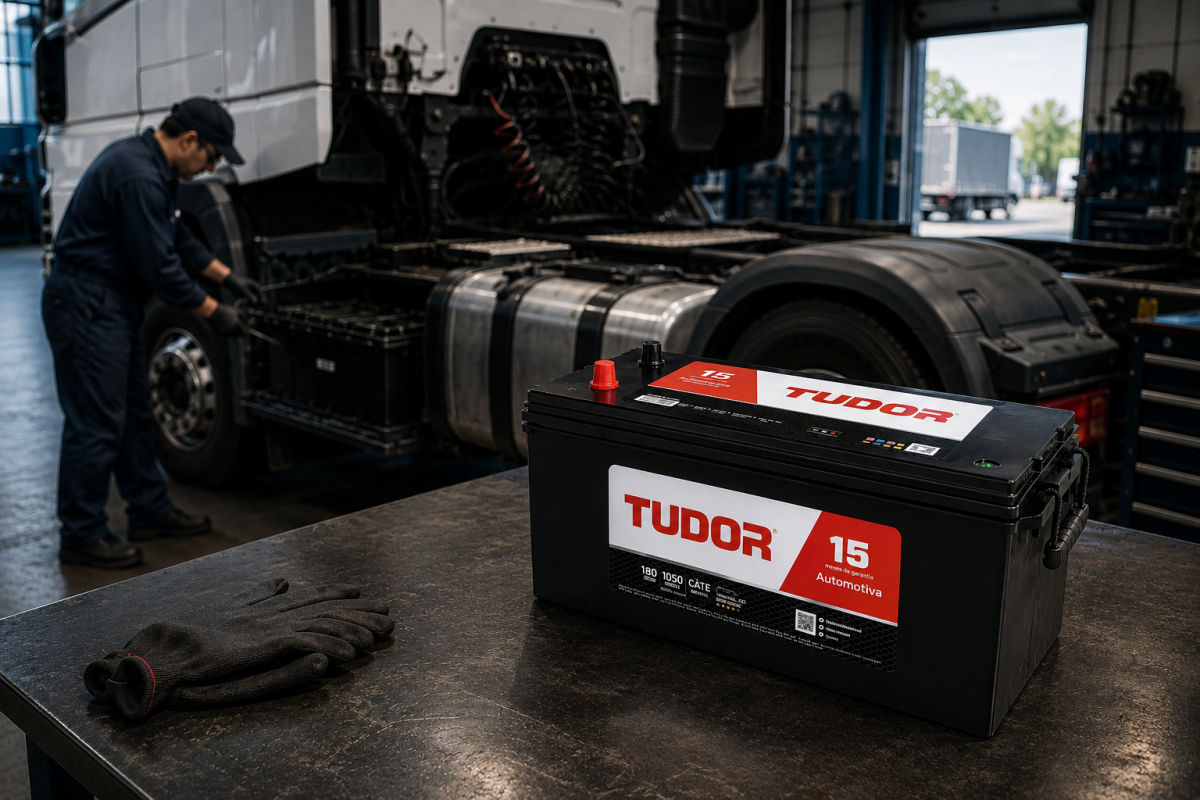
Which criteria define the ideal battery?
- Capacity (Ah): the stored energy, sized according to the operation's consumption.
- CCA: cold cranking amps, critical for diesel engines and cold regions.
- Polarity and dimensions: the battery must fit the tray and align with the cables.
- Electrical system: 12V with one battery, or 24V with a balanced pair - check the manual and the dashboard voltmeter.
- Technology: maintenance-free batteries reduce inspection stops in demanding operations.
It is also worth noting what the ideal choice is not: it is not the most expensive battery, nor the highest-capacity battery that fits the tray. It is the one that meets the specification with the right operating margin - capacity beyond what is needed is idle investment; below it, a breakdown is only a matter of time.
Which battery is best for urban operation (light trucks and VUCs)?
Urban routes concentrate starting events: dozens per day over short trips. The priority is a battery with strong CCA and good recharge acceptance, around the 100Ah range, compact enough for the smaller chassis. The main enemy here is incomplete recharging - very short trips may not restore the energy used for starting, the same phenomenon behind the battery discharging quickly in urban cars.
Which battery is best for mixed operation (medium and medium-heavy trucks)?
City plus highway, often with auxiliary equipment - liftgate, crane, cargo body. The 150Ah to 180Ah range provides the extra reserve these accessories consume without compromising starting. In this type of operation, resistance to vibration and charge-discharge cycles matters as much as capacity.
Which battery is best for long-haul operation (heavy-duty trucks)?
Overnight stays in the cab, refrigerator, air conditioning, and electronics running for hours with the engine off: long-haul operation requires the most reserve - a silent drain similar to a car that sits unused for days. The answer is the 220Ah range - as a balanced pair in 24V systems, always with two batteries of the same capacity and age.
Which mistakes cancel out the right battery choice?
- Installing the battery with loose mounting: vibration can destroy a correctly specified battery within months.
- Replacing only one battery in a 24V pair.
- Buying a battery that has been in stock for a long time - a classic among the mistakes that reduce battery lifespan.
- Ignoring the consumption of auxiliary equipment installed after the truck was purchased.
- Leaving accessories on for hours with the engine off, beyond the designed reserve.
How do you schedule replacement without stopping the operation?
A truck battery lasts, on average, 2 to 4 years - and, as with automotive battery lifespan, the actual figure depends on use. From the second year onward, periodic testing of the battery and charging system at each service turns end of life into a predictable event: replacement goes into the maintenance schedule instead of the breakdown statistics.
When is it worth consulting a specialist?
Whenever there is a change from the factory configuration: new auxiliary equipment, additional cab electronics, a route with a different climate, or a history of batteries lasting less than they should. In these cases, the original specification may no longer represent the actual demand - and a technical adjustment prevents the same problem from recurring with the new battery.
How does Tudor support each type of operation?
The Tudor heavy-duty line covers everything from urban delivery to long-haul operation, with capacities from 100Ah to 220Ah, high CCA within the category, reinforced construction against vibration, and maintenance-free batteries. Domestic production and a network of more than 85 distribution centers ensure fast replacement on any route - and the technical team confirms the exact specification via WhatsApp.
Conclusion
Choosing the ideal truck battery means translating the operation into numbers: the right capacity, CCA, and polarity for the vehicle's actual work. With these criteria defined, replacement stops being a gamble and becomes planned maintenance.
Compare the capacities in the heavy-duty line under truck batteries by capacity and confirm the choice with a Tudor specialist.
When it is time to replace the battery, follow the step-by-step guide to a safe replacement - the precautions for polarity, mounting, and torque apply to every category.
Frequently Asked Questions
What is the ideal truck battery capacity?
It depends on the operation: around 100Ah for urban light trucks, 150Ah to 180Ah for medium and medium-heavy trucks, and 220Ah for long-haul heavy-duty trucks - in pairs in 24V systems.
Can I install a battery with a higher capacity than the original?
In many cases, yes, as long as it fits the tray, maintains the correct polarity, and the charging system can support it. The manufacturer's specification is always the reference.
Which matters more: capacity or CCA?
Both matter for different functions: CCA ensures the diesel engine starts; capacity sustains equipment consumption. The ideal battery meets both requirements in the specification.
Does auxiliary equipment change the battery choice?
Yes. Refrigerated bodies, liftgates, and cranes increase consumption and require more capacity and reserve than the original factory configuration.
Is a truck battery the same as a bus battery?
The capacity ranges and 24V systems are similar, but the specification must always follow the manufacturer of each vehicle - capacity, CCA, polarity, and battery-tray dimensions.
What is the average service life of a truck battery?
From 2 to 4 years, depending on the operation, climate, vibration, and condition of the charging system. Periodic testing from the second year onward makes replacement predictable.
Read also
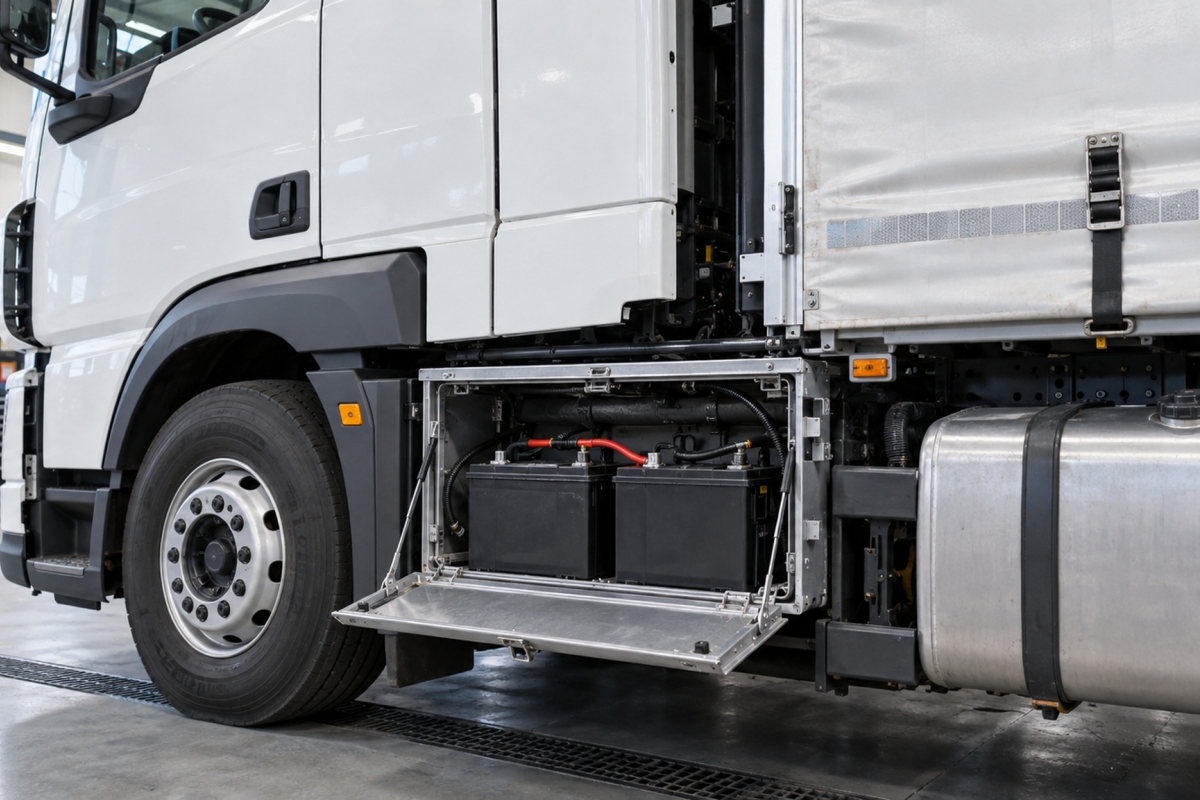
How Many Batteries Does a Truck Use? Understanding the Most Common Configurations
A truck uses one or two batteries, depending on its electrical system: light-duty vehicles and VUCs operate on 12V with a single battery, while medium-duty, medium-heavy, and heavy-duty trucks use two 12V batteries connected in series, forming a 24V system. The number of batteries is not the driver's choice - it is a design decision made by the manufacturer, based on the engine size and the vehicle's electrical demand. In this article, you'll understand why these two configurations exist, what changes in each one, and why, when used as a pair, the two batteries need to be treated as a single unit.
Continue reading

Checklist for Replacing a Truck Battery Without Mistakes
Replacing a truck battery without mistakes requires three steps: confirming the correct specifications before purchase (capacity, CCA, polarity, and system voltage), performing the replacement in the proper sequence - negative first when removing, positive first when installing - and checking the charging system afterward. It may seem simple, but many of the problems unfairly attributed to a new battery actually begin during the replacement: loose mounting, improperly tightened terminals, an unbalanced pair in a 24V system, and even reversed polarity. This checklist covers the entire process, from purchase checks to the proper disposal of the old battery.
Continue reading
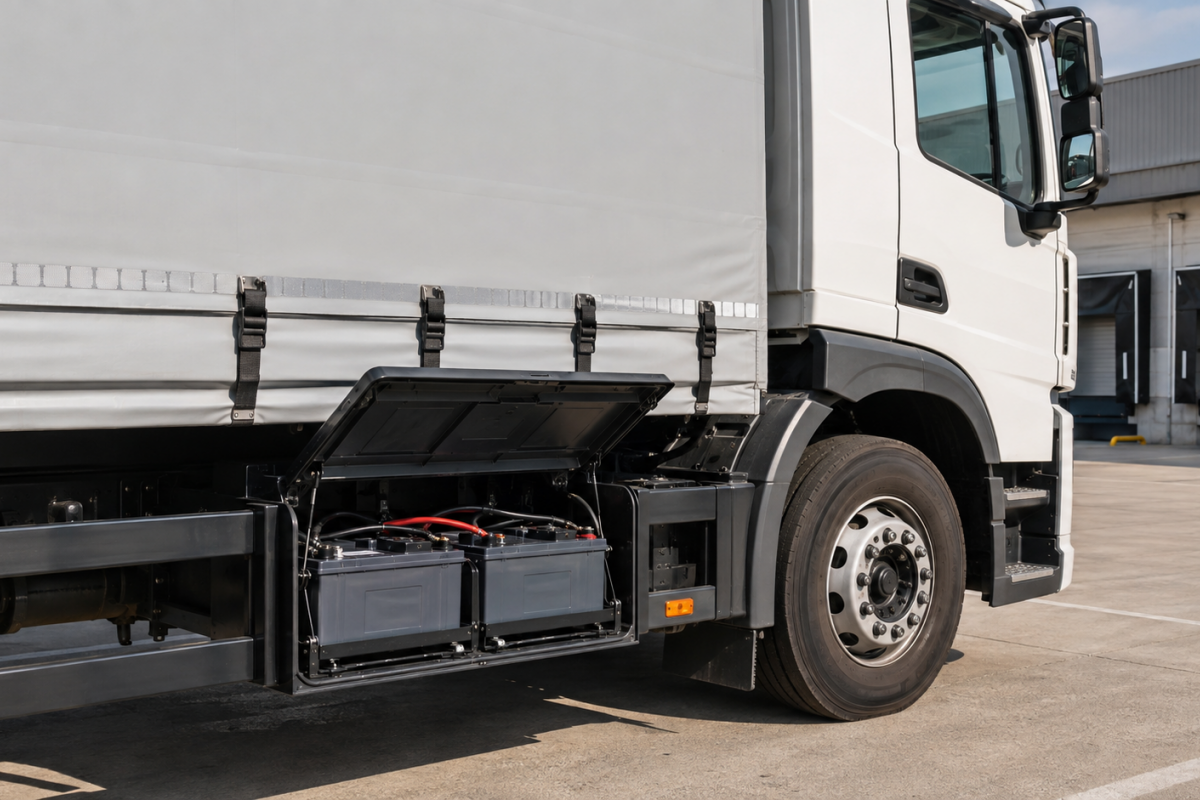
How to Tell Whether a Truck Is 12V or 24V: a Quick Guide to Avoid Mistakes
To determine whether a truck is 12V or 24V, check three things: the owner's manual, the number of installed batteries, and the dashboard voltmeter. Two 12V batteries connected in series indicate a 24V system; a single battery indicates a 12V system. This information may seem like a detail, but it defines the entire purchase: capacity, replacement method, and even the correct emergency-recharging procedure change from one system to the other. In this quick guide, you will learn how to identify your truck's system in minutes and understand what this difference changes in practice.
Continue reading