Difference Between Traction, Stationary, and Automotive Batteries
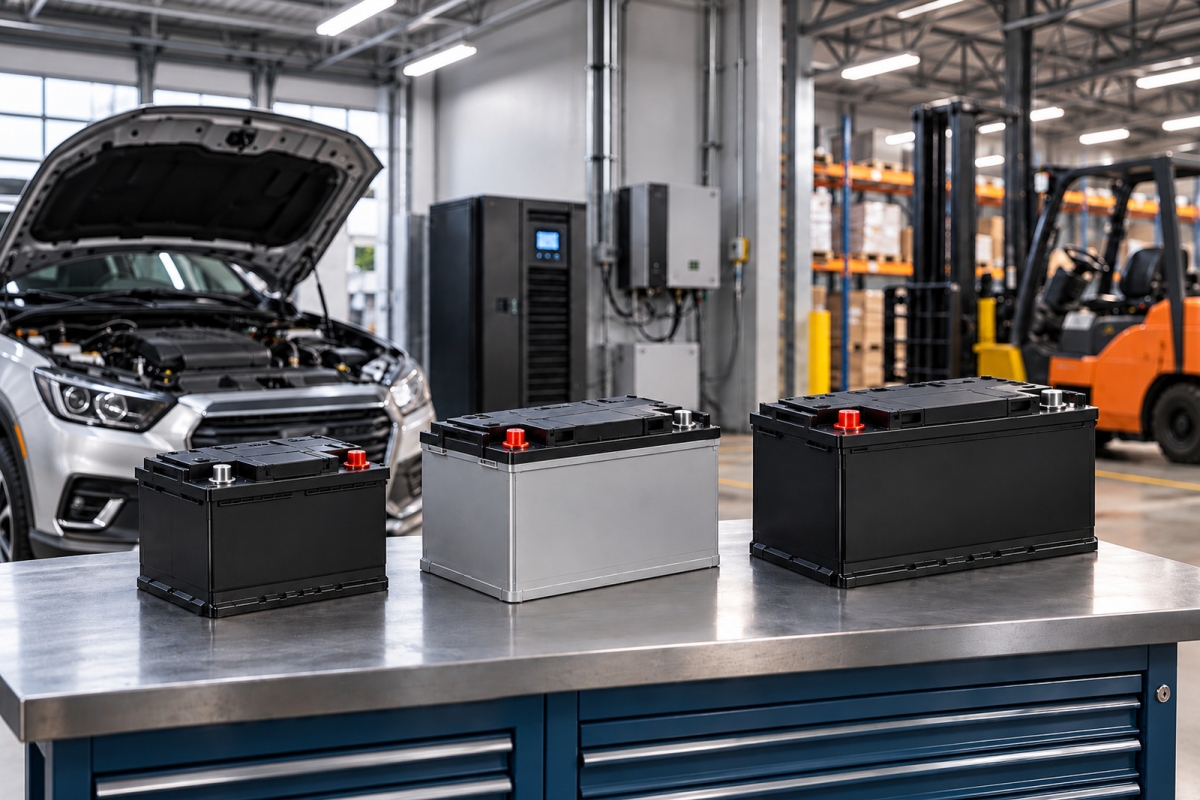
The difference among the three lies in the job: an automotive battery starts engines (extremely high current for seconds), a stationary battery powers fixed installations (continuous or backup energy), and a traction battery moves industrial equipment in daily deep-cycle operation under vibration and movement.
All three share a lead-acid foundation and may even look similar - but internally they are different designs optimized for operating regimes that should not be mixed.
This guide places all three side by side: what each one does, how it is built, and what happens when someone tries to use one in place of another.
The job of each battery
The automotive battery is the sprinter: it delivers hundreds of amps to turn the engine and is recharged immediately by the alternator - it lives almost fully charged. The stationary battery is the fixed-position marathoner: it spends its life in float mode or predictable cycles, powering UPS systems, telecom, security, and solar. The traction battery is the worker: it goes deep every day while moving forklifts and pallet trucks, in the duty described in what is a traction battery.
Internal construction compared
The design follows the job. The automotive battery uses many thin plates to maximize instant current. The stationary battery uses plates sized for cycling and long float regimes. The traction battery goes further: high-antimony grids tolerate deep discharge under vibration - assembled from 2V cells or monoblocks, as explained in the guide to traction battery types.
The relationship: all cycle, but at different depths
Stationary and traction batteries are relatives in the deep-cycle family - the same concept that also applies to the deep-cycle marine battery. The difference is intensity: stationary batteries cycle moderately in a controlled environment; traction batteries go deep every day while moving. Automotive batteries sit outside this family: for them, deep discharge means damage.
Where does the marine battery fit?
The marine battery is the bridge between worlds: dual-purpose construction handles engine starting and onboard service in the same battery - part sprinter, part marathoner - with reinforcement against salt spray and vibration. It proves that dividing batteries by job is not bureaucracy: each environment shapes the engineering of the battery that lives in it.
What happens when the wrong batteries are interchanged?
- Automotive battery in a forklift or solar system: the thin plates cannot withstand deep discharge - failure in weeks or months.
- Stationary battery in a forklift: without the mechanical robustness and antimony grids, it cannot tolerate deep cycling under vibration.
- Traction battery instead of stationary: expensive oversizing and unnecessary industrial maintenance for a lighter duty.
- Any of them instead of automotive: none is designed to deliver the engine’s specified starting current.
The first case is the most common - and the dedicated stationary battery vs. automotive battery comparison shows why the purchase “savings” disappear at the first premature replacement.
How do you identify which battery you need?
Three questions solve it: will the battery start an engine? Automotive, to the vehicle specification. Will it power a fixed installation for hours? Stationary, sized by consumption and runtime. Will it move equipment that works in shifts? Traction, specified by voltage, capacity, and duty - the full process is in the Complete Guide to Traction Batteries.
How does Tudor cover all three families?
The Tudor portfolio has a line for each job: automotive batteries with high CCA, ANATEL-approved 12TE Stationary batteries with a 24-month warranty, and the Traction line with factory application engineering - cells and monoblocks specified equipment by equipment, with ISO 9001 certified quality.
Conclusion
Three batteries, three jobs: starting, fixed installation, and industrial traction. There is no single best one among them - there is the right one for each duty. Identify the job, and you identify the battery.
If your application is moving equipment, see how to choose a traction battery and specify it with a Tudor specialist.
Frequently Asked Questions
What is the difference between a traction battery and a stationary battery?
A traction battery moves equipment in daily deep-cycle operation, under vibration and movement; a stationary battery powers fixed installations in float or backup-cycle operation. Their internal constructions are different.
Can I use an automotive battery in a forklift?
No. The thin plates in an automotive battery cannot withstand daily deep discharge - the battery fails quickly and the equipment stops in the middle of a shift.
Can a traction battery be used for solar energy?
Technically it can handle cycling, but it is oversized for the duty: industrial cost and maintenance with no need. For solar, use a stationary battery sized for the project.
Do all three batteries use the same technology?
They share a lead-acid base, but have different internal designs: thin plates in automotive batteries, cycling plates in stationary batteries, and high-antimony grids in traction batteries.
How do I know which battery my application requires?
By the job: engine starting requires automotive; a fixed installation requires stationary; equipment that moves and works in shifts requires traction.
Is a marine battery a traction or stationary battery?
Neither: it is its own category, typically dual purpose, combining starting and onboard service with reinforcement against salt spray and vibration - another example of a battery shaped by its job.
Read also
What Is a Traction Battery and Where Is It Used?
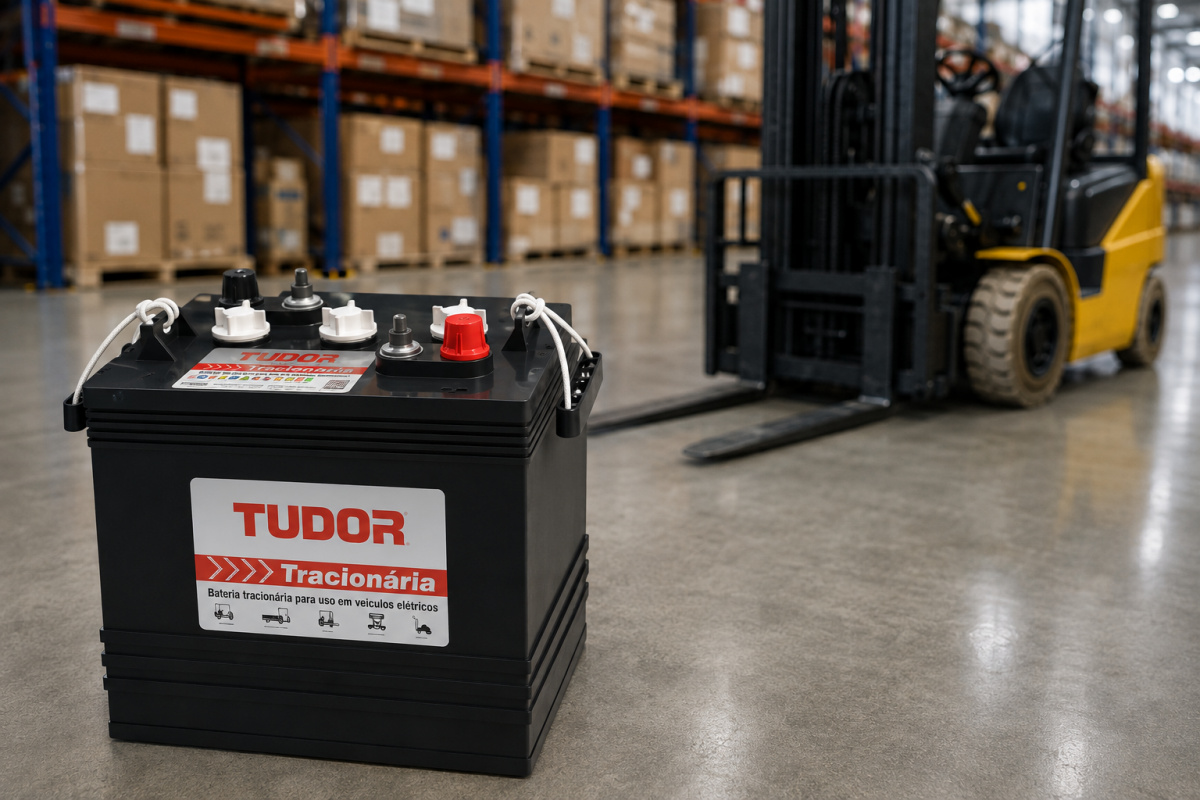
A traction battery is a deep-cycle battery designed to power industrial electric equipment: forklifts, pallet trucks, electric pallet jacks, aerial work platforms, and shunting locomotives. It discharges deeply during the work shift and then recharges, every day. If an automotive battery is a sprinter - extremely high current for seconds - a traction battery is a marathon runner: deep cycle taken to an industrial extreme, with the equipment moving and under vibration. In this article, you will understand how it is built, where it is used, and why maintenance determines the service life of this industrial asset.
Continue reading
Complete Guide to Traction Batteries: types, cycles, industrial applications, and how to choose the ideal one
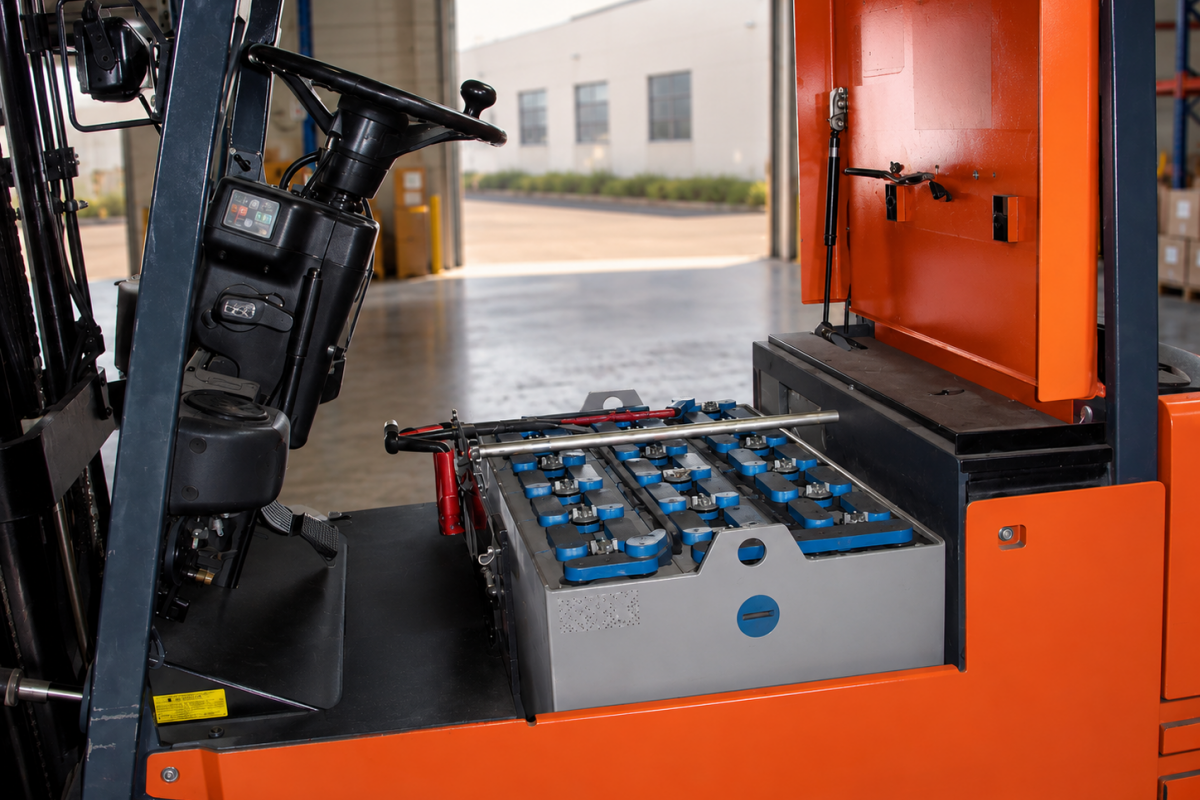
A traction battery is the deep-cycle battery that powers industrial electric equipment: forklifts, pallet trucks, electric pallet jacks, aerial work platforms, and even shunting locomotives. It is designed to discharge deeply throughout an entire work shift and then recharge, every day. No other lead-acid battery works as hard: daily deep discharge, vibration, movement, and often two- or three-shift operation. That is why the internal construction of a traction battery is different from anything found in automotive or stationary batteries. This guide explains how a traction battery works, where it is used, how to size voltage and capacity for each shift, and which maintenance practices determine the service life of the investment.
Continue reading