Complete Guide to Stationary Batteries: types, deep cycle, applications, service life, and how to choose the ideal one
A stationary battery is a battery designed for fixed installations: it provides continuous or backup power and supports repeated charge and discharge cycles. It is a central component of off-grid solar power systems, UPS systems, telecommunications, electronic security, and emergency lighting.
Unlike an automotive battery, which delivers high current for a few seconds during starting, a stationary battery works for hours, gradually discharging and then recharging - an operating profile that requires a specific internal construction.
This guide explains how a stationary battery works, where it is used, what concepts such as deep cycle and depth of discharge mean, and how to size the right capacity for each project.
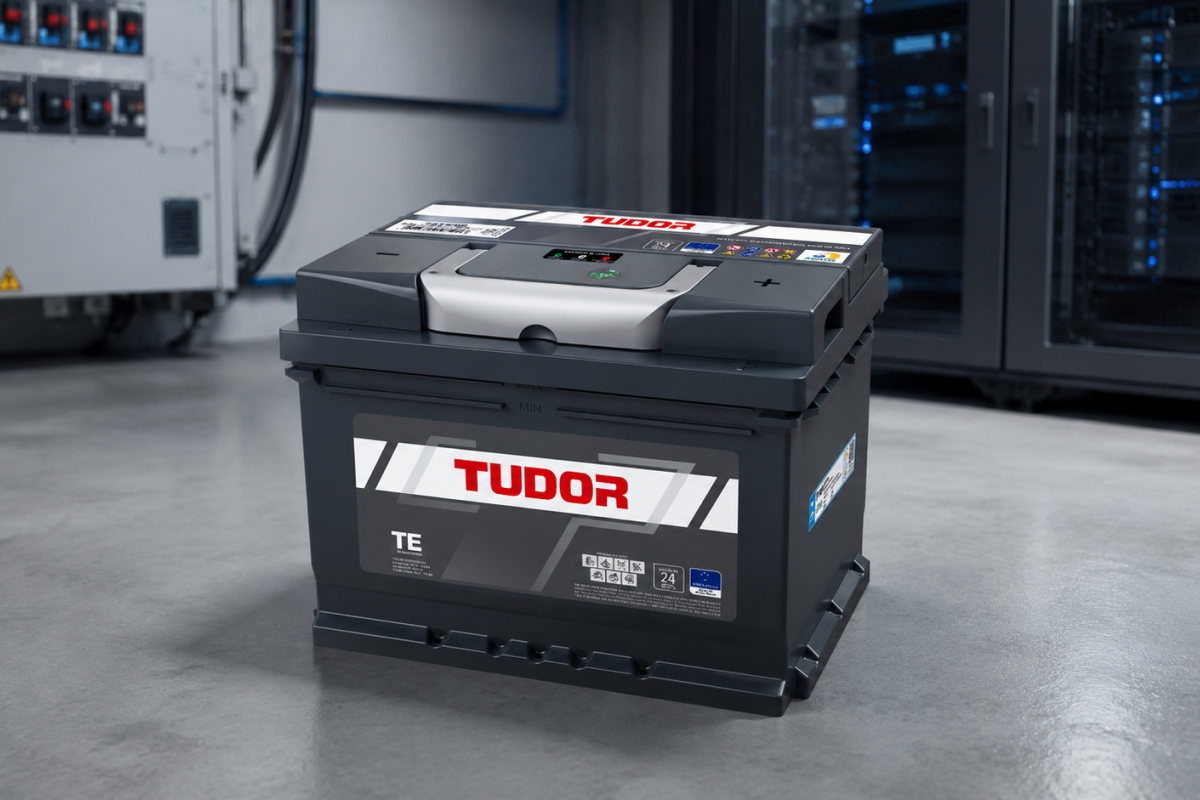
What is a stationary battery and how does it work?
A stationary battery stores chemical energy and converts it into electrical energy on demand, operating in two typical situations: in float mode, permanently connected to a charger - a principle similar to the maintenance charger used for parked vehicles - and ready to take over the load in a power outage; or in cycling mode, charging and discharging daily, as in isolated solar systems.
Its plates and alloys are designed to tolerate deeper discharges than a starting battery could withstand, and its construction prioritizes service life over years of continuous operation.
Where are stationary batteries used?
- Off-grid solar power: stores energy from the panels for nighttime and cloudy days.
- UPS systems: immediate power when the grid fails, protecting sensitive equipment.
- Telecommunications: towers, radios, and central systems - an application that requires models approved by ANATEL.
- Electronic security: alarms, CCTV, electric fences, gates, and automation.
- Emergency lighting and critical measurement and control systems.
What are deep cycle and depth of discharge (DoD)?
A cycle is the complete process of discharge and recharge. A deep-cycle battery is built to repeatedly discharge a significant portion of its capacity without damaging the plates - the same principle used in deep-cycle marine batteries, applied to a fixed installation.
Depth of discharge (DoD) indicates how much of the capacity was used in each cycle. The relationship is direct: the lower the average depth of discharge, the greater the number of cycles the battery can deliver over its life. Well-sized projects operate with a margin - instead of draining the battery every day, they use a fraction of its capacity and multiply its service life.
What types of stationary batteries are there?
Stationary batteries are divided into two major construction families. Vented batteries, with liquid electrolyte, require periodic inspection and a well-ventilated environment. Valve-regulated lead-acid (VRLA) batteries are sealed, require no water replenishment, and can be installed in racks and cabinets - making them dominant in UPS and telecommunications applications.
In both cases, the most common format in the Brazilian market is the 12V monoblock, which simplifies battery-bank assembly: identical units are combined in series and parallel until the project's required voltage and capacity are reached.
What is the difference between a stationary battery and an automotive battery?
Using an automotive battery in a stationary application is one of the mistakes that most reduce battery lifespan - and one of the most expensive: it fails early, and the initial savings disappear with the first premature replacement.
How do you size the project capacity?
Sizing starts with consumption: add the power (W) of the equipment, define the required hours of autonomy, and calculate the energy (Wh = W × hours). Dividing by the bank voltage gives the capacity in Ah - to which margins for depth of discharge and temperature are then applied.
In solar systems, the calculation also considers the number of days of autonomy without sun.
How do you assemble battery banks in series and parallel?
A series connection adds voltages while keeping capacity unchanged: two 12V, 100Ah batteries in series form 24V and 100Ah. A parallel connection adds capacities while keeping voltage unchanged: the same two batteries in parallel form 12V and 200Ah. Larger projects combine both types of connection to reach 24V or 48V with the calculated capacity.
The golden rule for battery banks: use batteries of the same model, the same age, and the same state of charge. One different unit unbalances the entire bank - and the bank starts aging at the pace of its weakest battery.
What mistakes compromise stationary battery projects?
- Using an automotive battery instead of a stationary battery to save on the purchase.
- Undersizing autonomy by ignoring sunless days or the actual hours of power outage.
- Deep-discharging the batteries every day without a depth-of-discharge margin.
- Installing batteries in a hot, unventilated environment.
- Mixing new and old batteries in the same bank.
- Operating with an incorrectly adjusted float voltage in the charger or inverter.
What affects stationary battery service life?
Three factors dominate: average depth of discharge, ambient temperature, and charging quality. The technical reference temperature is 27°C - above this, self-discharge accelerates and service life decreases - the effect of temperature is universal in lead-acid technology. An incorrectly adjusted float voltage in the charger or inverter continuously overcharges or undercharges the battery, with the same effect. Batteries that remain idle for long periods also require the same care for storage while not in use.
Correct installation also matters: a ventilated location, clean terminals with proper torque, and identical batteries within each bank.
How does Tudor support stationary applications?
The Tudor 12TE Stationary line includes fourteen models from 25Ah to 220Ah, all 12V, ready for individual use or in 12V, 24V, and 48V banks. The models are approved by ANATEL for telecommunications applications and come with their own technical manual for installation, charging, and maintenance - with a 24-month warranty.
Conclusion
A stationary battery is an investment in the project: when correctly sized and maintained, it provides years of reliable power for the system it protects. Understanding cycles, depth of discharge, and charging mode is what separates a durable battery bank from a premature replacement.
To choose the right capacity from the 12TE line for your project, access which stationary battery to choose and speak with a Tudor specialist.
And to keep learning, follow the technical content on the Tudor blog.
Frequently Asked Questions
What is a stationary battery?
It is a battery designed for fixed installations, providing continuous or backup power and supporting repeated charge and discharge cycles - as in solar power, UPS systems, telecommunications, and electronic security.
What is the difference between a stationary battery and an automotive battery?
An automotive battery delivers high current for a few seconds for starting and does not tolerate repeated deep discharges. A stationary battery discharges gradually over hours and is built for cycling and float operation.
What is depth of discharge (DoD)?
It is the percentage of capacity used in each cycle. The lower the average depth of discharge, the greater the number of cycles and the battery's total service life.
How long does a stationary battery last?
It depends on depth of discharge, temperature, and charging quality. The reference temperature is 27°C; with correct sizing and float voltage, service life can extend for years.
Does a stationary battery require maintenance?
It requires periodic checks of float voltage, terminal cleanliness and torque, and ventilation, in accordance with the manufacturer's technical manual.
Read also

How to Install a Stationary Battery Correctly and Safely
Properly installing a stationary battery involves four key areas: choosing a well-ventilated location protected from heat, making connections in the safe sequence with the correct torque, assembling battery banks only with identical batteries, and adjusting the charger or inverter's float voltage according to the manufacturer's manual. Installation is the moment that determines a significant part of the battery's service life: a properly sized battery installed in a hot location or with incorrect float settings will age in a fraction of its expected lifespan. This guide covers the complete procedure - from preparing the installation site to the final system validation.
Continue reading
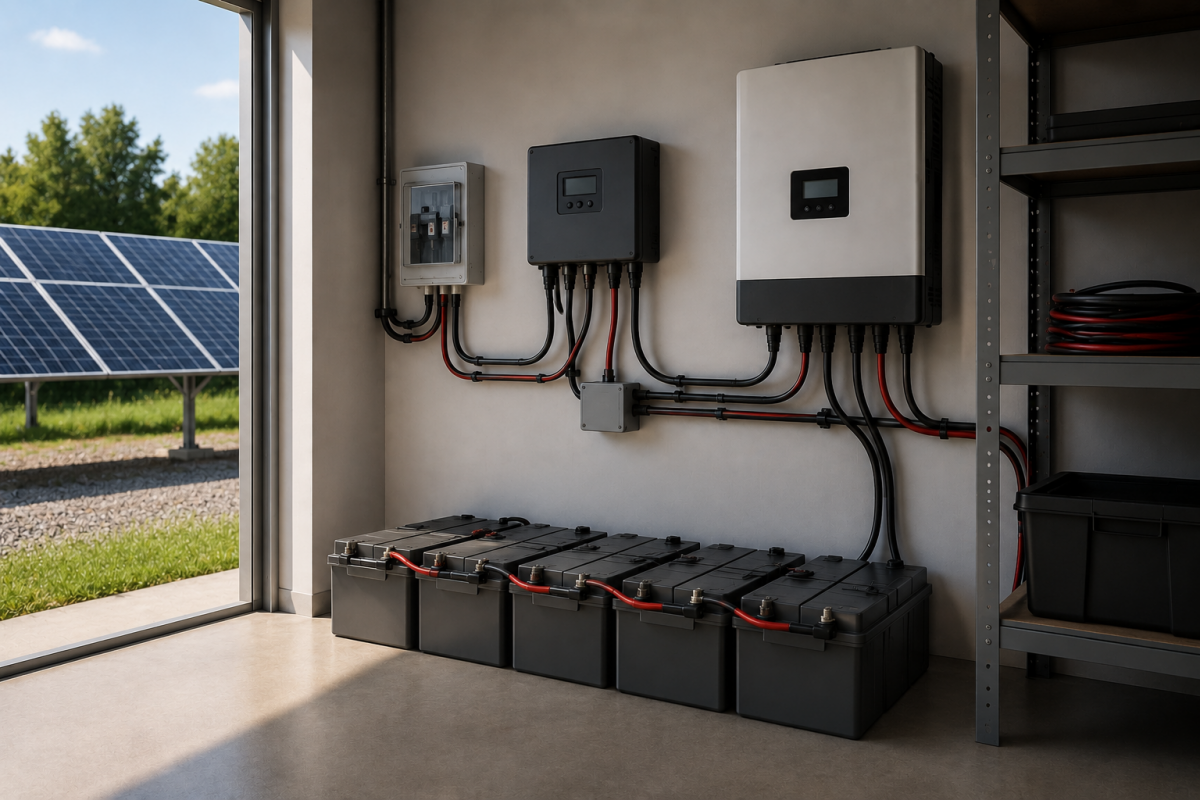
How to Choose the Ideal Stationary Battery for Off-Grid Solar Power
The ideal stationary battery for off-grid solar power is sized in four steps: add the equipment's daily consumption, define the days of autonomy without sun, apply the recommended depth of discharge, and convert the result into capacity (Ah) at the battery-bank voltage. In an off-grid system, there is no utility grid to back up the project: the battery is the only reserve. Tight sizing means running out of power on the second cloudy night; correct sizing means years of quiet, reliable supply. This article walks through the calculation step by step, covering the concepts that make a difference in the result.
Continue reading
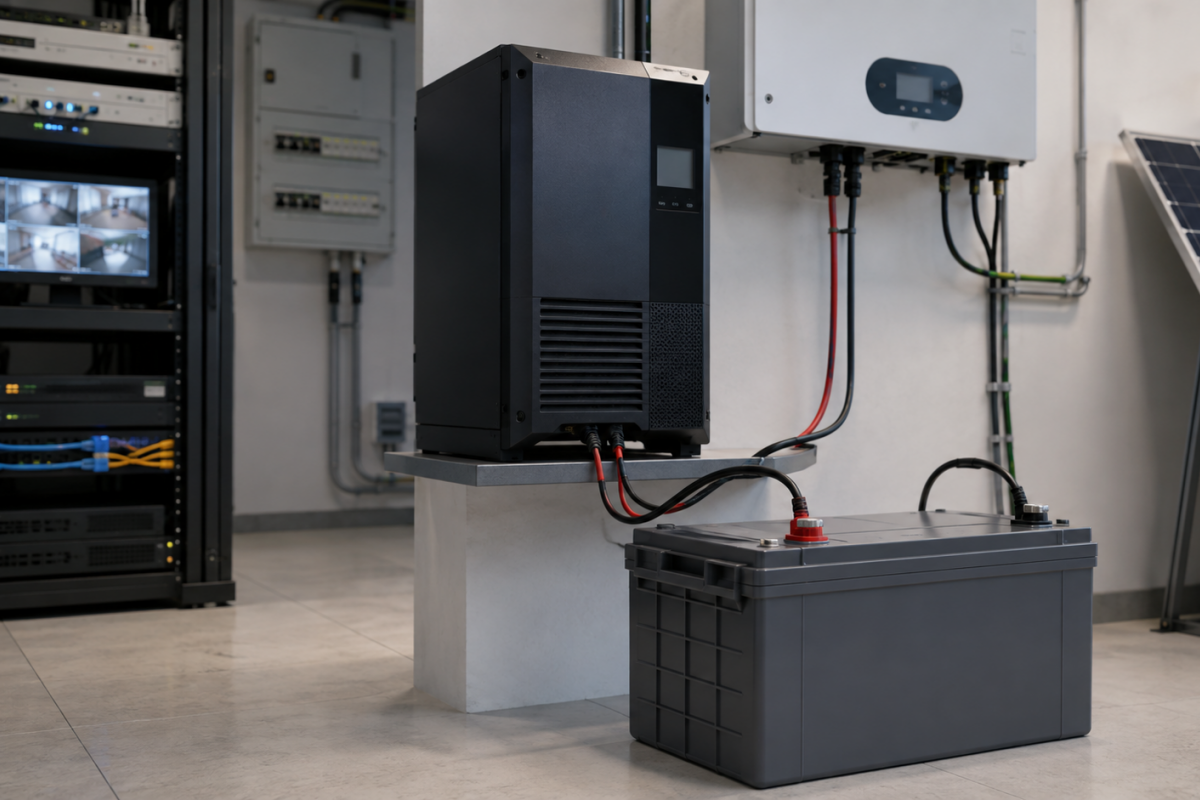
What Is a Stationary Battery and What Is It Used For?
A stationary battery is a battery designed for fixed installations: it provides continuous or backup power and supports repeated charge and discharge cycles. It is used in solar power systems, UPS systems, telecommunications, electronic security, and emergency lighting. The name says a lot: “stationary” because it does not move - unlike a car battery, it works in a fixed position, in a technical room, rack, or cabinet, powering systems that cannot be left without energy. In this article, you will understand how it works, where it is used, and why it should not be confused with an automotive battery.
Continue reading