What Is the Difference Between a Stationary Battery and an Automotive Battery (Regular Battery)?
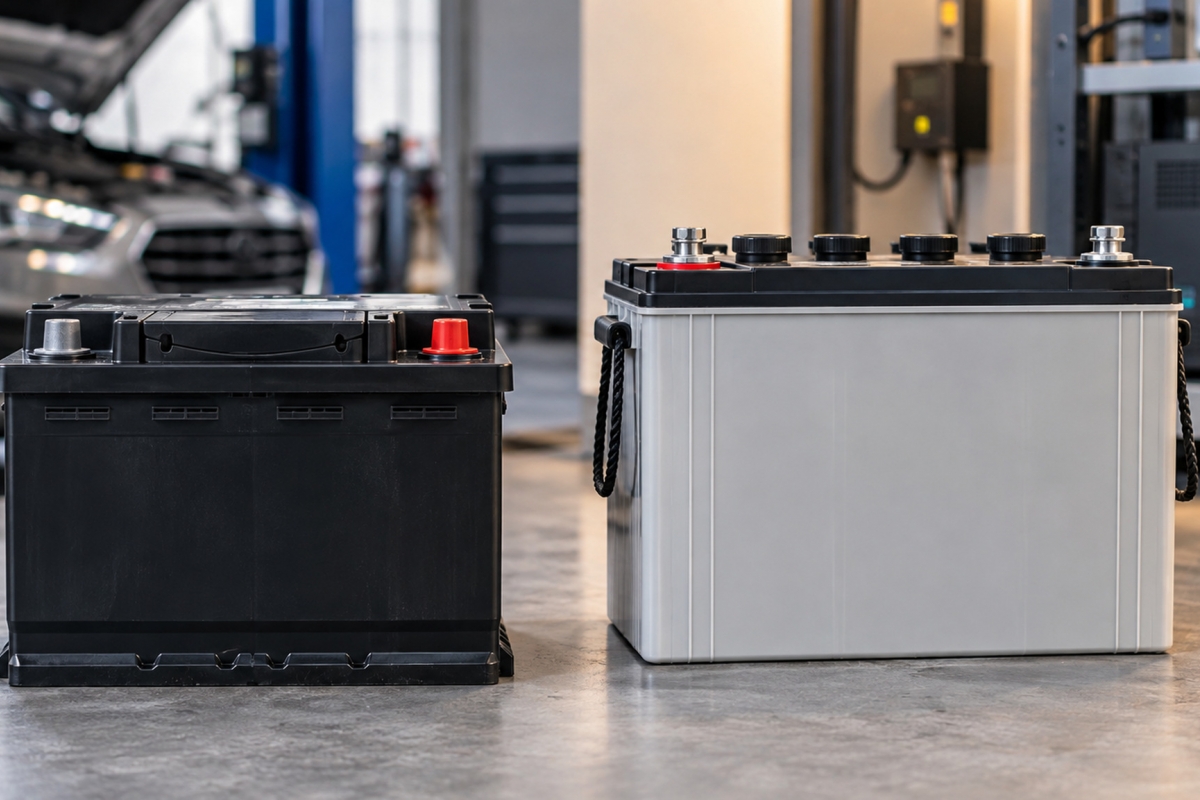
The difference between stationary and automotive batteries lies in the job each one is designed to perform: an automotive battery delivers extremely high current for a few seconds to start the engine, while a stationary battery provides gradual and continuous power for hours, supporting repeated charge and discharge cycles in fixed installations.
From the outside, the two may look identical - casing, terminals, 12V. Inside, however, they are designed for opposite purposes. And it is precisely this external similarity that leads to one of the most costly mistakes in the segment: using one in place of the other.
In this article, you'll understand the differences in construction, behavior, and application - and why each technology should be used for its intended purpose.
What Does Each Battery Do Best?
An automotive battery is a specialist in bursts of energy: hundreds of amps for a few seconds to crank the engine, followed by immediate recharging through the alternator. It spends most of its time fully charged - and that's how it is designed to operate.
A stationary battery is a specialist in endurance: it discharges a significant portion of its capacity over several hours, recharges, and repeats the process - the concept of deep cycling, the same principle behind deep-cycle marine batteries, applied to fixed installations. This is why stationary batteries are used in solar systems, UPS units, telecommunications, and security systems, as explained in the article on what a stationary battery is and what it is used for.
Differences in Internal Construction
Automotive batteries use thinner and more numerous plates, maximizing the contact area to deliver high instantaneous current. Stationary batteries use plates and alloys designed to withstand repeated deep discharges and long periods of float operation, prioritizing durability over years of continuous use.
| Feature | Automotive Battery | Stationary Battery |
|---|---|---|
| Main function | Engine starting | Continuous or backup power |
| Discharge pattern | High current for seconds | Moderate current for hours |
| Deep discharge | Causes rapid damage | Designed to withstand it |
| Operating mode | Mostly fully charged (recharged by the alternator) | Cycles or continuous float |
| Environment | Vehicle, subject to vibration | Fixed, controlled installation |
| Service life measured in | Years of engine starts | Cycles and years of float operation |
What Happens If You Use Them for the Wrong Purpose?
Automotive battery in a solar system, UPS, or alarm: daily deep discharges damage plates that were not designed for this type of use, and the battery can fail within months. This is one of the mistakes that most reduce battery life, and the savings from the initial purchase disappear with the first premature replacement.
Stationary battery in a car: it does not deliver the starting current required by the engine. At best, starting will be weak; at worst, the vehicle simply will not start - and repeated attempts can also damage the battery.
Why Do the Two Batteries Look So Similar?
Because they share the same basic technology - lead-acid, plastic casing, two terminals, 12V - and industry-standard formats. The difference lies where the eye cannot see: plate thickness and alloy, separators, electrolyte density, and the operating conditions for which each design has been optimized.
That's why a safe purchase should never be based on appearance alone. It should be based on the product's specifications and stated application. If the casing does not identify the battery as “stationary,” it should not be assumed to be suitable for stationary applications.
How Do I Know Which Battery I Need?
The key question is about the job: will the battery start an engine, or will it power equipment for several hours? Engine starting = automotive battery, according to the vehicle manufacturer's specifications. Continuous or backup power in a fixed installation = stationary battery, sized according to power consumption and required autonomy - as in the classic example of a stationary battery for off-grid solar energy.
The same reasoning applies to everyday applications: UPS systems, automatic gates, alarms, and CCTV systems all use stationary batteries, even when they are compact.
How Does Tudor Serve Both Applications?
In the Tudor portfolio, each application has its own product line: automotive batteries with high CCA for engine starting, and the Tudor 12TE Stationary line - ranging from 25Ah to 220Ah, approved by ANATEL and backed by a 24-month warranty - for continuous power. The complete technical overview of the category is available in the Complete Guide to Stationary Batteries.
Conclusion
Stationary and automotive batteries are not competitors: they perform different jobs. One is a sprinter, the other a marathon runner - and each internal design serves a purpose that the other is not designed to fulfill. Choosing the right one simply means asking what job the battery will perform.
If your application requires continuous or backup power, visit how to choose the ideal stationary battery and confirm the required capacity with a Tudor specialist.
Frequently Asked Questions
What Is the Main Difference Between a Stationary Battery and an Automotive Battery?
An automotive battery delivers extremely high current for a few seconds to start the engine; a stationary battery provides gradual power for hours and supports repeated charge and discharge cycles.
Can I Use an Automotive Battery in a UPS or Solar System?
It is not recommended: automotive batteries are not designed to withstand repeated deep discharges and can fail within months in these applications. Use a stationary battery sized according to the power consumption.
Can I Use a Stationary Battery in a Car?
No. It does not deliver the starting current required by the engine, and repeated starting attempts can damage it. In a vehicle, use the battery specified by the manufacturer.
Does a Stationary Battery Last Longer Than an Automotive Battery?
They are measured differently: stationary batteries are designed for years of cycling and float operation in a controlled environment; automotive batteries are designed for years of engine starts under vibration. Each is designed to last longer when used for its intended purpose.
Are Batteries for Automatic Gates and Alarms Stationary Batteries?
Yes. Alarm systems, CCTV, automatic gates, and UPS systems use compact stationary batteries that remain on float charge and take over the load when the power goes out.
Is There a Battery That Works for Both Cars and UPS Systems?
Not as a general rule: their internal designs are optimized for opposite types of operation. Specific dual-purpose applications, such as marine dual-purpose batteries, do exist, but they use their own specialized construction - never an improvised combination of categories.
Read also

How to Install a Stationary Battery Correctly and Safely
Properly installing a stationary battery involves four key areas: choosing a well-ventilated location protected from heat, making connections in the safe sequence with the correct torque, assembling battery banks only with identical batteries, and adjusting the charger or inverter's float voltage according to the manufacturer's manual. Installation is the moment that determines a significant part of the battery's service life: a properly sized battery installed in a hot location or with incorrect float settings will age in a fraction of its expected lifespan. This guide covers the complete procedure - from preparing the installation site to the final system validation.
Continue reading
How to Choose the Ideal Stationary Battery for Off-Grid Solar Power
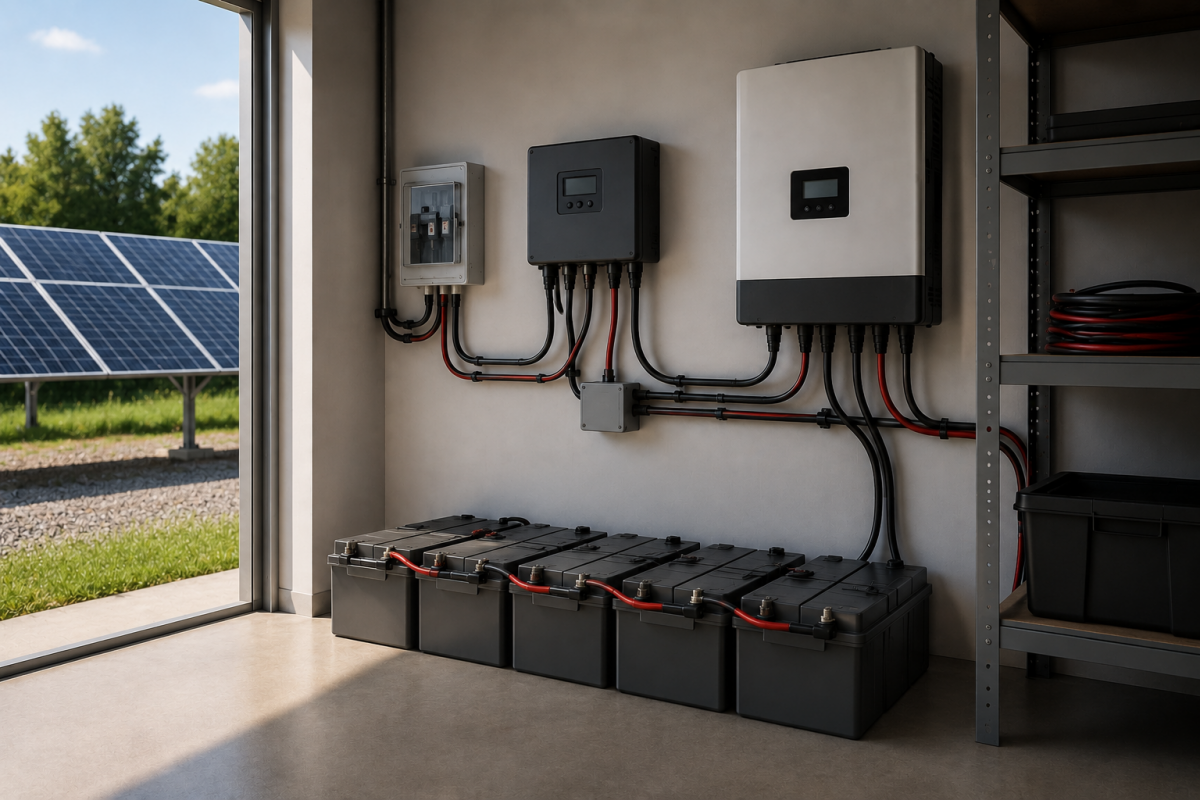
The ideal stationary battery for off-grid solar power is sized in four steps: add the equipment's daily consumption, define the days of autonomy without sun, apply the recommended depth of discharge, and convert the result into capacity (Ah) at the battery-bank voltage. In an off-grid system, there is no utility grid to back up the project: the battery is the only reserve. Tight sizing means running out of power on the second cloudy night; correct sizing means years of quiet, reliable supply. This article walks through the calculation step by step, covering the concepts that make a difference in the result.
Continue reading
What Is a Stationary Battery and What Is It Used For?
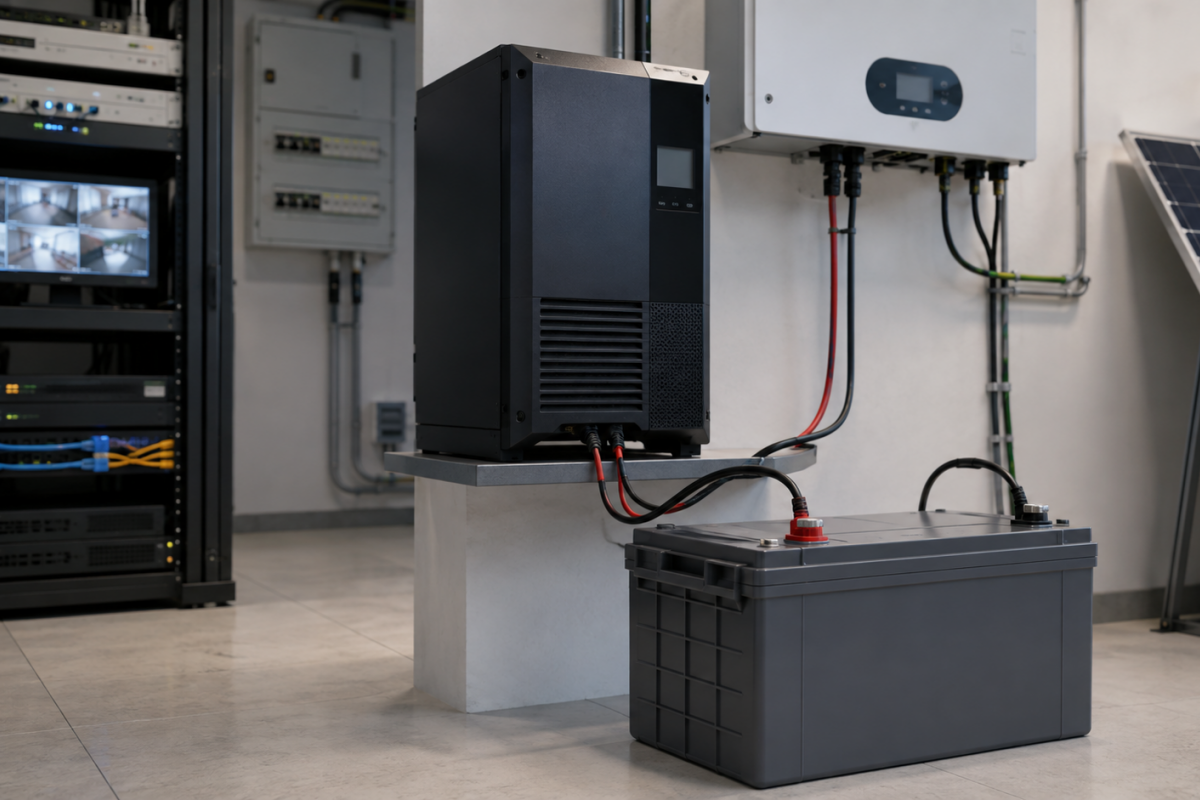
A stationary battery is a battery designed for fixed installations: it provides continuous or backup power and supports repeated charge and discharge cycles. It is used in solar power systems, UPS systems, telecommunications, electronic security, and emergency lighting. The name says a lot: “stationary” because it does not move - unlike a car battery, it works in a fixed position, in a technical room, rack, or cabinet, powering systems that cannot be left without energy. In this article, you will understand how it works, where it is used, and why it should not be confused with an automotive battery.
Continue reading