How to Choose the Ideal Stationary Battery for Off-Grid Solar Power
The ideal stationary battery for off-grid solar power is sized in four steps: add the equipment's daily consumption, define the days of autonomy without sun, apply the recommended depth of discharge, and convert the result into capacity (Ah) at the battery-bank voltage.
In an off-grid system, there is no utility grid to back up the project: the battery is the only reserve. Tight sizing means running out of power on the second cloudy night; correct sizing means years of quiet, reliable supply.
This article walks through the calculation step by step, covering the concepts that make a difference in the result.
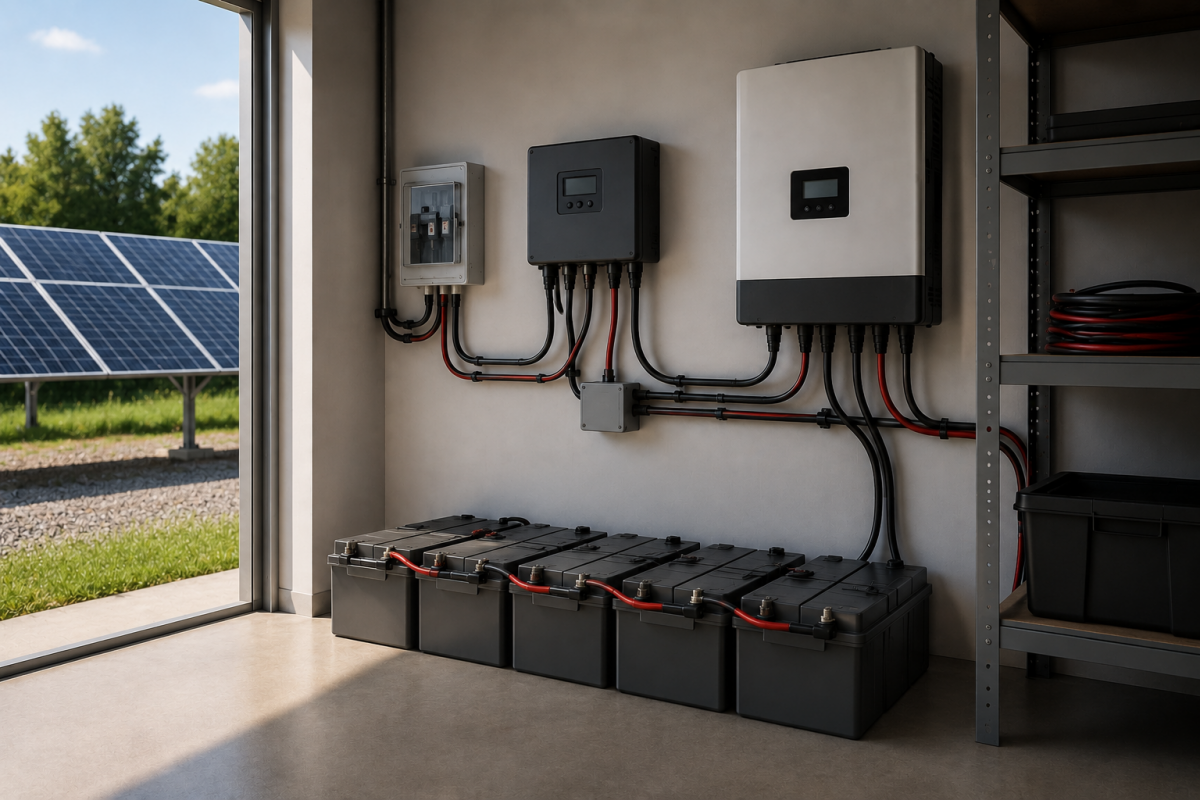
Why is the battery the heart of an off-grid system?
The panels generate energy only when there is sunlight; consumption, however, continues at night and on overcast days. The stationary battery shifts energy through time - storing it during the day and delivering it when needed. Because it operates in daily charge and discharge cycles, it must be a deep-cycle battery - built to discharge and recharge every day.
Step 1: calculate daily consumption
List the equipment, the power (W) of each item, and the hours of use per day. The sum of the products (W × hours) is the daily consumption in watt-hours (Wh). Example: 60W lighting for 5 hours (300Wh), an efficient refrigerator averaging 600Wh/day, and a 500W pump for 1 hour (500Wh) total 1,400Wh per day.
Step 2: define autonomy
How many days should the system operate without sun? In regions with cloudy winters, two to three days of autonomy are common. Multiplying daily consumption by the autonomy gives the total energy the bank needs to reserve - in the example, 1,400Wh × 2 days = 2,800Wh.
Step 3: apply depth of discharge (DoD)
The battery should not be discharged completely on every cycle: the lower the average depth of discharge, the more cycles it can deliver - the logic explained in the deep-cycle marine battery article. Applying a design margin - for example, using only half of the capacity - doubles the required energy in the sizing calculation: 2,800Wh ÷ 0.5 = 5,600Wh of installed capacity.
Step 4: convert to capacity (Ah)
Divide the energy by the bank voltage. In a 24V bank: 5,600Wh ÷ 24V ≈ 233Ah. The project can build this capacity using batteries in series (adds voltage) and in parallel (adds capacity) - always with units of the same model, age, and state of charge. The site temperature also enters the calculation: the technical reference is 27°C, and hotter environments require additional margin.
Summary of the complete example
With the figure in hand, the bank can be assembled, for example, with 12V batteries in series and parallel until 24V and the calculated capacity are reached - always using identical units.
What mistakes compromise an off-grid battery bank?
- Sizing according to the budget rather than consumption - an undersized bank collects the price in nights without power.
- Ignoring autonomy days and trusting that “the sun always shines.”
- Deep-discharging the batteries every day without a DoD margin.
- Installing the batteries in a hot environment above the 27°C reference temperature.
- Using a charge controller with incorrect parameters for the battery.
What is the role of the charge controller?
The controller is the guardian of the battery bank: it manages energy from the panels, applies the correct charging stages, and prevents both overcharging and discharge beyond the limit. A well-sized bank is of little use if the controller is configured for a different battery type - voltage parameters must follow the battery manufacturer's manual - the logic of the charging stages is the same as in automotive battery chargers, on a system scale.
How does Tudor support off-grid solar systems?
The Tudor Stationary line 12TE ranges from 25Ah to 220Ah at 12V, allowing custom 12V, 24V, and 48V battery banks to be built according to the calculated consumption. These batteries are designed for cycling, with low self-discharge, their own technical manual, and a 24-month warranty - and the technical team validates your project's sizing via WhatsApp.
Conclusion
Sizing the battery for an off-grid system is an exercise in being realistic about consumption: measure what is used, define the actual autonomy, and respect the depth of discharge. Once that is done, the battery bank delivers exactly what the project promises.
To choose the 12TE models for your bank, access how to choose the ideal stationary battery and size the system with a Tudor specialist.
Complete your reading with the mistakes that reduce the lifespan of any battery and the care required for storage of batteries while not in use.
Frequently Asked Questions
Which battery should be used for off-grid solar power?
A deep-cycle stationary battery, sized according to daily consumption, autonomy without sun, and the project's depth of discharge - never an automotive battery.
How do you calculate battery-bank capacity?
Add daily consumption (Wh), multiply by the days of autonomy, divide by the adopted depth of discharge, and convert to Ah by dividing by the bank voltage.
What is depth of discharge (DoD)?
It is the percentage of capacity used in each cycle. Projects that discharge less in each cycle multiply battery service life.
Can I mix different batteries in the same bank?
No. Use batteries of the same model, age, and state of charge; different units unbalance the bank and reduce service life.
How many batteries do I need in an off-grid system?
It depends on the calculated capacity and the bank voltage. The result in Ah is built using batteries in series (adds voltage) and in parallel (adds capacity) - always using identical units.
Will a 220Ah battery work for any off-grid system?
Not necessarily: the correct capacity comes from daily consumption, autonomy, and depth of discharge. Larger systems combine multiple batteries in a bank.
Read also

How to Install a Stationary Battery Correctly and Safely
Properly installing a stationary battery involves four key areas: choosing a well-ventilated location protected from heat, making connections in the safe sequence with the correct torque, assembling battery banks only with identical batteries, and adjusting the charger or inverter's float voltage according to the manufacturer's manual. Installation is the moment that determines a significant part of the battery's service life: a properly sized battery installed in a hot location or with incorrect float settings will age in a fraction of its expected lifespan. This guide covers the complete procedure - from preparing the installation site to the final system validation.
Continue reading
What Is a Stationary Battery and What Is It Used For?
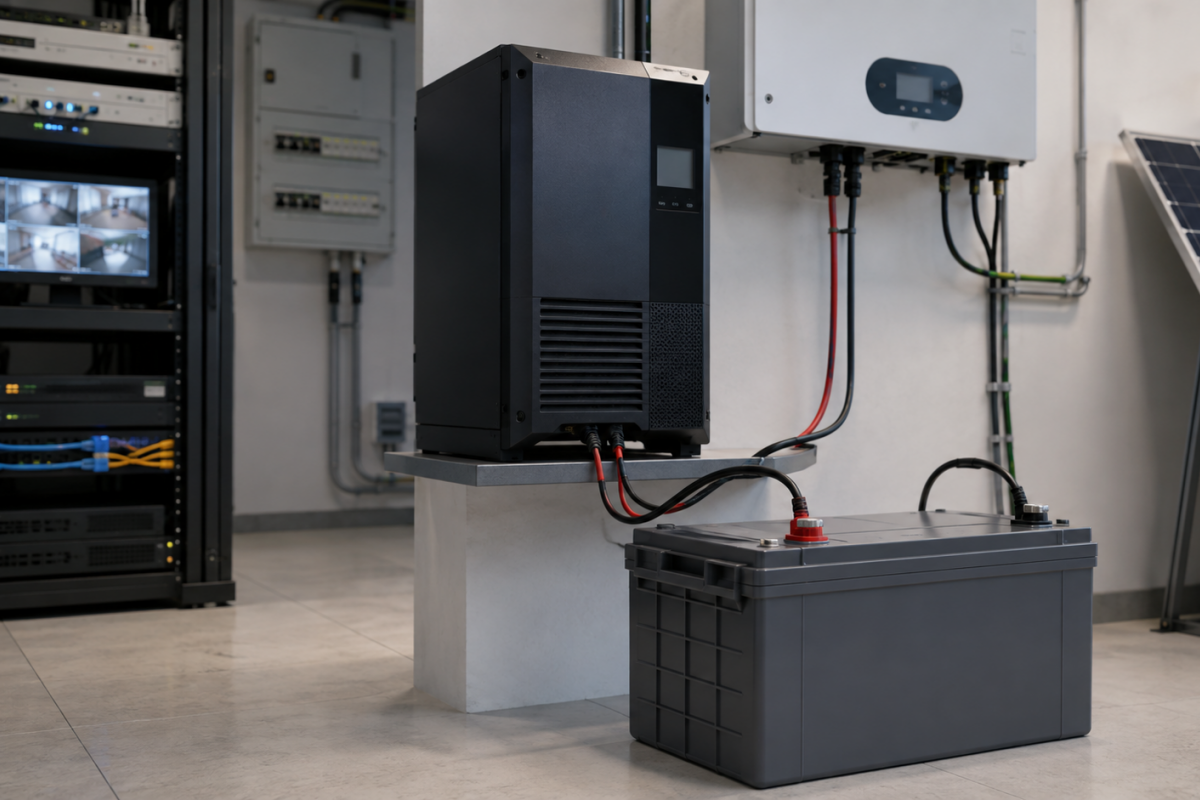
A stationary battery is a battery designed for fixed installations: it provides continuous or backup power and supports repeated charge and discharge cycles. It is used in solar power systems, UPS systems, telecommunications, electronic security, and emergency lighting. The name says a lot: “stationary” because it does not move - unlike a car battery, it works in a fixed position, in a technical room, rack, or cabinet, powering systems that cannot be left without energy. In this article, you will understand how it works, where it is used, and why it should not be confused with an automotive battery.
Continue reading
Complete Guide to Stationary Batteries: types, deep cycle, applications, service life, and how to choose the ideal one
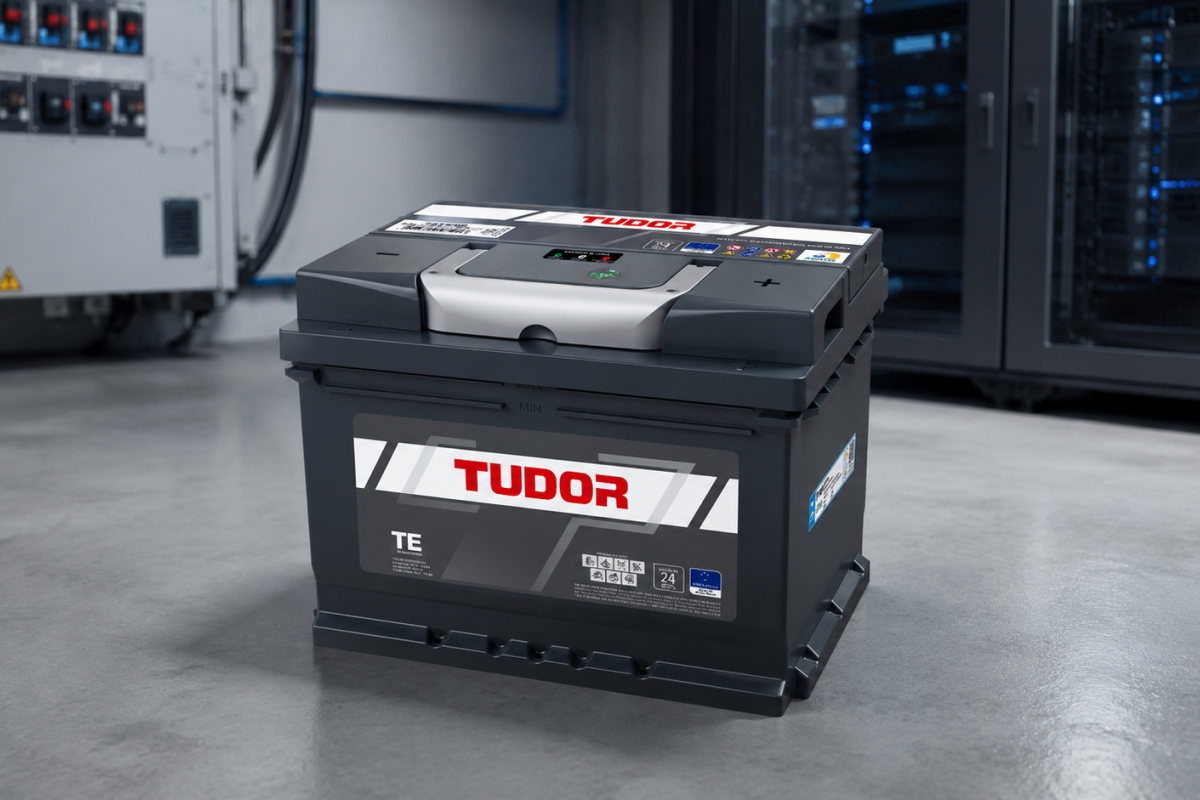
A stationary battery is a battery designed for fixed installations: it provides continuous or backup power and supports repeated charge and discharge cycles. It is a central component of off-grid solar power systems, UPS systems, telecommunications, electronic security, and emergency lighting. Unlike an automotive battery, which delivers high current for a few seconds during starting, a stationary battery works for hours, gradually discharging and then recharging - an operating profile that requires a specific internal construction. This guide explains how a stationary battery works, where it is used, what concepts such as deep cycle and depth of discharge mean, and how to size the right capacity for each project.
Continue reading